French Stories for Beginners
Beginner French stories give you more than vocabulary lists: you see greetings, cafés, travel, family, and daily routines inside real scenes. Start with short A1-A2 stories that keep the French readable while context does the heavy lifting.
Each story links to a full reader page with French text, English translation, and a vocabulary glossary, so you can read first, confirm meaning, and carry useful chunks into speaking practice.
Quick answer
The best beginner French stories are short A1-A2 texts with a clear scene, common vocabulary, English support, and enough repetition to make grammar patterns noticeable. This page collects 11 free French stories across A1 and A2.
Written by our language team · Last updated:
Le Matin a la Boulangerie
La petite boutique sent bon le pain frais et le beurre chaud.
« Bonjour, madame ! » dit Sophie avec un sourire éclatant.
Translation
The little shop smells of fresh bread and warm butter. " Good morning, ma'am!" says Sophie with a beaming smile. "
11
A1-A2 stories
5
A1 starting points
6
A2 next-step reads
Read first. Check meaning second.
Read the French line for the scene first, then use the English support to check meaning without turning the session into translation drills.
Free graded stories
Start with French stories you can actually finish
These French stories use practical beginner contexts: morning bakeries, markets, office surprises, train trips, and riverside walks. You get repeated connectors and phrases without the flat feeling of flashcards.

Le bus du matin
Sophie boards the early bus, hunts for coins in one pocket, and still keeps her window seat ritual before school.
Open story →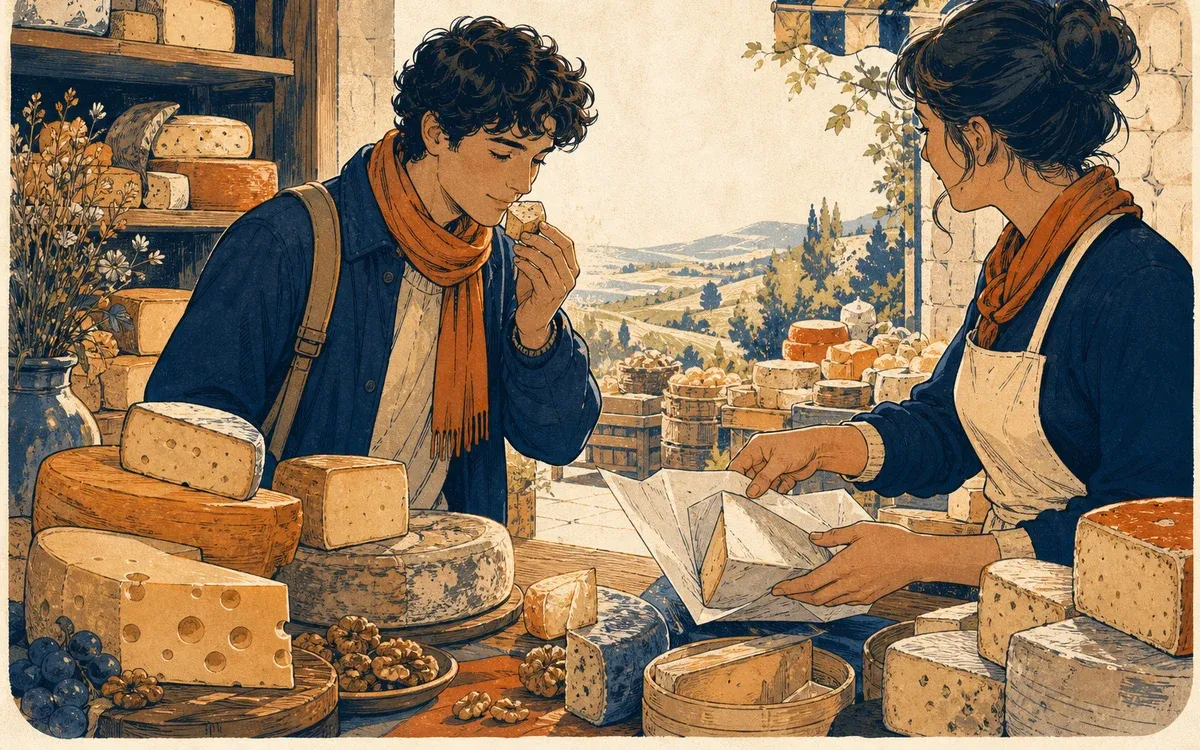
Le fromager du quartier
Noah follows the aroma of cheese, tastes a nutty slice, and learns to wrap cheese like a local.
Open story →
Le Matin a la Boulangerie
Sophie se réveille à l'aube pour une aventure quotidienne à la boulangerie, où l'odeur du pain frais et du beurre chaud l'accueille.
Open story →
Une Promenade le Long de la Seine
It is Sunday afternoon. The sky is blue and it is mild. Lucas decides to take a walk along the Seine. The river water is calm and green.
Open story →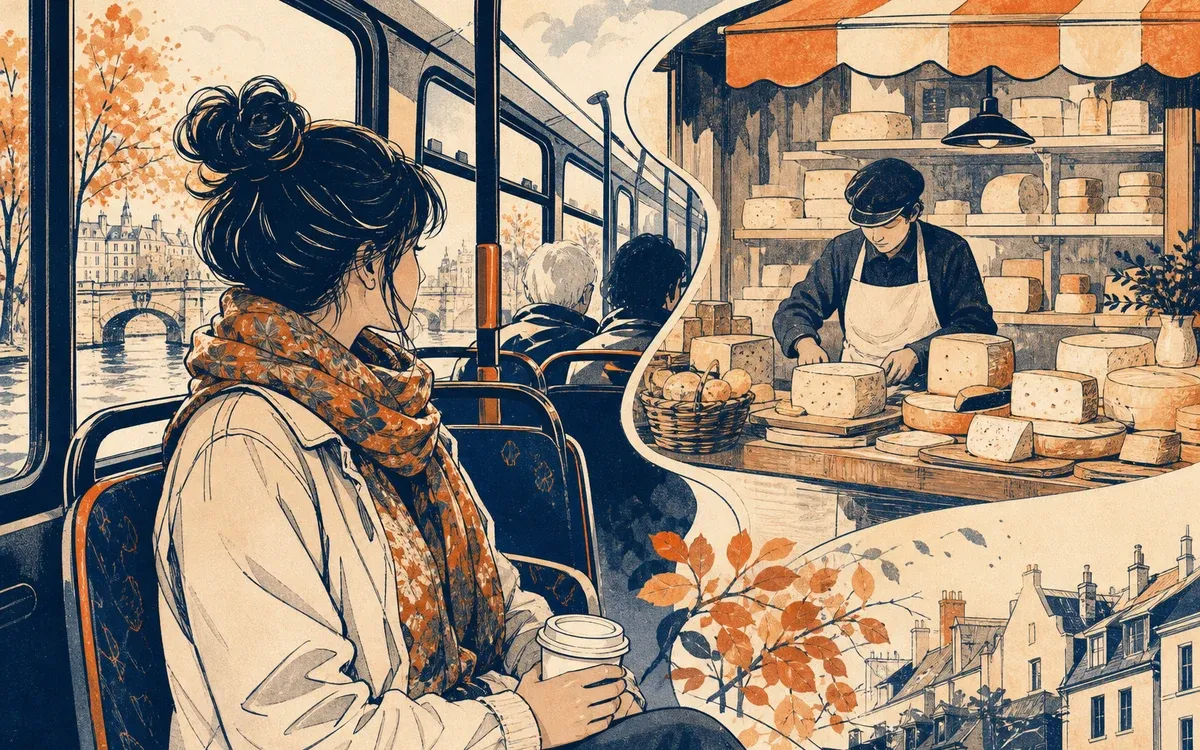
Une Rencontre au Café
Marie is sitting at the terrace of a café. She is drinking a coffee with cream and reading the newspaper.
Open story →
Cinq minutes sous la pluie
On a rainy Clichy bus, Nora must choose between helping with a stroller and arriving on time.
Open story →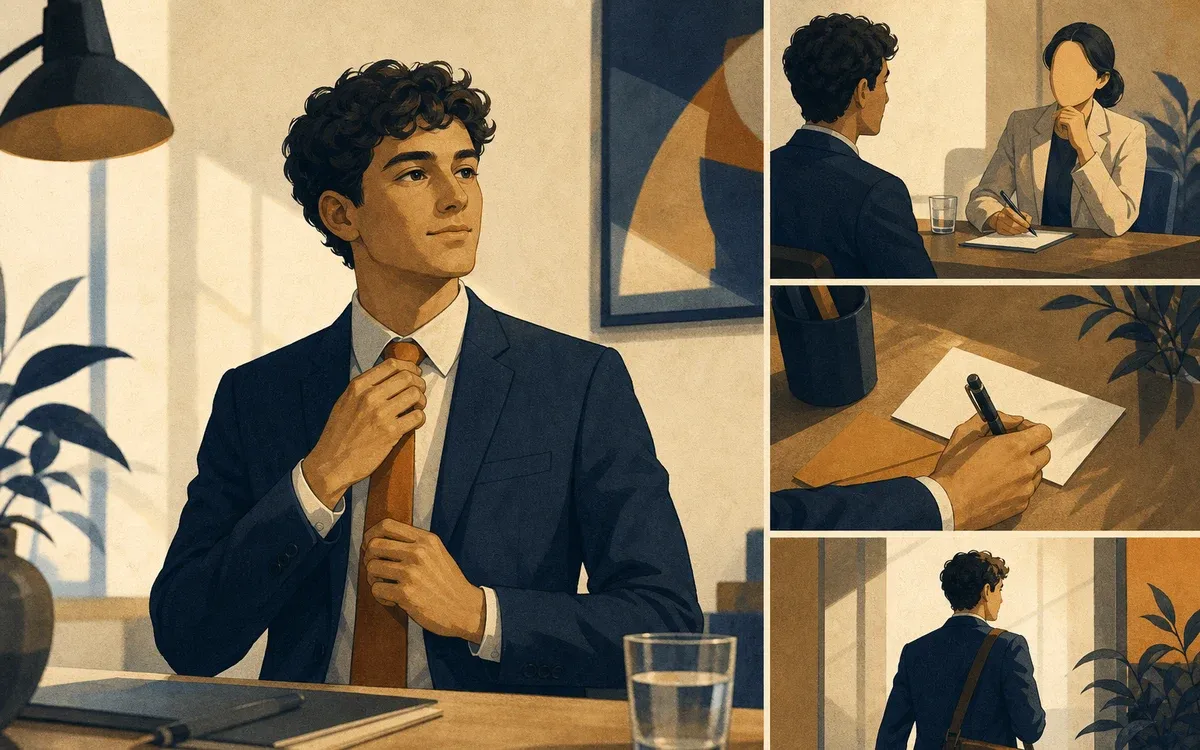
L'entretien du mardi
Yanis, with a crisp tie and calm demeanor, navigates a pivotal interview, leaving a lasting impression with his poised follow-up.
Open story →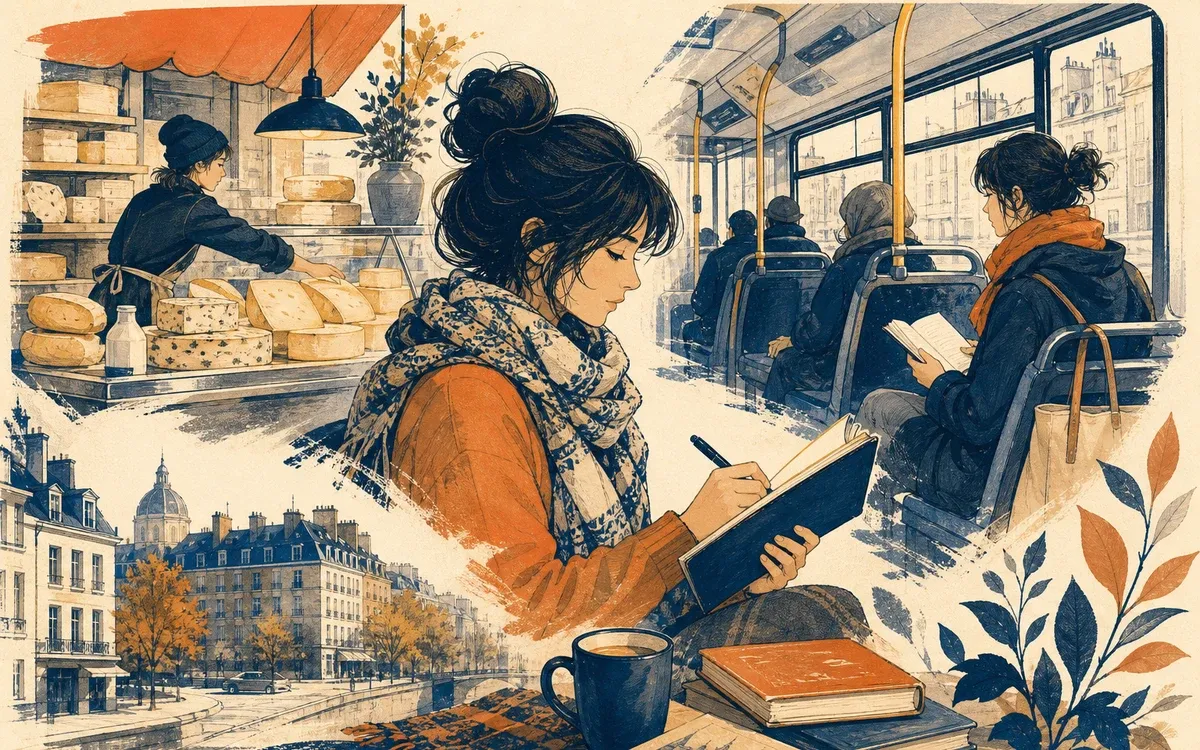
Un Dîner Entre Amis
Julie invites Paul for a cozy dinner. Together, they create a delicious quiche, filling the kitchen with laughter and the aroma of melted cheese.
Open story →Why stories work for beginner French
French beginners benefit from liaison exposure, nasal vowels, and natural sentence melody. Stories let you repeat those patterns inside phrases you already understand.
Articles, gender, and common verb patterns become easier to recognize when they keep appearing in short scenes about food, people, places, and actions.
Method background: story-based language learning research and our editorial policy .
Vocabulary has a scene
French words for food, transit, family, and routines stick better when they belong to a moment instead of a list.
Liaison in context
Linked sounds are easier to notice when you meet them in full sentences rather than isolated pronunciation drills.
Grammar feels less abstract
Gender, articles, and verb endings show up again and again in sentences that already make sense.
Beginner confidence compounds
Finishing a short French story gives you a concrete win and a reason to open the next one.
Beginner reading path
How to use these French stories
1
Read for the scene
Skim the story once for who, where, and what happens. Do not stop for every unknown word on the first pass.
2
Check the translation
Use English support to confirm meaning after you have tried the French text. That keeps the story from becoming a word list.
3
Repeat useful chunks
Pick two or three lines that sound useful, read them aloud, then meet the same patterns again in the next story.
Good first story contexts
A morning bakery scene with simple ordering phrases
A café meet-up with greetings and small talk
A rainy-day museum visit with past-tense cues
A postcard or train trip with travel vocabulary
Related resources
Keep learning French with stories
Learn French with stories
The main French hub explains MeloLingua story sessions, listening practice, and speaking reps.
French reading practice
Leveled A1–B2 passages with glosses and translations — ideal between longer stories.
A1 French stories
Start with absolute beginner stories around bakeries, cafés, family, and daily life.
French story guide
Read the blog guide for more beginner examples and study advice.
Answers
Beginner French Stories — FAQ
Q01Can beginners read French stories?
Can beginners read French stories?
Yes. French is approachable for beginner reading when stories use everyday topics, short sentences, and translation support. Familiar scenes keep liaison-heavy lines manageable.
Q02What kind of French story should I start with?
What kind of French story should I start with?
Start with A1 stories about familiar situations: cafés, family, shopping, travel, or food. Those scenes introduce high-frequency verbs and nouns without forcing advanced grammar too early.
Q03Should I read French with English translation?
Should I read French with English translation?
Use the translation as a check, not as the first step. Try to understand the French paragraph from context, then read the English version to confirm details and review the vocabulary list.
Q04How do French stories help speaking?
How do French stories help speaking?
Stories give you short phrases that are already meaningful. When you repeat useful lines aloud, you practice rhythm, liaison, and common sentence patterns at the same time.
Start here
Beginner French stories on the site
Read a graded story for gist first, then carry the same habit into MeloLingua with native audio, tap-to-translate vocabulary, and speaking drills.