24 free stories · A1–B2 · No account needed
French short stories
A small story, a little more French. Read with English translation and vocabulary close at hand.
Read your first storybeginner · 6 stories
A1 French short stories — 6 beginner readers
Short, concrete scenes built from familiar words and everyday actions.

Le bus du matin
Sophie boards the early bus, hunts for coins in one pocket.
6 glossed words
Read story →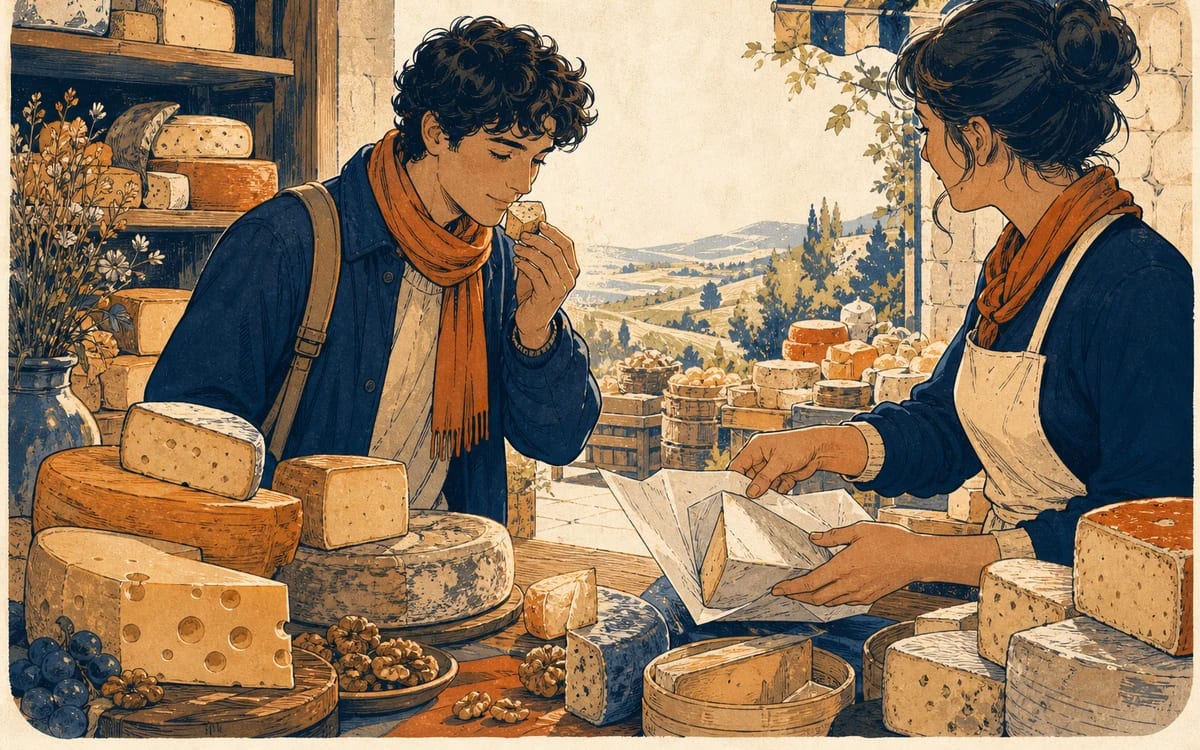
Le fromager du quartier
Noah follows the aroma of cheese, tastes a nutty slice.
4 glossed words
Read story →
Le matin à la boulangerie
Sophie starts her day at the neighborhood bakery.
8 glossed words
Read story →
Le pique-nique au parc
Two friends share a simple Sunday picnic in a Paris park.
4 glossed words
Read story →
Une promenade le long de la Seine
Lucas follows the Seine past bouquiniste boxes and a quiet bateau-mouche.
8 glossed words
Read story →
Une rencontre au café
Marie is sitting at the terrace of a café.
7 glossed words
Read story →elementary · 6 stories
A2 French short stories — 6 elementary readers
Connected events with simple reasons, time phrases, and familiar situations.

Cinq minutes sous la pluie
On a rainy Clichy bus, Nora must choose between helping with a stroller and arriving on time.
9 glossed words
Read story →
L'entretien du mardi
Yanis, with a crisp tie and calm demeanor, navigates a pivotal interview.
6 glossed words
Read story →
Un dîner entre amis
Julie invites Paul for a cozy dinner. Together, they create a delicious quiche.
7 glossed words
Read story →
Un train pour Marseille
A missed station announcement sends Inès to an attendant.
5 glossed words
Read story →
Un week-end à Lyon
Emma spends a weekend in Lyon and discovers the city through food.
6 glossed words
Read story →
Une surprise au bureau
Nadia expects an ordinary workday, but her colleagues have prepared a warm surprise for her.
6 glossed words
Read story →intermediate · 6 stories
B1 French short stories — 6 intermediate readers
Longer plots, wider vocabulary, and enough context to infer unfamiliar language.
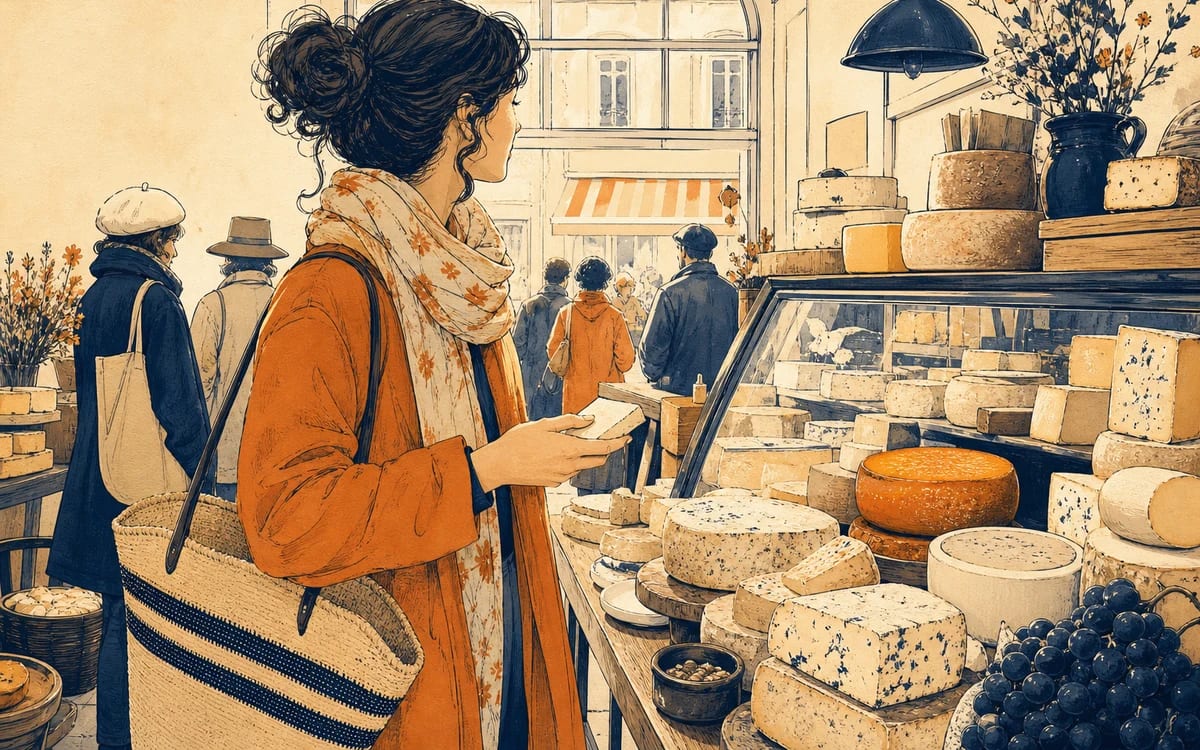
Au marché
Claire navigates a vibrant market, her senses alive.
8 glossed words
Read story →
La rencontre au marché
Two strangers meet at a cheese stall in a Lyon market.
4 glossed words
Read story →
La réunion des anciens
At a class reunion in Brittany, an old photograph forces former classmates to confront.
3 glossed words
Read story →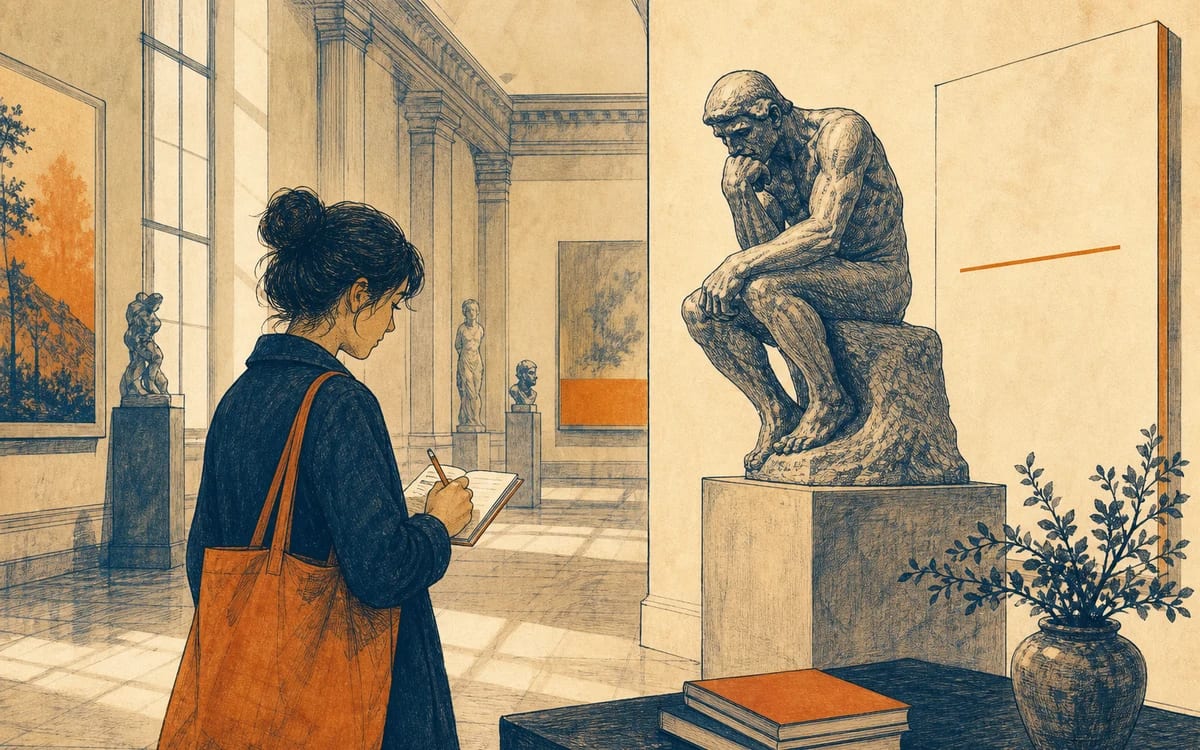
Le musée Rodin en octobre
Sara visits on a grey Tuesday, copies one line from a cartel beside Le Penseur.
6 glossed words
Read story →
Les voisins du dessous
A noise complaint note stuck to the door in a Lyon apartment building leads two neighbors.
4 glossed words
Read story →
Un dimanche en Provence
A solo traveler's plan to see lavender fields is disrupted by an unexpected invitation.
3 glossed words
Read story →upper-intermediate · 6 stories
B2 French short stories — 6 upper-intermediate readers
Denser narration, nuanced viewpoints, and less predictable sentence patterns.
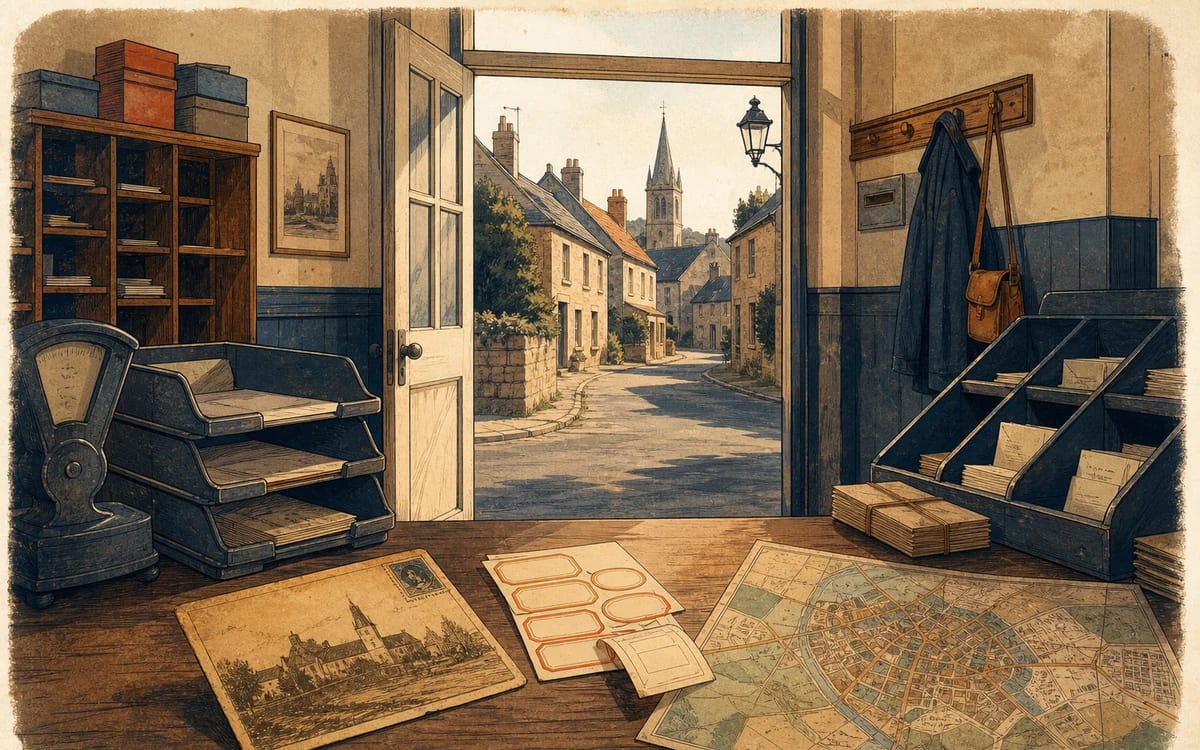
La carte postale
A misdelivered postcard from 1985 leads a postal worker in a small Normandy town to unravel.
3 glossed words
Read story →
La fabrique du souvenir
A granddaughter discovers that her grandmother's paintings in a Montmartre workshop hide.
4 glossed words
Read story →
Le débat en classe
A heated classroom debate about secularism forces a quiet student in a French university.
3 glossed words
Read story →
Le dîner de la discorde
A wine choice at a family dinner in a bourgeois Parisian home escalates into a confrontation.
3 glossed words
Read story →
Le stage qui change tout
A routine internship evaluation reveals a hidden tension between a mentor's advice.
5 glossed words
Read story →
Les coulisses du journal
A junior reporter at a regional newspaper must decide whether to publish a story.
4 glossed words
Read story →Grammar decisions through stories
Choose the right French form inside a real scene
Each guide gives you one decision rule, a narrated micro-story, five explained questions, and a speaking drill. Compare the meanings first, then hear both forms doing different jobs in the same scene.
A2–B1 · narrated story
Passé composé vs imparfait
Use the passé composé for a completed event that advances the plot; use the imparfait for background, habit, description, or an action viewed in progress.
Open the decision labA1–B1 · narrated story
Savoir vs connaître
Use savoir especially before a clause, question word, or infinitive; use connaître for people and familiarity. With some noun objects, either verb can be possible and context decides.
Open the decision labA2–B1 · narrated story
Qui vs que
Use qui when the replaced noun is the subject of the next verb; use que when it is the direct object and a new subject follows.
Open the decision labStarting from zero?
Follow the French A1 path, in order
8 units from "Meet someone" to "Ask for help", with one outcome per unit and the first 2 episodes free.
Choose by learning goal
MeloLingua vs. free French story sites vs. graded readers
MeloLingua is the strongest fit when short supported stories should lead into repeated listening and speaking. Free story sites suit broad browsing, while traditional graded readers are better for longer offline reading.
Swipe to compare →
| Compare | MeloLingua | Free story sites | Traditional graded readers |
|---|---|---|---|
| Reading support | Inline vocabulary, English translation, and a comprehension check across the web library | Varies by site; translations and exercises may be separate or unavailable | Usually a glossary, notes, or exercises elsewhere in the book |
| Level choice | A1 6 · A2 6 · B1 6 · B2 6 | Often uses broad beginner or intermediate labels | Usually one stated level or range per book |
| After the story | Continue with listening, vocabulary review, and speaking practice in the app | Usually self-directed reading; some sites add quizzes or audio | Often includes end-of-chapter questions or activities |
| Best fit | Short, repeatable story practice that can continue in the app | Browsing free texts from a range of publishers and formats | Longer offline reading in a curated sequence |
| Access | 24 web readers are free; the app adds personalized practice | Usually free, sometimes supported by ads or registration | Buy, borrow, or access through a library or course |
Category comparison based on the typical format of each option; individual sites and books vary.
A language-specific reading cue
Read French for meaning first, then for sound
Follow the scene silently before reading a useful line aloud. At A1–A2, this keeps spelling from slowing comprehension; at B1–B2, a second spoken pass helps you notice liaison, pronoun flow, and verb endings without turning the story into a pronunciation drill.
Read the first French storyAnswers
French short stories — FAQ
Q01Are these French short stories free?
Are these French short stories free?
Yes. All 24 French web readers on this page are free to read without an account. The MeloLingua app is a separate experience for personalized stories and continued listening, review, and speaking practice.
Q02Which French story level should I choose?
Which French story level should I choose?
Choose A1 if you need short concrete scenes and frequent support, A2 for connected everyday events, B1 for longer plots with more inference, or B2 for denser language and more nuanced viewpoints.
Q03Do the French stories include English translation?
Do the French stories include English translation?
24 of the 24 readers include English support. Read the French first, then open the translation only when a line blocks your understanding.
Q04How is MeloLingua different from a free story site or graded reader?
How is MeloLingua different from a free story site or graded reader?
This library groups short French stories by CEFR level and keeps vocabulary and translation support close to the text. The app extends the same story-first approach into listening, review, and guided speaking practice.
Learn French through daily stories
MeloLingua turns graded French stories into a daily habit — native audio, tap-to-translate vocabulary, and speaking drills matched to what you read.
More free graded readers
Explore story libraries in five more languages
Keep the same read-for-meaning routine and switch languages. Every library is free to browse, with level guidance and English support.