Le musée Rodin en octobre
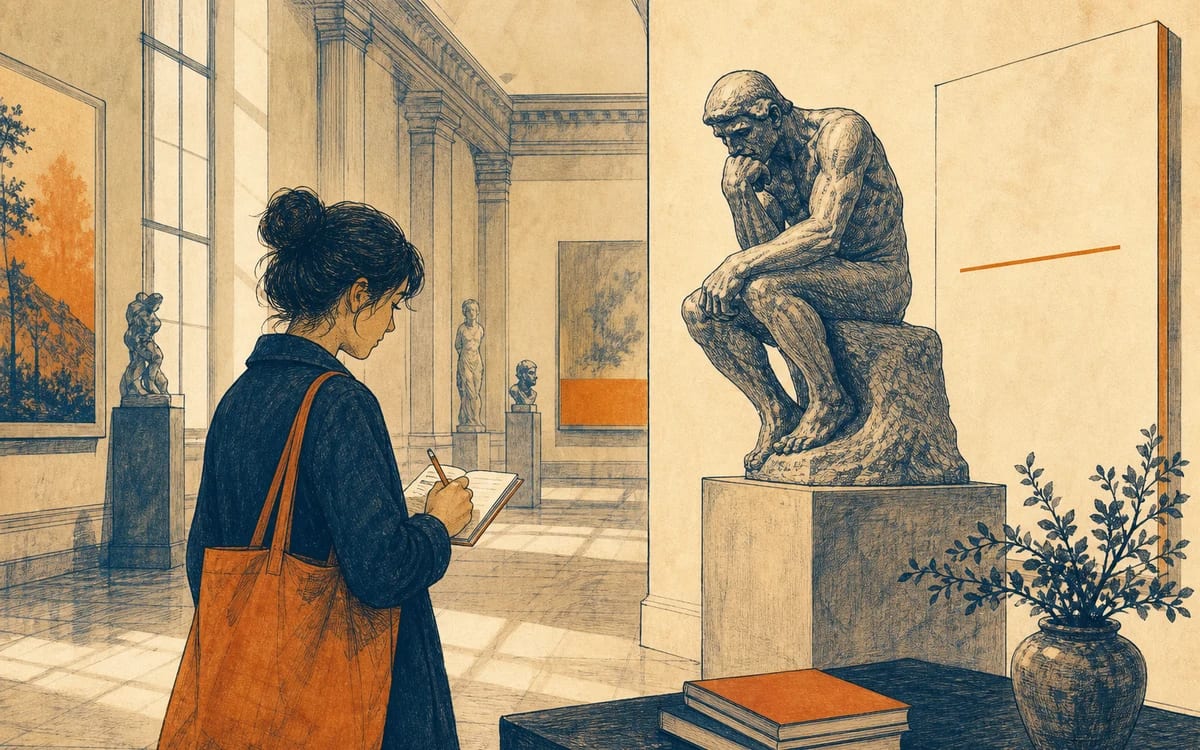
Sara had booked her visit for a rainy Tuesday because she hated queuing when sunny days drew too many people.
What you'll learn
- Bilingual graded story
- Native narration
- 7 useful words
- 3 comprehension questions
Then shadow
Borrow the narrator’s rhythm
Pause after this line and repeat it aloud without translating. Aim for three clean repetitions.
1Listen first
Hear the whole story
Native French narration of this exact text. Keep the transcript visible on the first pass.
Playback speed: Natural
2Then shadow
Sara avait réservé sa visite un mardi pluvieux parce qu'elle détestait faire la queue quand le soleil attirait trop de monde.Warm-up vocabulary
Preview 1 optional words before reading
Your French story
Read along with the narration, and tap any highlighted word for its meaning
Sara avait réservé sa visite un mardi pluvieux parce qu'elle détestait faire la queue quand le soleil attirait trop de monde.
Sara had booked her visit for a rainy Tuesday because she hated queuing when sunny days drew too many people.
Une fine collait les feuilles mortes aux près du mur du Rodin ; elle serrait un parapluie gris et un carnet flambant neuf.
A fine drizzle glued fallen leaves to the cobblestones near the Rodin Museum wall; she clutched a grey umbrella and a brand-new notebook.
À l'intérieur, le semblait encore tiède sous ses doigts effleurant une main sculptée, comme si les gestes anciens pouvaient réchauffer l'hiver avant même novembre.
Inside, the marble felt almost warm under her fingers brushing a sculpted hand, as if ancient gestures could warm the winter before November even arrived.
Elle lisait lentement les bilingues jusqu'à ce qu'elle trouve une phrase sur la patience du matériau—des mots modestes face au tumulte des visites pressées.
She slowly read the bilingual plaques until she found a phrase about the patience of the material—modest words amidst the rush of hurried visits.
Dans le jardin humide, quelques enfants couraient autour du Penseur, mais elle s'est contentée de noter la phrase avant de fermer son carnet.
In the damp garden, a few children ran around the Thinker, but she simply noted the phrase before closing her notebook.
En sortant, elle n'a acheté aucune carte postale : elle préférait garder trois images floues en plutôt qu'un fichier parfait.
As she left, she bought no postcards: she preferred to keep three blurry images in her mind rather than a perfect file.
Elle est rentrée les pieds mouillés en pensant qu'à Paris certains monuments demandent encore le silence avant la photo finale.
She returned home with wet feet, thinking that in Paris, some monuments still demand silence before the final photo.
Le soir, elle a relu la phrase et l'a répétée à voix haute. Sa visite continuait ainsi, dans le silence de sa chambre.
That evening, she reread the sentence and repeated it aloud. In this way, her visit continued in the quiet of her room.
Vocabulary recap
Reading Comprehension Exercise
B1 French Reading Comprehension Exercises
1. Why does Sara choose a rainy Tuesday?
Correct: Because she hates queuing when the sun brings crowds
Sara prefers to visit the museum when there are fewer people, which is often the case on rainy days.
2. What does she write in her notebook?
Correct: A short phrase about the patience of the material
She is touched by a phrase about the patience of the material, which contrasts with the rush of visits.
3. Why doesn't she buy a postcard?
Correct: She prefers blurry images in her memory to a perfect photo
Sara prefers to keep personal and imperfect memories rather than perfect but impersonal images.
Nailed the quiz? Start your own story in MeloLingua →
Line 1 / 8
0:00/–:––
Mini-lesson complete
You understood 3 of 3 questions.
That is 184 real French words read in context.
- ✓ 184 words read
- 7 new expressions
- 2 grammar patterns
- B1 level unlocked
- ○ Narration ready
- 0 shadowing reps
Ready for tomorrow’s story?Hear it, shadow the narrator, and lock these words into memory in MeloLingua.
Start learning with storiesOne story. The whole practice loop.
Reading this story for free is just the first rep. The MeloLingua app turns the same story into a full practice loop — understand every word, speak it back, build sentences, and keep stories coming that match what you actually care about.
| What you get | FreeThis story | Full loopMeloLingua app |
|---|---|---|
| Understand every sentence instantly | Bilingual reader, tap to translate | Interactive reader with word-by-word explanations |
| Know exactly why each word works | Basic translation in context | Translation, grammar, conjugation & usage examples |
| Train your ear with native audio | Studio narration — slow, normal, fast | Listen, follow along, and shadow the narrator |
| Speak like a native while reading | Read aloud on your own | Real-time pronunciation feedback |
| Turn what you read into what you can say | Not included | Build sentences from the story you just read |
| Never forget today's vocabulary | In-story glossary + comprehension quiz | Flashcards & spaced review from story lines |
| Read stories about your real life | Not included | Stories matched to your level and interests |
| Feel yourself improve every day | Not included | Streaks, goals, and your full learning history |
| Result | Enjoy a great story | Actually speak with confidence |
Understand every sentence instantly
Know exactly why each word works
Train your ear with native audio
Speak like a native while reading
Turn what you read into what you can say
Never forget today's vocabulary
Read stories about your real life
Feel yourself improve every day
Result
Make stories aboutyour life
Most language apps hand everyone the same content. MeloLingua lets you create stories around the things you actually enjoy — so staying consistent stops feeling like homework.
- “I love space and cooking”Your story
A chef opens the first restaurant on Mars.
- “I like football and history”Your story
A young striker time-travels to play the legendary teams.
- “I enjoy surfing and travel”Your story
A surfer hunts secret waves across the world.
- “I like Brazilian Jiu-Jitsu and sci-fi”Your story
An astronaut enters the first intergalactic grappling tournament.
Read it. Listen to it. Speak it back. The more it sounds likeyour world, the easier it is to keep going.
Generate your first storyMake it yours
Your next French story is one tap away
Turn today's read into a daily habit — personalized scenes, native audio, tap-to-translate vocabulary, and speaking drills matched to what you just understood.
Keep reading on-site
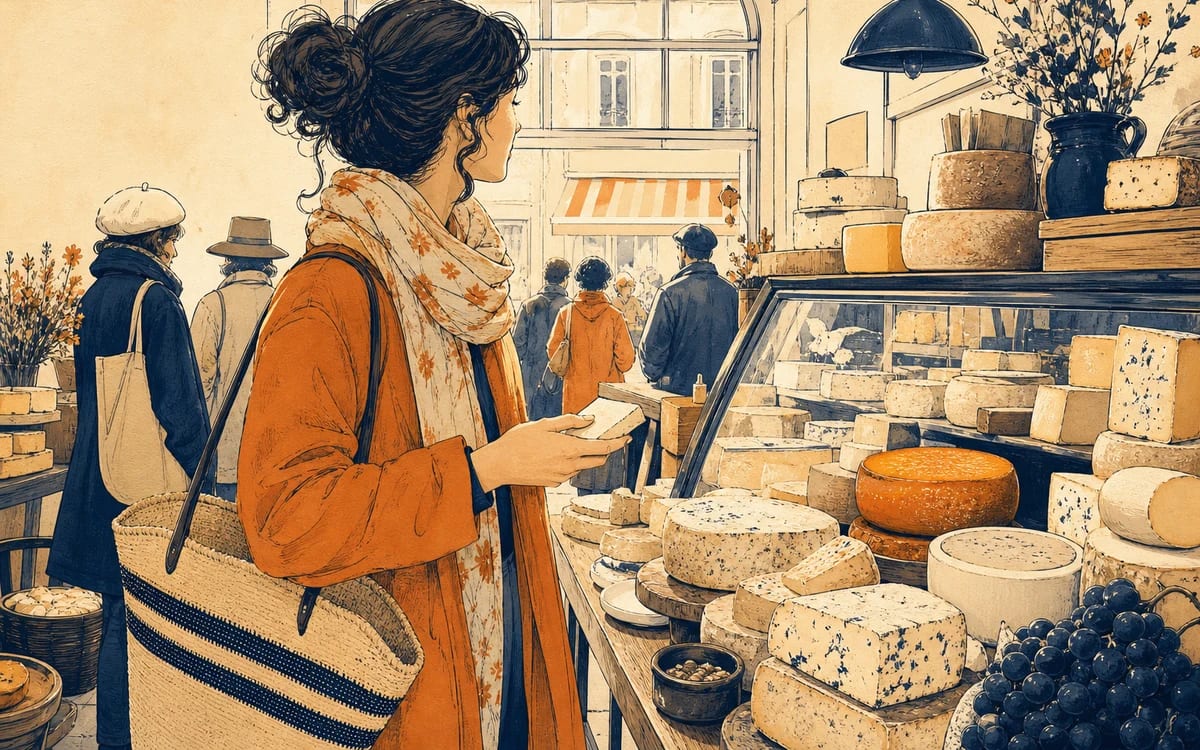
Au marché
Claire navigates a vibrant market, her senses alive with colors and sounds, as she fills her bag with fresh produce and flowers.
Read story →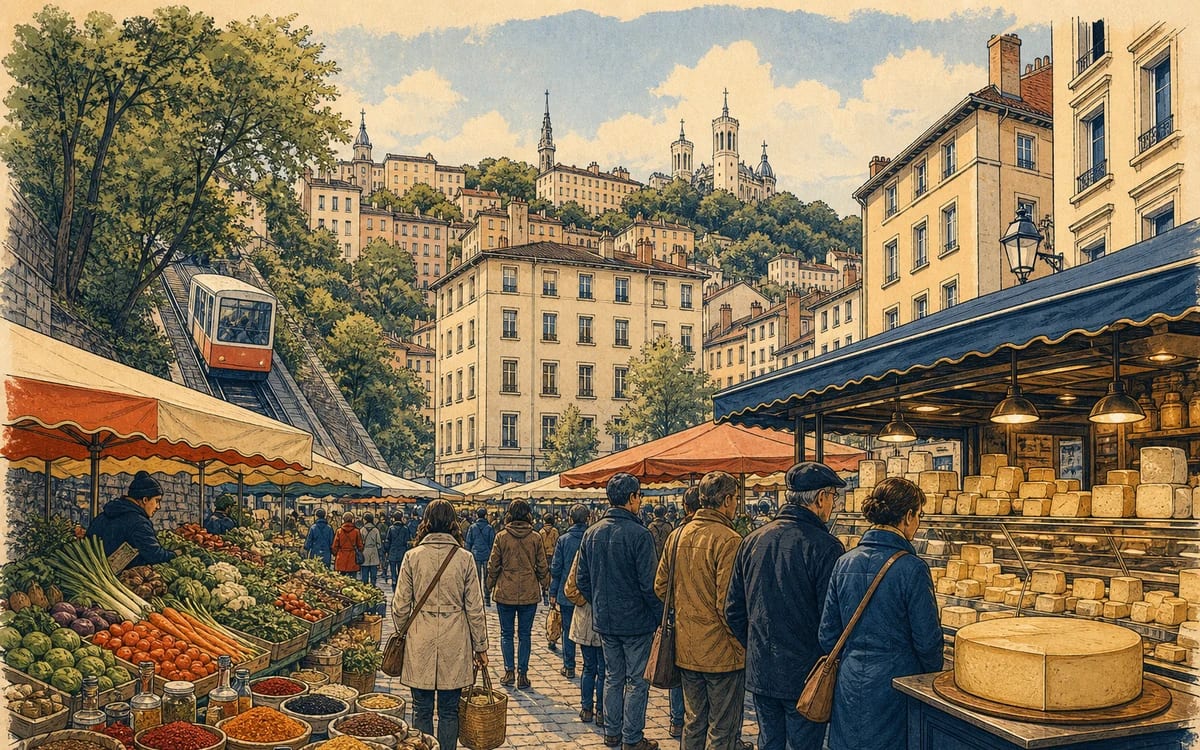
La rencontre au marché
Two strangers meet at a cheese stall in a Lyon market and discover they both want the last portion of Comté.
Read story →
La réunion des anciens
At a class reunion in Brittany, an old photograph forces former classmates to confront a silence they have carried for twenty years.
Read story →