Italian Short Stories — Free A1–B2 Reading Library
MeloLingua is a story-based reader with 25 free Italian short stories from A1 to B2. Begin with café and market scenes, then move into workplace, travel, and cultural narratives. Every reader keeps Italian first, with inline vocabulary and English translation available when meaning breaks down, plus a comprehension check to confirm what you understood.
25 free stories4 CEFR levels1–3 minutes eachEnglish support in every reader
Written by our language team · How we write comparisons · Research & statistics
Updated
Starting from zero?
Follow the Italian A1 path, in order
8 units from "Meet someone" to "Solve a small problem", with one outcome per unit and the first 2 episodes free.
Grammar decisions through stories
Choose the right Italian form inside a real scene
Each guide gives you one decision rule, a narrated micro-story, five explained questions, and a speaking drill. Compare the meanings first, then hear both forms doing different jobs in the same scene.
A2–B1 · narrated story
Passato prossimo vs imperfetto
Use the passato prossimo for a completed event viewed as a whole; use the imperfetto for background, habit, description, or an action viewed while it was unfolding.
Open the decision labA2–B1 · narrated story
Essere vs avere
Use avere with transitive verbs and many activities; use essere with all reflexive verbs and a core group of intransitive movement, arrival, change, and state verbs — then make the participle agree with the subject.
Open the decision labA1–B1 · narrated story
Sapere vs conoscere
Use sapere for facts, answers, and knowing how; use conoscere for people, places, works, and subjects you know through familiarity or experience.
Open the decision labStart at the right depth
Choose your Italian story level
Start where you can follow the event without translating every line. Move up when the plot flows and support becomes occasional.
beginner
A1 stories
Short, concrete scenes built from familiar words and everyday actions.
Browse A1 Italian storieselementary
A2 stories
Connected events with simple reasons, time phrases, and familiar situations.
Browse A2 Italian storiesintermediate
B1 stories
Longer plots, wider vocabulary, and enough context to infer unfamiliar language.
Browse B1 Italian storiesupper-intermediate
B2 stories
Denser narration, nuanced viewpoints, and less predictable sentence patterns.
Browse B2 Italian storiesbeginner · 6 stories
A1 Italian short stories — 6 beginner readers
Short, concrete scenes built from familiar words and everyday actions.

Al Mercato
Giulia strolls through the vibrant stalls of Campo de' Fiori.
6 glossed words
Read story →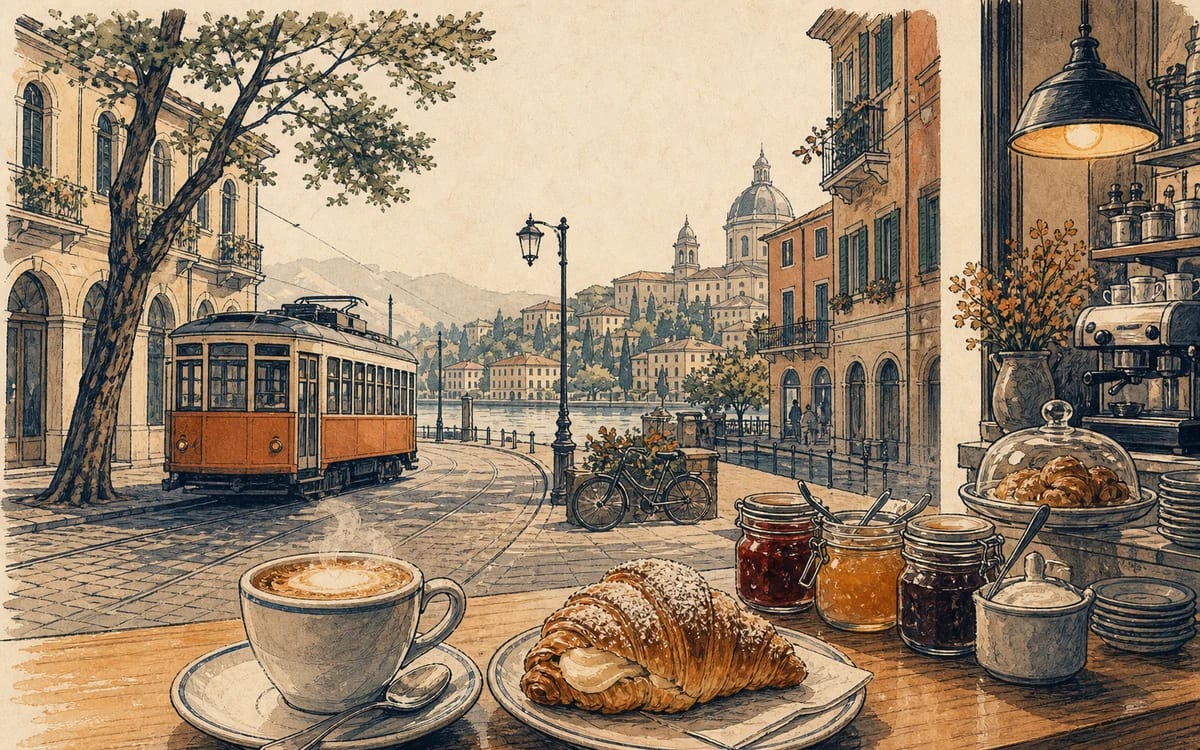
La Colazione da Marta
A regular customer's usual order is accidentally swapped.
5 glossed words
Read story →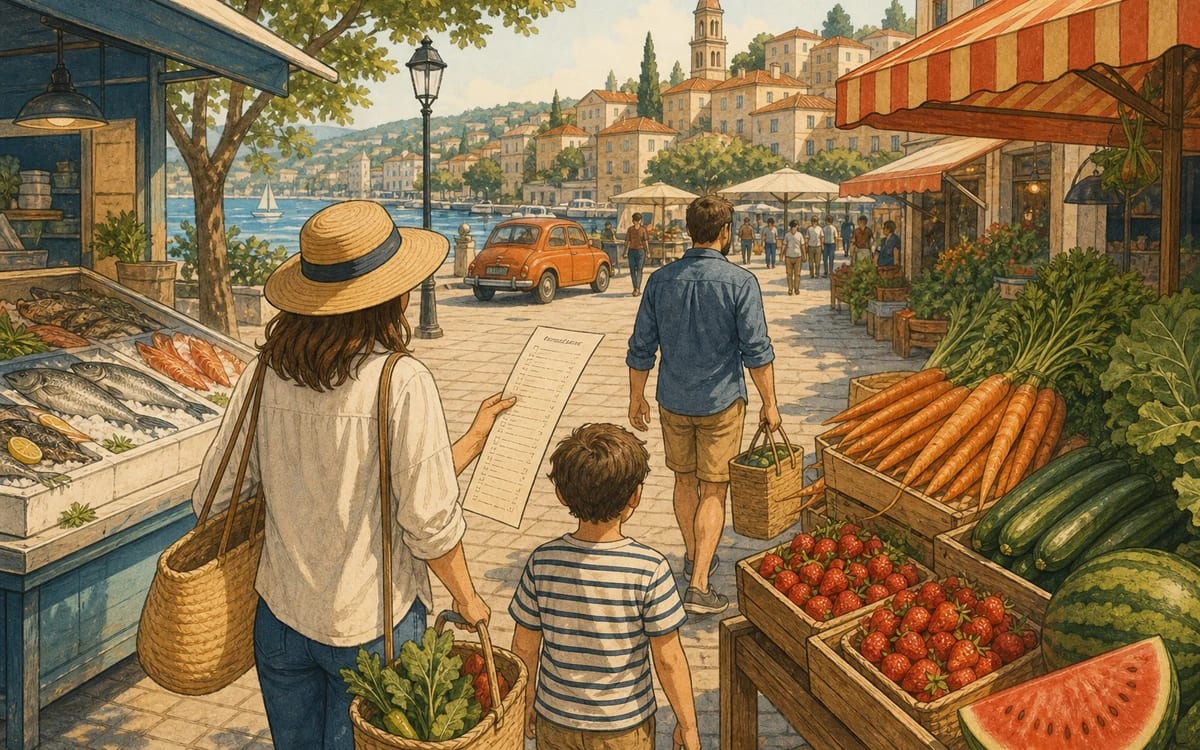
La Gita al Mercato
A child's shopping list turns a routine errand into a negotiation.
5 glossed words
Read story →
La pizzeria di quartiere
Matteo scivola nella pizzeria di quartiere, dove il profumo di basilico e crosta dorata lo.
5 glossed words
Read story →
Una domenica al parco
Giulia spreads a blanket beside the duck pond, trades quiet chat.
6 glossed words
Read story →
Una Passeggiata a Roma
A tourist trying to find the Trevi Fountain learns more from getting lost than from the map.
4 glossed words
Read story →elementary · 7 stories
A2 Italian short stories — 7 elementary readers
Connected events with simple reasons, time phrases, and familiar situations.

Cena alla pizzeria
Marco prenota un tavolo, chiede consigli educati alla cameriera e assapora una margherita.
6 glossed words
Read story →
Domenica al parco
Matteo e Lucia camminano con Leo vicino al laghetto.
6 glossed words
Read story →
Il colloquio di lavoro
Elena walks HR through two shipped projects, answers remote-team cadence without buzzwords.
4 glossed words
Read story →
Il Corso di Cucina
Marco joins a cooking class and discovers that culinary mishaps can lead to delightful.
6 glossed words
Read story →
Il Gelato Perfetto
It's a hot summer afternoon. Sofia walks through the streets of Florence.
6 glossed words
Read story →
Una Gita a Firenze
Giulia spends a day in Florence, exploring its hidden gems.
6 glossed words
Read story →
Weekend a Venezia
Chiara e Tommaso arrivano a Venezia per un weekend avventuroso.
6 glossed words
Read story →intermediate · 6 stories
B1 Italian short stories — 6 intermediate readers
Longer plots, wider vocabulary, and enough context to infer unfamiliar language.

Colloquio per lo stage
Giulia arriva in anticipo, spiega progetti universitari e mediazione di gruppo.
5 glossed words
Read story →
Il Caffè della Mattina
Every morning, Marco wakes up at seven. He gets dressed quickly and leaves the house.
6 glossed words
Read story →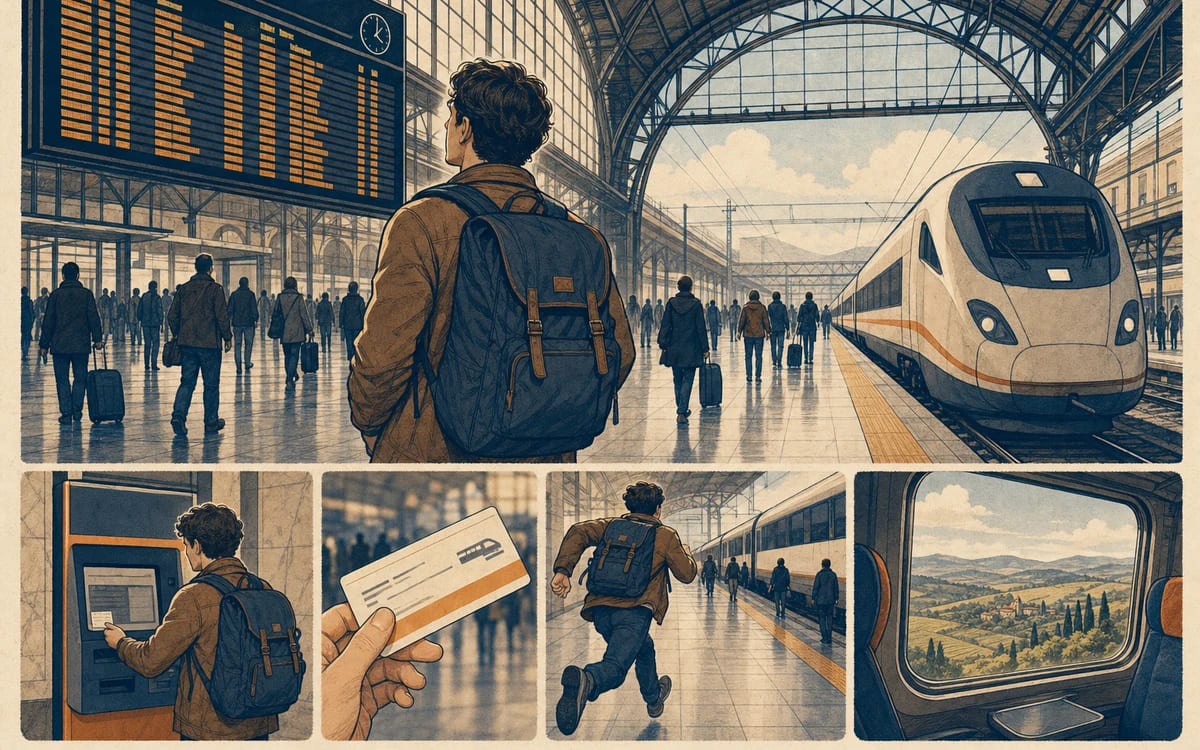
In Treno verso Firenze
Luca embarks on a train journey from bustling Rome to the enchanting city of Florence.
6 glossed words
Read story →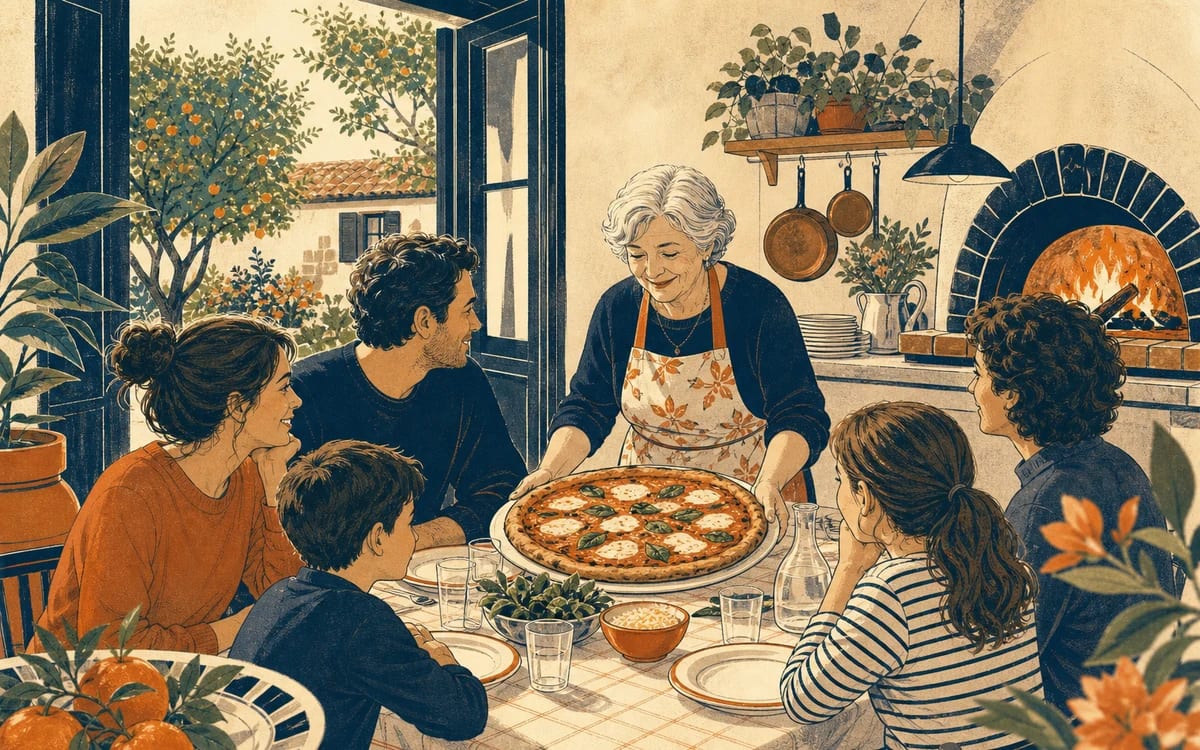
La Cena della Nonna
Every Sunday, the Rossi family gathers at Nonna Teresa's cozy home for a feast filled.
6 glossed words
Read story →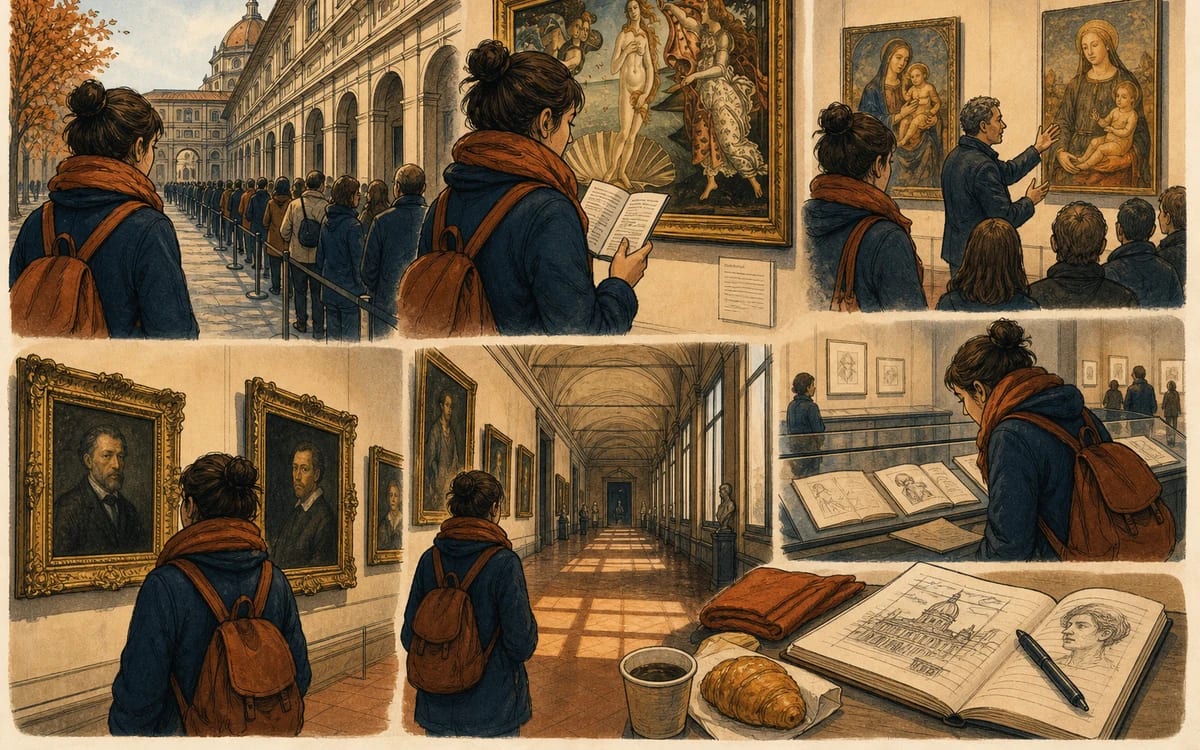
Una visita agli Uffizi
Sofia naviga tra le sale degli Uffizi, scoprendo il fascino delle didascalie e il mistero.
6 glossed words
Read story →
Visita serale al museo
Alessandro esplora un museo al crepuscolo, tra statue antiche.
6 glossed words
Read story →upper-intermediate · 6 stories
B2 Italian short stories — 6 upper-intermediate readers
Denser narration, nuanced viewpoints, and less predictable sentence patterns.

Il Condominio del Sabato
A dispute about the courtyard garden at a Roman palazzo exposes a deeper rift between old.
4 glossed words
Read story →
Il Convegno a Milano
A young architect's presentation is upstaged by a colleague.
4 glossed words
Read story →
Il Posto Vacante
A job interview at a Bologna publishing house reveals that the position may not be what.
4 glossed words
Read story →
La Bottiglia di Barolo
An expensive bottle of Barolo tastes wrong at a Piedmont wine tasting .
4 glossed words
Read story →
La Notte della Lirica
A music critic discovers that the soprano's flawless performance at La Scala hides.
3 glossed words
Read story →
Lo Scambio
A house swap between Rome and Palermo goes wrong when one family arrives early.
4 glossed words
Read story →Choose by learning goal
MeloLingua vs. free Italian story sites vs. graded readers
MeloLingua is the strongest fit when short supported stories should lead into repeated listening and speaking. Free story sites suit broad browsing, while traditional graded readers are better for longer offline reading.
Swipe to compare →
| Compare | MeloLingua | Free story sites | Traditional graded readers |
|---|---|---|---|
| Reading support | Inline vocabulary, English translation, and a comprehension check across the web library | Varies by site; translations and exercises may be separate or unavailable | Usually a glossary, notes, or exercises elsewhere in the book |
| Level choice | A1 6 · A2 7 · B1 6 · B2 6 | Often uses broad beginner or intermediate labels | Usually one stated level or range per book |
| After the story | Continue with listening, vocabulary review, and speaking practice in the app | Usually self-directed reading; some sites add quizzes or audio | Often includes end-of-chapter questions or activities |
| Best fit | Short, repeatable story practice that can continue in the app | Browsing free texts from a range of publishers and formats | Longer offline reading in a curated sequence |
| Access | 25 web readers are free; the app adds personalized practice | Usually free, sometimes supported by ads or registration | Buy, borrow, or access through a library or course |
Category comparison based on the typical format of each option; individual sites and books vary.
A language-specific reading cue
Use Italian rhythm to hold the sentence together
Read the whole line before isolating an unfamiliar form. At A1–A2, articles and verb endings reveal the basic relationships; at B1–B2, rereading aloud helps pronouns, elision, and connected clauses feel like one thought instead of separate grammar problems.
Read the first Italian storyAnswers
Italian short stories — FAQ
Q01Are these Italian short stories free?
Are these Italian short stories free?
Yes. All 25 Italian web readers on this page are free to read without an account. The MeloLingua app is a separate experience for personalized stories and continued listening, review, and speaking practice.
Q02Which Italian story level should I choose?
Which Italian story level should I choose?
Choose A1 if you need short concrete scenes and frequent support, A2 for connected everyday events, B1 for longer plots with more inference, or B2 for denser language and more nuanced viewpoints.
Q03Do the Italian stories include English translation?
Do the Italian stories include English translation?
25 of the 25 readers include English support. Read the Italian first, then open the translation only when a line blocks your understanding.
Q04How is MeloLingua different from a free story site or graded reader?
How is MeloLingua different from a free story site or graded reader?
This library groups short Italian stories by CEFR level and keeps vocabulary and translation support close to the text. The app extends the same story-first approach into listening, review, and guided speaking practice.
Learn Italian through daily stories
MeloLingua turns graded Italian stories into a daily habit — native audio, tap-to-translate vocabulary, and speaking drills matched to what you read.
More free graded readers
Explore story libraries in five more languages
Keep the same read-for-meaning routine and switch languages. Every library is free to browse, with level guidance and English support.