Spanish Daily Life Stories You Can Actually Use
Daily life stories turn ordinary moments into practical Spanish input: greetings, errands, food, neighbors, work routines, and the small phrases that make conversation feel natural.
Read in Spanish, then check the full English line
Try the story
Tap underlined words for a short gloss. Open the translation panel when you want the full English paragraph, then work through the comprehension prompts.
Un Recado Antes del Trabajo
Lucia has ten minutes before work, but she still needs bread, coffee, and a quick chat at the corner store.
2 min read
Lucia las escaleras con una en la mano.
En la esquina, saluda al y dos barras pequeñas.
El panadero le pregunta si quiere , porque ya conoce su .
Lucia mira el , sonrie y dice: "Solo si es ."
Sale de la tienda con el listo y llega al trabajo tranquila.
Show English Translation
Lucia walks down the stairs with a cloth bag in her hand. On the corner, she greets the baker and asks for two small loaves. The baker asks her if she wants coffee because he already knows her routine. Lucia looks at the clock, smiles, and says: "Only if it is to go." She leaves the shop with breakfast ready and arrives at work calmly.
Comprehension Questions
1. ¿Qué pide Lucia al panadero?
Correct: Dos barras pequeñas
Correct: dos barras pequeñas. The second line states that she greets the baker "y pide dos barras pequeñas."
2. ¿Por qué el panadero ofrece café?
Correct: Porque ya conoce la rutina de Lucia
Correct: porque ya conoce su rutina. The baker asks about coffee explicitly because “ya conoce su rutina,” showing he remembers her habits.
3. En la frase "Solo si es para llevar", ¿qué idea expresa mejor para llevar?
Correct: Llevar la bebida consigo
Correct: llevar la bebida consigo. In context Lucia is rushing to work and limits coffee to takeaway, matching “solo si es para llevar.”
4. ¿Con qué tono llega Lucia al trabajo al final?
Correct: Tranquila y lista
Correct: tranquila y lista. The closing line notes she leaves with breakfast ready “y llega al trabajo tranquila,” signaling calm preparedness.
Vocabulary recap
Stories in this theme
Spanish Daily Life stories to read

El Café de la Mañana
María’s seven-o’clock coffee, toast with jam, and open window turn an ordinary morning into a small ritual before work.
Open story →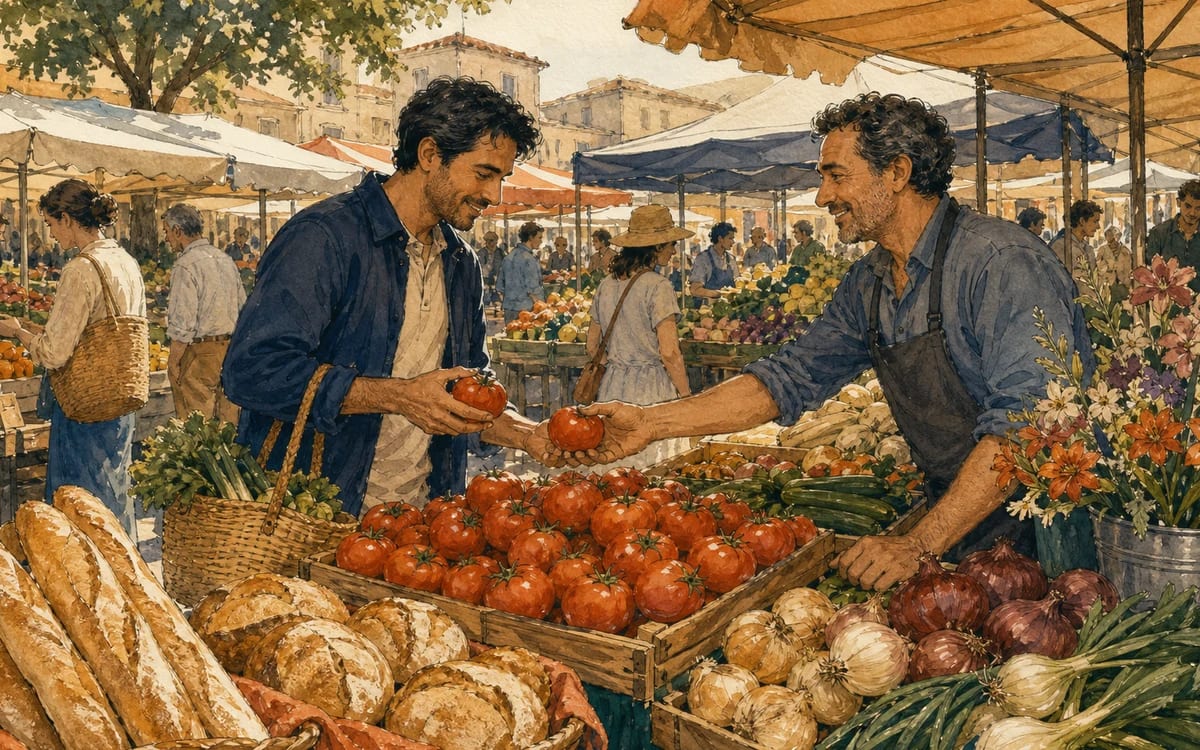
El Mercado
Pedro visits a bustling market on a vibrant Saturday morning, seeking fresh ingredients for a delicious homemade soup.
Open story →
El Parque
While Sofía reads on a park bench, Max finds new playmates—and a young visitor who wants to pet him.
Open story →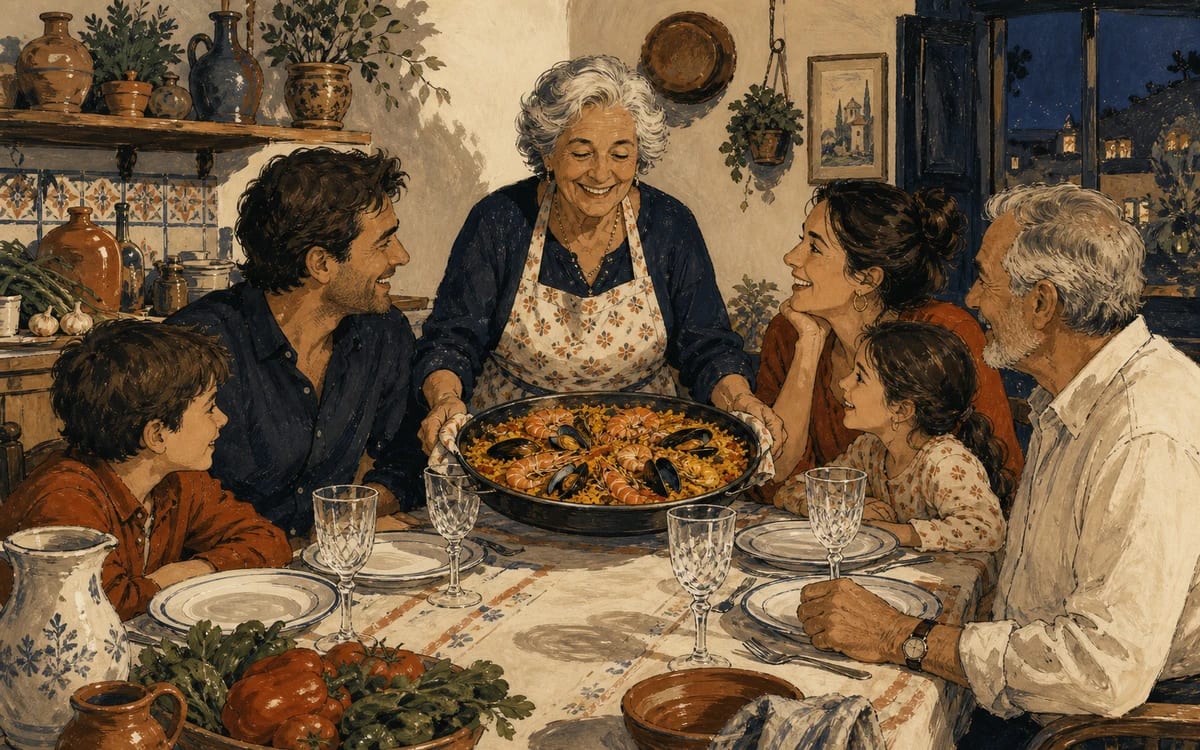
La Cena
Grandmother’s seafood paella brings the Rodríguez family to a table set with crystal glasses and stories from the day.
Open story →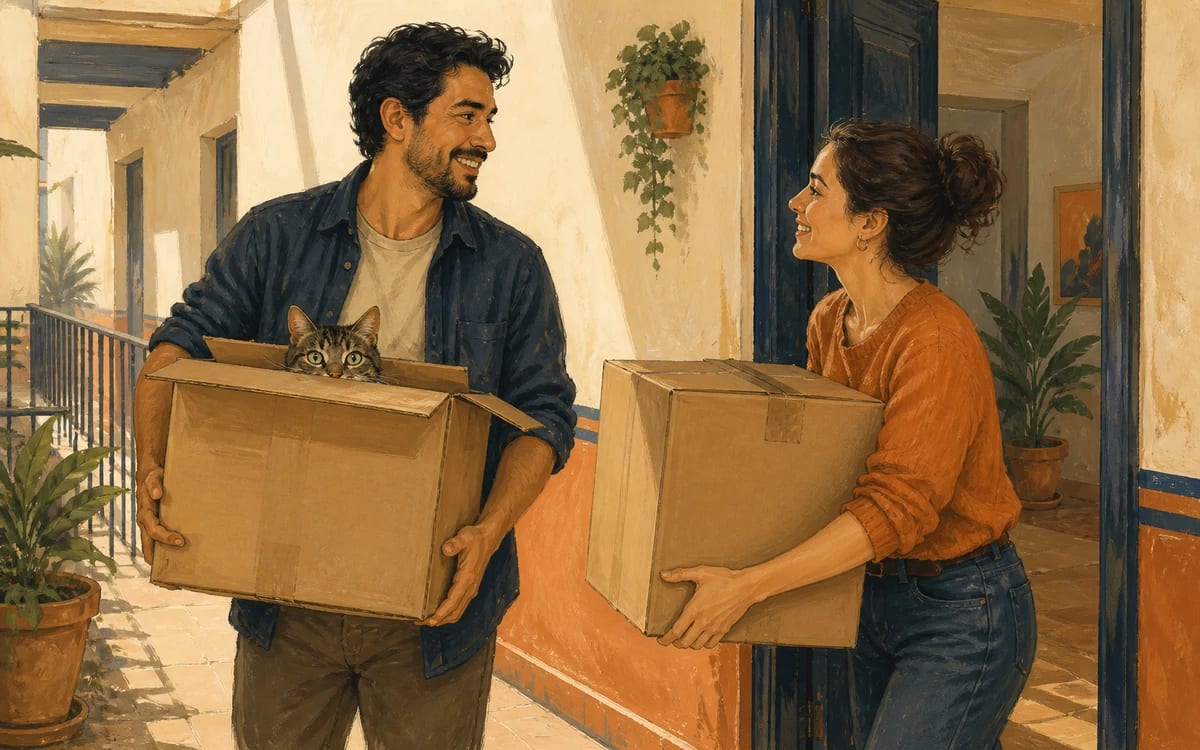
Mi Nuevo Vecino
Carlos arrives with moving boxes and a curious green-eyed cat; Ana’s help turns an apartment hallway into the start of a friendship.
Open story →
Una llamada a mamá
After a tiring day, a short call from his mother gives Marcos the energy to make dinner.
Open story →
El Viaje en Tren
Mateo embarks on a train journey to Valencia, discovering unexpected connections and the art of patience along the way.
Open story →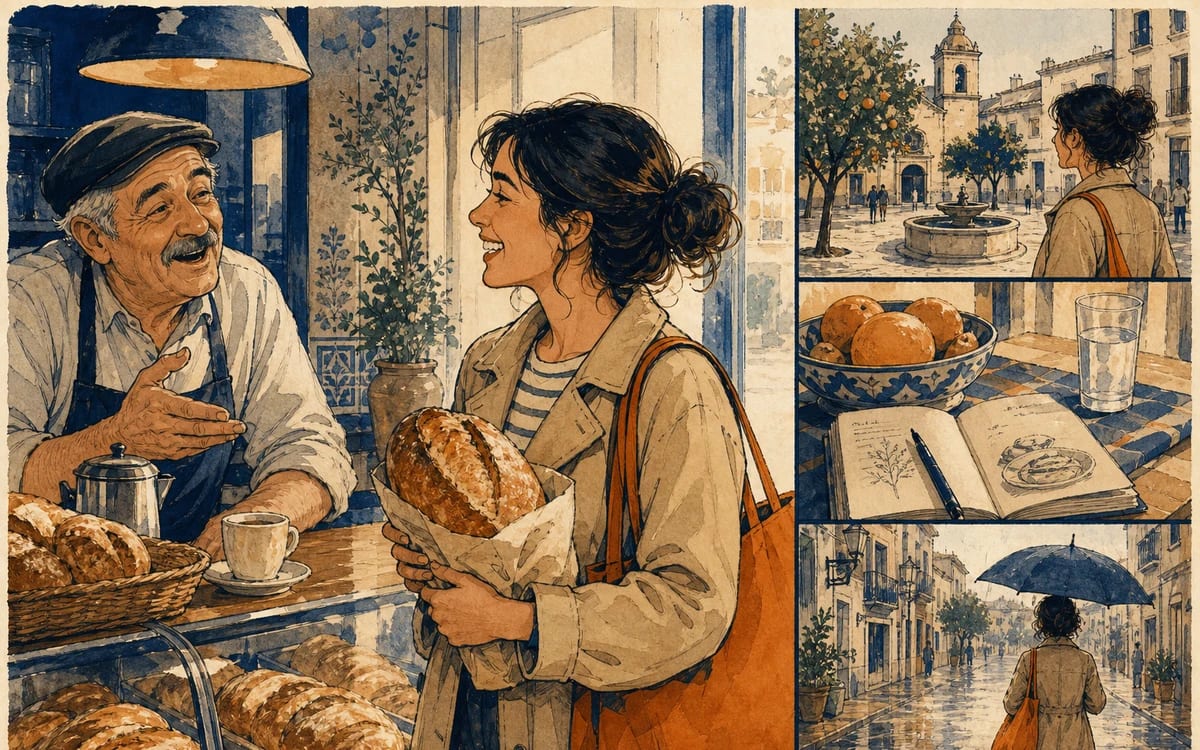
La Panadería del Sábado
Sofía goes out early for crusty bread, trades jokes with Don Ramón at the plaza bakery, and walks home through light rain with a simpler plan.
Open story →
La cola en el banco
Ana joins a long bank queue in Madrid and overhears a conversation that changes her rushed morning into something unexpected.
Open story →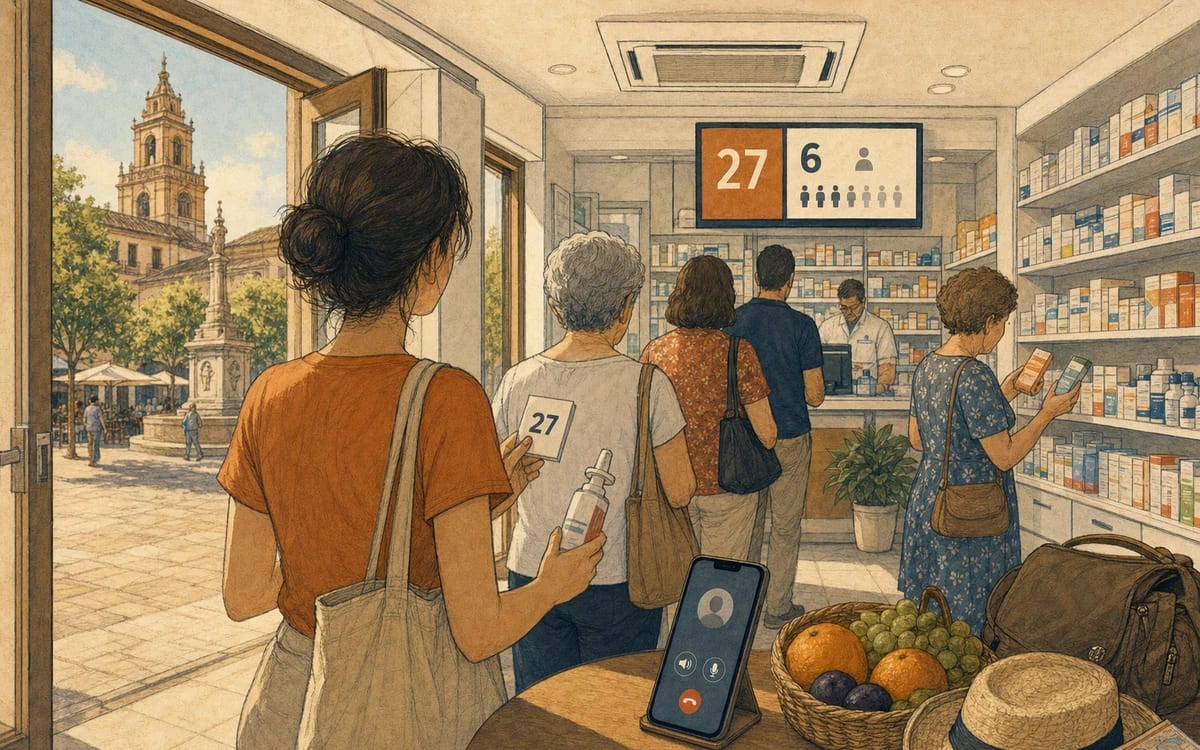
La fila en la farmacia
In Seville's pharmacy queue, Elena buys nasal spray while her mother on speaker and a stranger warn about the midday sun.
Open story →
El ascensor que no llega
A broken elevator in a Buenos Aires apartment building forces two neighbors from different generations into an unexpected conversation that changes their view of each other.
Open story →Answers
Spanish Daily Life stories — FAQ
Q01What is the Daily Life theme on MeloLingua?
What is the Daily Life theme on MeloLingua?
Daily life stories turn ordinary moments into practical Spanish input: greetings, errands, food, neighbors, work routines, and the small phrases that make conversation feel natural. You can read a sample story on this page with glossed vocabulary and comprehension prompts before continuing in the app.
Q02What level is this Spanish story sample?
What level is this Spanish story sample?
This sample is labeled A1-A2 and takes about 2 min read. Open related stories below to compare levels in the same theme.
Q03How should I read this Spanish story sample?
How should I read this Spanish story sample?
Read for gist first, tap underlined words only when meaning is blocked, then open the English line to confirm. Finish with the comprehension prompts before moving to the next story.
Q04Are there more Spanish stories in this theme?
Are there more Spanish stories in this theme?
Yes. Browse the story list at the bottom of this page or return to the main Spanish page for level-based libraries and reading practice.
Q05Can I continue this theme in the MeloLingua app?
Can I continue this theme in the MeloLingua app?
Yes. The app adds native audio, shadow and speak drills, vocabulary review, and daily sessions tied to the stories you finish.
Keep the session going
Continue learning Spanish through your own stories
Read the sample here, then continue with native audio, shadow and speak drills, vocabulary review, and progress tied to the stories you finish.