Spanish Travel Stories for Real Trips
Travel stories put language into movement: train stations, hotel desks, street questions, small surprises, and the confidence to keep going in Spanish.
Read in Spanish, then check the full English line
Try the story
Tap underlined words for a short gloss. Open the translation panel when you want the full English paragraph, then work through the comprehension prompts.
El Tren a Granada
Nico misses an announcement at the station, then uses Spanish to find the right platform before the train leaves.
2 min read
Nico llega a la con una mochila y un en el bolsillo.
No entiende el , asi que pregunta: "Donde esta el seis?"
Una mujer a la izquierda y le dice que todavia tiene tiempo.
En el tren, Nico mira las y escribe nuevas palabras en su .
Cuando llega a Granada, ya sabe pedir sin cambiar al ingles.
Show English Translation
Nico arrives at the station with a backpack and a ticket in his pocket. He does not understand the announcement, so he asks: "Where is platform six?" A woman points to the left and tells him that he still has time. On the train, Nico looks at the mountains and writes new words in his notebook. When he arrives in Granada, he already knows how to ask for help without switching to English.
Comprehension Questions
1. ¿Por qué Nico tiene que hacer una pregunta en la estación?
Correct: Porque no entiende el anuncio
Correct: incomprensible announcement. He asks after admitting “No entiende el anuncio,” triggering the directional question.
2. ¿Qué pregunta Nico después del anuncio?
Correct: ¿Dónde está el andén seis?
Correct: ubicación del andén. Dialogue quotes "¿Dónde está el andén seis?” exactly.
3. ¿Qué aprende Nico dentro del vagón?
Correct: A anotar palabras nuevas mientras observa el paisaje
Correct: estudia vocabulario en movimiento. The fourth line mentions writing “nuevas palabras en su cuaderno.”
4. ¿Cuál es el resultado de su viaje al llegar a Granada?
Correct: Ya pide ayuda sin cambiar a inglés
Correct: español suficiente. Final line reinforces he llega knowing how “pedir ayuda sin cambiar al ingles.”
Vocabulary recap
Stories in this theme
Spanish Travel stories to read

El Viaje en Tren
Mateo embarks on a train journey to Valencia, discovering unexpected connections and the art of patience along the way.
Open story →
Fin de semana en Granada
Laura combines a squeaky suitcase, a hillside mirador, and a slow breakfast to learn Granada one staircase at a time.
Open story →
El puente de septiembre
A planned beach weekend in Cádiz turns into an unexpected exploration of a hidden cove when rain forces two friends off the sand.
Open story →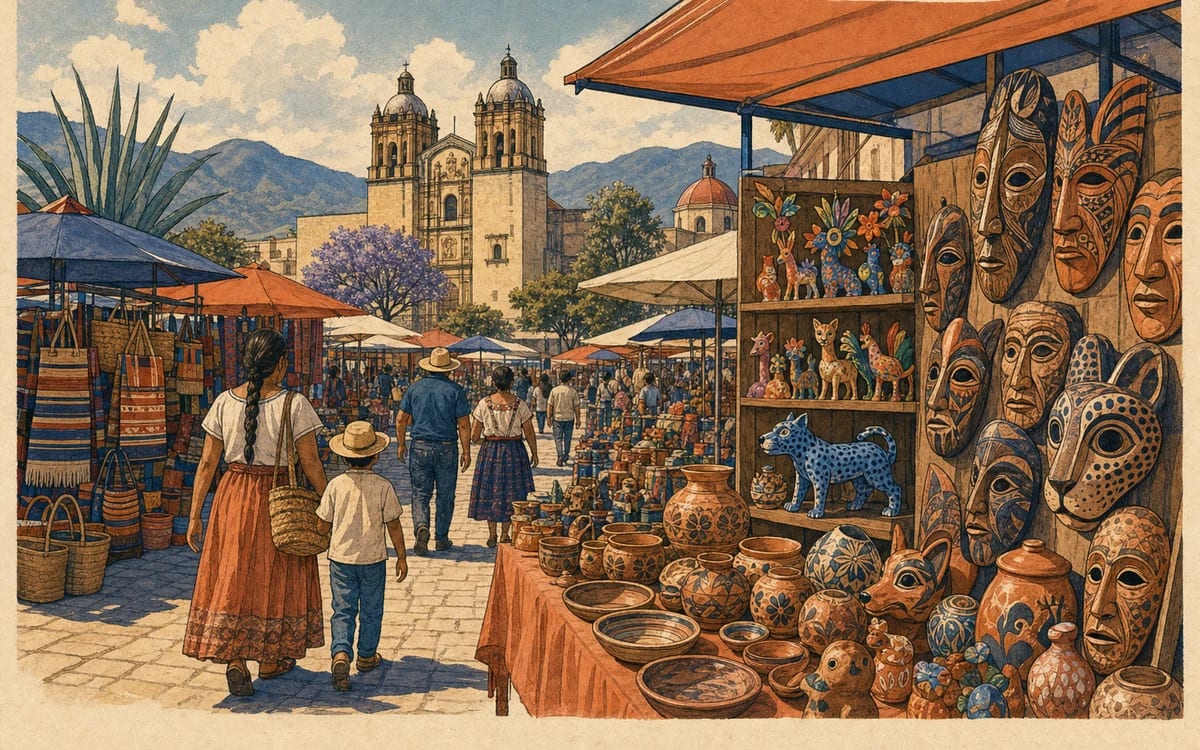
El mercado de artesanos
A visitor at an Oaxaca artisan market discovers that a seemingly simple ceramic piece carries a story her local guide won't translate.
Open story →
El vuelo reprogramado
After his flight is cancelled at the airport, Pablo goes to Atocha to book a train and bus route to Lisbon.
Open story →Answers
Spanish Travel stories — FAQ
Q01What is the Travel theme on MeloLingua?
What is the Travel theme on MeloLingua?
Travel stories put language into movement: train stations, hotel desks, street questions, small surprises, and the confidence to keep going in Spanish. You can read a sample story on this page with glossed vocabulary and comprehension prompts before continuing in the app.
Q02What level is this Spanish story sample?
What level is this Spanish story sample?
This sample is labeled A1-A2 and takes about 2 min read. Open related stories below to compare levels in the same theme.
Q03How should I read this Spanish story sample?
How should I read this Spanish story sample?
Read for gist first, tap underlined words only when meaning is blocked, then open the English line to confirm. Finish with the comprehension prompts before moving to the next story.
Q04Are there more Spanish stories in this theme?
Are there more Spanish stories in this theme?
Yes. Browse the story list at the bottom of this page or return to the main Spanish page for level-based libraries and reading practice.
Q05Can I continue this theme in the MeloLingua app?
Can I continue this theme in the MeloLingua app?
Yes. The app adds native audio, shadow and speak drills, vocabulary review, and daily sessions tied to the stories you finish.
Keep the session going
Continue learning Spanish through your own stories
Read the sample here, then continue with native audio, shadow and speak drills, vocabulary review, and progress tied to the stories you finish.