ハイライトされた単語をタップすると意味が表示され、どの単語もタップして保存できます。
When Hyun-woo was a boy in Busan, parents at his school stand at the back of the classroom and .
ヒョヌが釜山で子どもだったころ、彼の学校では、保護者は教室の後ろに立って、ほとんど何も話さないものだった。
So at Back-to-School Night at his son’s school in Chicago, he sat in a chair and waited for someone to tell him what to do.
だから、シカゴにある息子の学校の新学期の保護者会で、彼は小さないすに座り、何をすればいいかだれかが教えてくれるのを待っていた。
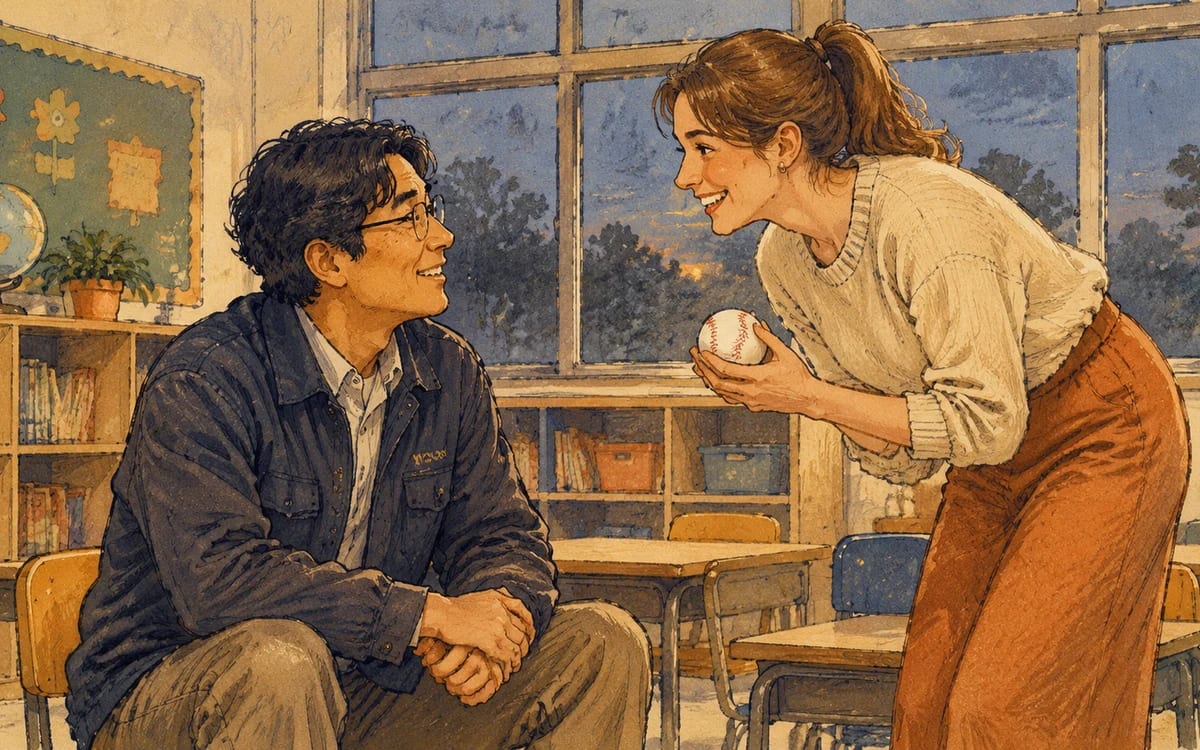
The teacher, Ms. Rivera, sat down next to him. “Mr. Park, Jun-ho a lot. You used to play baseball, right?”
リベラ先生が、彼の隣に腰を下ろした。「パクさん、ジュノくんはよくお父さんの話をしてくれますよ。以前、野球をなさっていたんですよね?」
He was . “Yes, I used to play every weekend. I don’t have time .”
彼は驚いた。「はい、以前は毎週末やっていました。今はもう時間がなくて」
“Jun-ho is quiet in class,” she said, “but on the he’s different. He explains the to the other kids.”
「ジュノくんは授業中はおとなしいんです」と先生は言った。「でも、グラウンドに出ると別人のようです。ほかの子たちにルールを説明してあげるんですよ」
She asked what they did at home to help with reading. Hyun-woo that they didn’t read together much: he , and reading in English was still hard for him.
先生は、読む力をつけるために家で何をしているかをたずねた。ヒョヌは、あまりいっしょに本を読んでいないことを打ち明けた。仕事で帰りが遅く、英語で読むのは彼にとってまだ難しかったのだ。
“That’s fine,” said Ms. Rivera. “ in Korean. Kids who read at home in any language usually read better in English too.”
「それでかまいませんよ」とリベラ先生は言った。「韓国語で読み聞かせてあげてください。家で本を読む子は、どの言語であっても、たいてい英語の読みも伸びるんです」
On the drive home, Jun-ho asked . “Good,” said his father. “Tonight we’re going to read. In Korean.”
帰りの車の中で、ジュノはどうだったかとたずねた。「よかったよ」と父は言った。「今夜は本を読もう。韓国語でね」
He looked at his son in the . “And on Saturday, we’re going to , like we used to.”
彼はバックミラー越しに息子を見た。「それから土曜日は、前みたいにキャッチボールをしよう」