Le pique-nique au parc
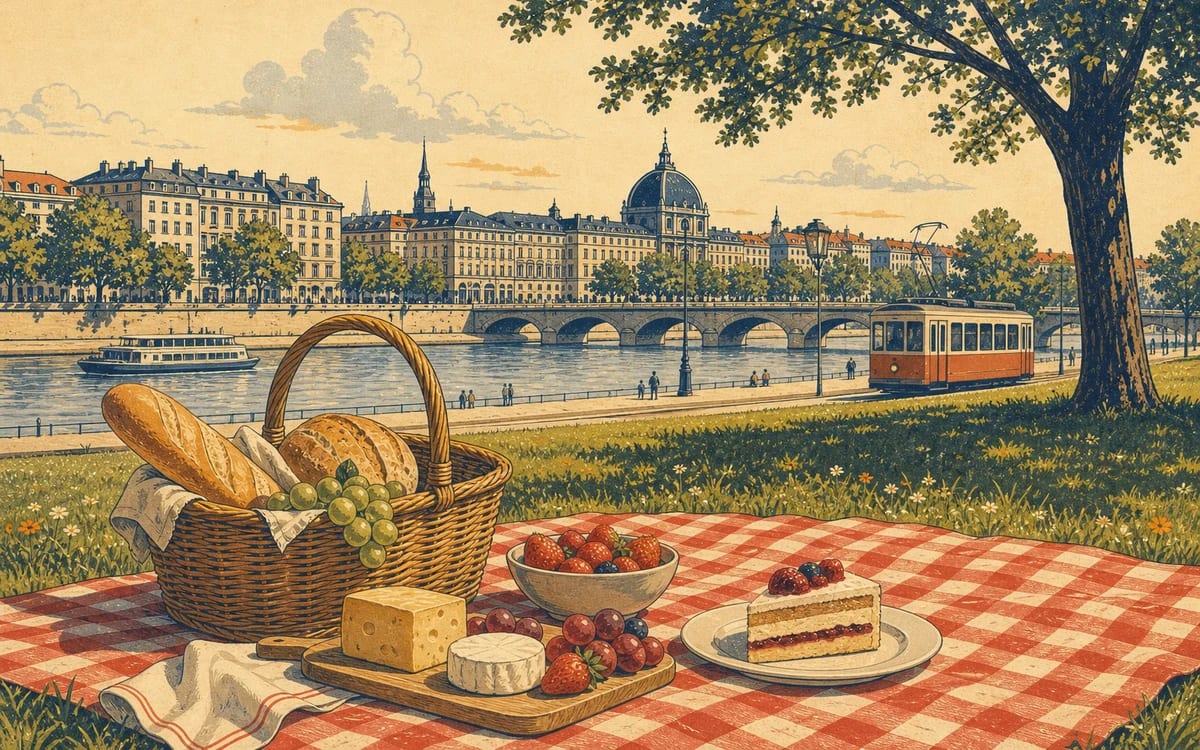
Léa and Camille prepare a picnic for their Sunday at the park. They take bread, cheese, and fruit. At the park, the sun shines and the birds sing.
What you'll learn
- Bilingual graded story
- Native narration
- 4 useful words
- 4 comprehension questions
Then shadow
Borrow the narrator’s rhythm
Pause after this line and repeat it aloud without translating. Aim for three clean repetitions.
1Listen first
Hear the whole story
Native French narration of this exact text. Keep the transcript visible on the first pass.
Playback speed: Natural
2Then shadow
Léa et Camille préparent un pique-nique pour leur dimanche au parc. Elles prennent du pain, du fromage et des fruits.Your French story
Read along with the narration, and tap any highlighted word for its meaning
Léa et Camille préparent un pour leur dimanche au parc. Elles prennent du pain, du fromage et des fruits.
Léa and Camille prepare a picnic for their Sunday at the park. They take bread, cheese, and fruit.
Au parc, le soleil brille et les oiseaux chantent. Elles mettent une à carreaux rouges sur l'herbe verte.
At the park, the sun shines and the birds sing. They put a red-checkered tablecloth on the green grass.
Léa sort le fromage et le pain. « Tu veux du fromage ? » demande-t-elle à Camille.
Léa takes out the cheese and bread. "Do you want some cheese?" she asks Camille.
« Oui, merci ! » répond Camille. Elle prend une petite tranche. « C'est délicieux ! »
"Yes, thank you!" replies Camille. She takes a small slice. "It's delicious!"
Léa coupe une de gâteau et la donne à Camille. « C'est pour toi. »
Léa cuts a slice of cake and gives it to Camille. "This is for you."
Camille dit : « Passe-moi la bouteille, . » Léa lui donne l'eau fraîche.
Camille says: "Pass me the bottle, please." Léa gives her the cold water.
Après le repas, elles ramassent tout et jettent les déchets dans une poubelle. « Il faut être propre », dit Léa.
After the meal, they pick everything up and throw the trash in a bin. "We must be clean," says Léa.
Elles marchent ensemble vers la sortie du parc. Camille sourit. « C'était un très bon dimanche. »
They walk together toward the park exit. Camille smiles. "It was a very good Sunday."
Vocabulary recap
Reading Comprehension Exercise
A1 French Reading Comprehension Exercises
1. What do Léa and Camille prepare for their Sunday?
Correct: A picnic in the park
Léa and Camille prepare a picnic for their Sunday at the park, with bread, cheese, and fruit.
2. What do they put on the grass?
Correct: A red-checkered tablecloth
They put a red-checkered tablecloth on the green grass to set up the picnic.
3. What does Camille say to ask for the bottle?
Correct: Pass me the bottle, please
Camille uses the polite phrase "Pass me the bottle, please" to make her request.
4. What do they do after the meal?
Correct: They pick everything up and throw away the trash
After the meal, they pick everything up and throw the trash in a bin, because you must be clean.
Nailed the quiz? Start your own story in MeloLingua →
Line 1 / 8
0:00/–:––
Mini-lesson complete
You understood 4 of 4 questions.
That is 143 real French words read in context.
- ✓ 143 words read
- 4 new expressions
- 2 grammar patterns
- A1 level unlocked
- ○ Narration ready
- 0 shadowing reps
Ready for tomorrow’s story?Hear it, shadow the narrator, and lock these words into memory in MeloLingua.
Start learning with storiesOne story. The whole practice loop.
Reading this story for free is just the first rep. The MeloLingua app turns the same story into a full practice loop — understand every word, speak it back, build sentences, and keep stories coming that match what you actually care about.
| What you get | FreeThis story | Full loopMeloLingua app |
|---|---|---|
| Understand every sentence instantly | Bilingual reader, tap to translate | Interactive reader with word-by-word explanations |
| Know exactly why each word works | Basic translation in context | Translation, grammar, conjugation & usage examples |
| Train your ear with native audio | Studio narration — slow, normal, fast | Listen, follow along, and shadow the narrator |
| Speak like a native while reading | Read aloud on your own | Real-time pronunciation feedback |
| Turn what you read into what you can say | Not included | Build sentences from the story you just read |
| Never forget today's vocabulary | In-story glossary + comprehension quiz | Flashcards & spaced review from story lines |
| Read stories about your real life | Not included | Stories matched to your level and interests |
| Feel yourself improve every day | Not included | Streaks, goals, and your full learning history |
| Result | Enjoy a great story | Actually speak with confidence |
Understand every sentence instantly
Know exactly why each word works
Train your ear with native audio
Speak like a native while reading
Turn what you read into what you can say
Never forget today's vocabulary
Read stories about your real life
Feel yourself improve every day
Result
Make stories aboutyour life
Most language apps hand everyone the same content. MeloLingua lets you create stories around the things you actually enjoy — so staying consistent stops feeling like homework.
- “I love space and cooking”Your story
A chef opens the first restaurant on Mars.
- “I like football and history”Your story
A young striker time-travels to play the legendary teams.
- “I enjoy surfing and travel”Your story
A surfer hunts secret waves across the world.
- “I like Brazilian Jiu-Jitsu and sci-fi”Your story
An astronaut enters the first intergalactic grappling tournament.
Read it. Listen to it. Speak it back. The more it sounds likeyour world, the easier it is to keep going.
Generate your first storyMake it yours
Your next French story is one tap away
Turn today's read into a daily habit — personalized scenes, native audio, tap-to-translate vocabulary, and speaking drills matched to what you just understood.
Keep reading on-site

Le bus du matin
Sophie boards the early bus, hunts for coins in one pocket, and still keeps her window seat ritual before school.
Read story →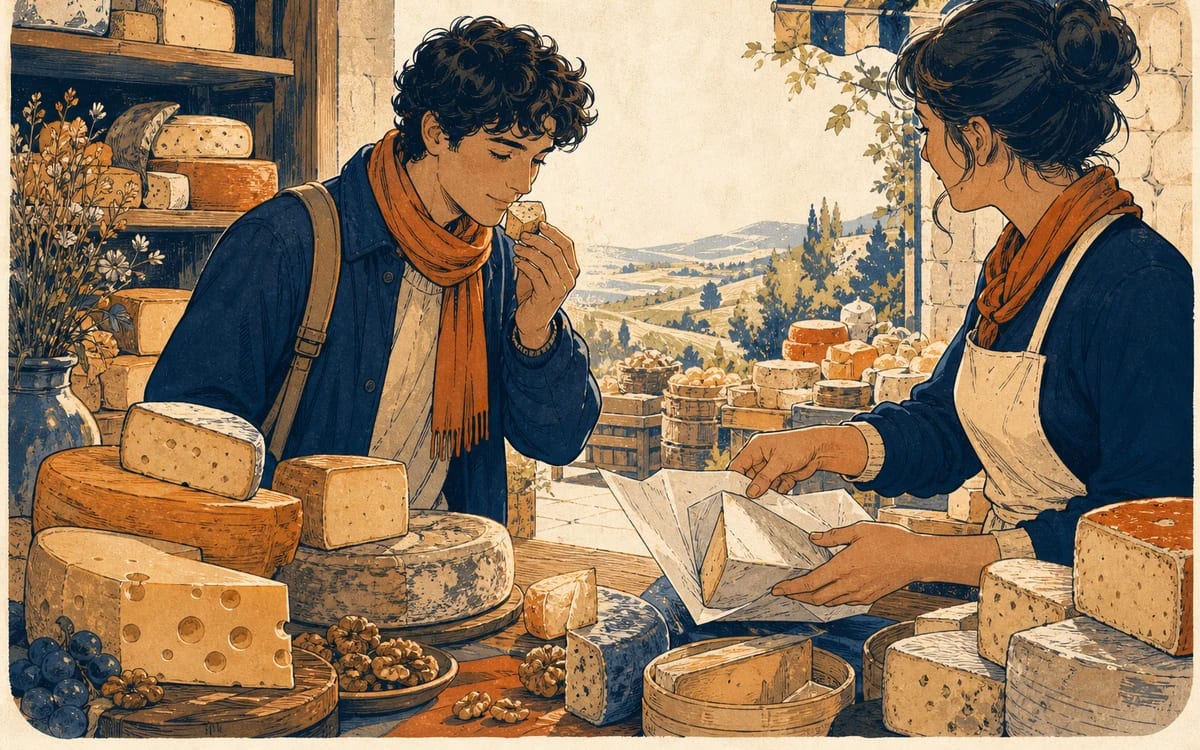
Le fromager du quartier
Noah follows the aroma of cheese, tastes a nutty slice, and learns to wrap cheese like a local.
Read story →
Le matin à la boulangerie
Sophie starts her day at the neighborhood bakery, where fresh bread, warm butter, and a familiar welcome await her.
Read story →