A1 German Stories for Beginners
A1 German stories on MeloLingua are free graded readers for absolute beginners, built around short present-tense scenes — Bäckerei, Bahnhof, Nachbargruß — controlled vocabulary, and recurring case patterns. Each story combines English support, glossed keywords, native audio, and a comprehension quiz so you can read for meaning while German word order settles naturally.
6 free A1 stories1 minute eachEnglish support + glossed vocabulary
Written by our language team · Editorial standards · Research & statistics
Reviewed by Klara · Updated
A place to begin
Start with Das Frühstück
Every morning, Anna wakes up at seven o'clock. She goes to the kitchen and makes coffee. The coffee is hot and strong. Anna sits down at the table and looks out the window.
1 minute read · English support · comprehension questions
Read Das Frühstück freeA line from the story
Jeden Morgen wacht Anna um sieben Uhr auf.
English: Every morning, Anna wakes up at seven o'clock.
Read the line in German first. Use the translation when you need it, then return to the story.
A1 German story library

Auf dem Weihnachtsmarkt
In December, Lukas visits a magical Christmas market filled.
6 glossed words
Read story →
Das Frühstück
Every morning, Anna wakes up at seven o'clock. She goes to the kitchen and makes coffee.
5 glossed words
Read story →
Der Regentag in Berlin
A rainy day in Berlin forces a tourist to explore a small museum that turns out to be.
3 glossed words
Read story →
Der Supermarkt am Samstag
Lina navigates Saturday crowds, hunts down milk and apples.
5 glossed words
Read story →
Ein Besuch beim Bauern
A city child visits a Bavarian farm stand for the first time.
4 glossed words
Read story →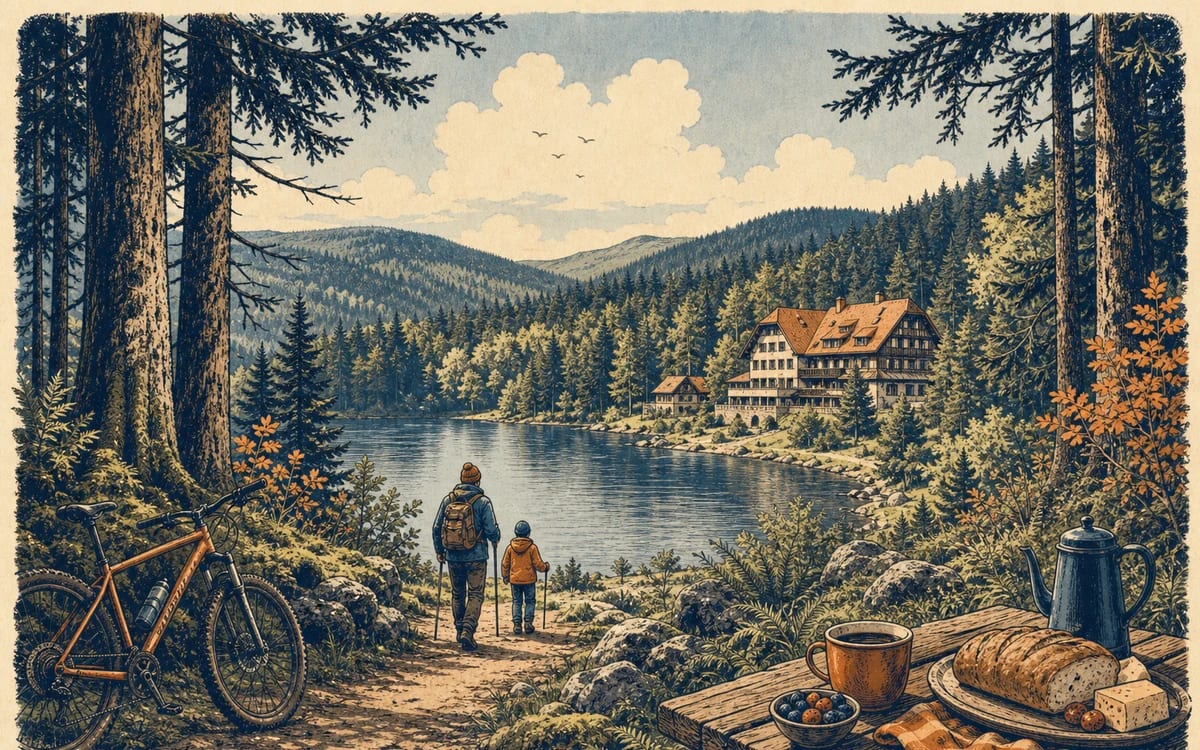
Ein Tag im Schwarzwald
On Saturday, Maria and Jan drive to the Black Forest. They want to go hiking.
6 glossed words
Read story →A better three-pass read
How to use an A1 German story
Mark the verb in position two before you look up nouns — comprehension follows syntax in German.
Research context: Hu and Nation studied adult learners reading English fiction and found that 98% known-word coverage generally supported adequate unassisted comprehension. That result is a useful benchmark, not a promise for every learner or language; MeloLingua adds glosses and English support so unfamiliar words do not stop the story. Hu & Nation (2000)
What A1 German stories help you practice
A1 German stories turn everyday situations into focused reading practice: picking up Brötchen at the Bäckerei, catching a train at the Bahnhof, and greeting neighbors. The stories embed accusative and dative inside high-frequency phrases like Ich kaufe einen Kaffee and Ich bin in der Bäckerei, verb-second word order in repeatable frames, and separable verbs in context — so grammar arrives through repeated patterns, not declension charts. When you are ready, continue with our free beginner story pack or explore the full Learn German story library. Stories repeat Ich gehe, Es gibt, Ich möchte until they sound automatic.
- Verb-second in statements
- Accusative in shopping frames
- Separable verbs in context
- Question words in service scenes
Answers
A1 German stories — FAQ
Q01What are A1 German stories?
What are A1 German stories?
A1 German stories are short graded readers for absolute beginners: mostly present tense, familiar settings like bakeries and train stations, and controlled vocabulary. MeloLingua pairs each story with English support and glosses so you can read for meaning before drilling grammar tables.
Q02Do I need to know cases at A1?
Do I need to know cases at A1?
You meet accusative and dative inside high-frequency phrases — Ich kaufe einen Kaffee, Ich bin in der Bäckerei — before explicit case study. Stories front-load these patterns in fixed frames so articles feel natural before you memorize declension charts.
Q03How long does an A1 German story take?
How long does an A1 German story take?
Set aside about 5–10 minutes for a useful session: read once for meaning, check only the words that block you, reread a few lines aloud, and finish the quiz. Your pace may be faster or slower; completing the practice matters more than racing the text.
Q04Can A1 German stories help with Goethe A1 prep?
Can A1 German stories help with Goethe A1 prep?
They build reading rhythm and sentence-level comprehension — useful alongside Goethe task practice. Stories train how German word order feels in context; exams still need timed reading and writing formats.
Q05When should I move from A1 to A2 German stories?
When should I move from A1 to A2 German stories?
Move up when you can read an A1 story once with roughly 80% word recognition and answer most quiz questions without re-reading every line. That usually follows several weeks of daily micro-reading.
Continue in MeloLingua
Go beyond reading: listen, speak, and remember German
Continue with personalized A1 German stories, listening practice, speaking exercises, and spaced review in MeloLingua.
Free to start · No card required
Inside a MeloLingua app session
Das Frühstück
Jeden Morgen wacht Anna um sieben Uhr auf.
Sie geht in die Küche und macht Kaffee. Der Kaffee ist heiß und stark.
Translation
Every morning, Anna wakes up at seven o'clock.