Ein Tag im Schwarzwald
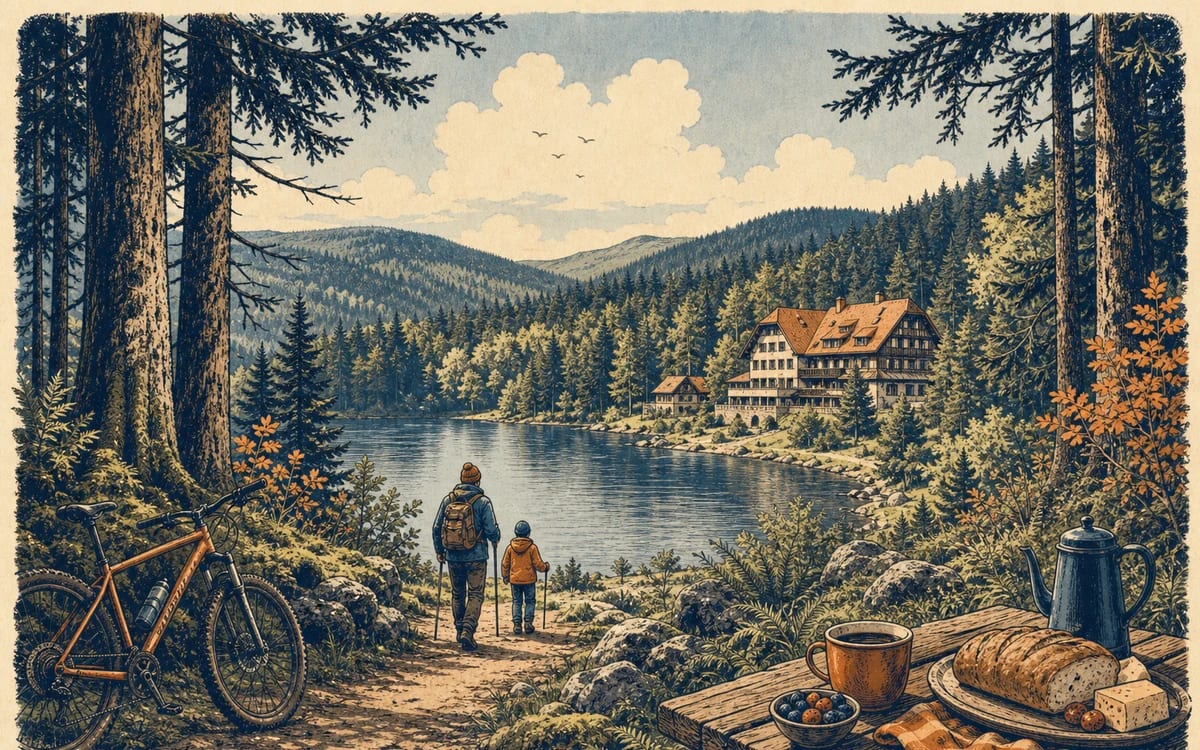
On Saturday, Maria and Jan drive to the Black Forest. They want to go hiking. The air is fresh and the forest is green. They walk along a narrow path between tall trees.
What you'll learn
- Bilingual graded story
- Native narration
- 7 useful words
- 3 comprehension questions
Then shadow
Borrow the narrator’s rhythm
Pause after this line and repeat it aloud without translating. Aim for three clean repetitions.
1Listen first
Hear the whole story
Native German narration of this exact text. Keep the transcript visible on the first pass.
Playback speed: Natural
2Then shadow
Am Samstag fahren Maria und Jan in den Schwarzwald. Sie wollen wandern.Warm-up vocabulary
Preview 1 optional words before reading
Your German story
Read along with the narration, and tap any highlighted word for its meaning
Am Samstag fahren Maria und Jan in den Schwarzwald. Sie wollen .
On Saturday, Maria and Jan drive to the Black Forest. They want to go hiking.
Die Luft ist frisch und ist grün. Sie gehen auf einem schmalen Weg zwischen hohen Bäumen.
The air is fresh and the forest is green. They walk along a narrow path between tall trees.
„Hör mal! Ein Vogel singt“, sagt Maria. Jan hört den Vogel und lächelt.
"Listen! A bird is singing," says Maria. Jan hears the bird and smiles.
Nach einer Stunde kommen sie zu einem kleinen See. Das Wasser ist klar und kalt.
After an hour, they reach a small lake. The water is clear and cold.
Sie setzen sich auf einen Stein und essen ihre Butterbrote.
They sit on a rock and eat their sandwiches.
„Der Schwarzwald ist so schön“, sagt Jan.
"The Black Forest is so beautiful," says Jan.
„Ja, ich bin gern in der Natur“, antwortet Maria.
"Yes, I love being in nature," replies Maria.
Am Nachmittag gehen sie in ein Gasthaus und trinken heißen Kakao. Es ist ein perfekter Tag.
In the afternoon, they visit a guesthouse and sip hot cocoa. It is a perfect day.
Vocabulary recap
Reading Comprehension Exercise
A1 German Reading Comprehension Exercises
1. What do Maria and Jan hear in the forest?
Correct: A bird
Maria and Jan hear a bird singing, which emphasizes the peace and beauty of the Black Forest.
2. What do Maria and Jan do at the lake?
Correct: They eat sandwiches
At the lake, they sit on a stone and enjoy their sandwiches while observing nature.
3. What do Maria and Jan drink at the guesthouse?
Correct: Hot cocoa
After a long day in nature, they relax at the guesthouse with a cup of hot cocoa.
Nailed the quiz? Start your own story in MeloLingua →
Line 1 / 8
0:00/–:––
Mini-lesson complete
You understood 3 of 3 questions.
That is 100 real German words read in context.
- ✓ 100 words read
- 7 new expressions
- 2 grammar patterns
- A1 level unlocked
- ○ Narration ready
- 0 shadowing reps
Ready for tomorrow’s story?Hear it, shadow the narrator, and lock these words into memory in MeloLingua.
Start learning with storiesOne story. The whole practice loop.
Reading this story for free is just the first rep. The MeloLingua app turns the same story into a full practice loop — understand every word, speak it back, build sentences, and keep stories coming that match what you actually care about.
| What you get | FreeThis story | Full loopMeloLingua app |
|---|---|---|
| Understand every sentence instantly | Bilingual reader, tap to translate | Interactive reader with word-by-word explanations |
| Know exactly why each word works | Basic translation in context | Translation, grammar, conjugation & usage examples |
| Train your ear with native audio | Studio narration — slow, normal, fast | Listen, follow along, and shadow the narrator |
| Speak like a native while reading | Read aloud on your own | Real-time pronunciation feedback |
| Turn what you read into what you can say | Not included | Build sentences from the story you just read |
| Never forget today's vocabulary | In-story glossary + comprehension quiz | Flashcards & spaced review from story lines |
| Read stories about your real life | Not included | Stories matched to your level and interests |
| Feel yourself improve every day | Not included | Streaks, goals, and your full learning history |
| Result | Enjoy a great story | Actually speak with confidence |
Understand every sentence instantly
Know exactly why each word works
Train your ear with native audio
Speak like a native while reading
Turn what you read into what you can say
Never forget today's vocabulary
Read stories about your real life
Feel yourself improve every day
Result
Make stories aboutyour life
Most language apps hand everyone the same content. MeloLingua lets you create stories around the things you actually enjoy — so staying consistent stops feeling like homework.
- “I love space and cooking”Your story
A chef opens the first restaurant on Mars.
- “I like football and history”Your story
A young striker time-travels to play the legendary teams.
- “I enjoy surfing and travel”Your story
A surfer hunts secret waves across the world.
- “I like Brazilian Jiu-Jitsu and sci-fi”Your story
An astronaut enters the first intergalactic grappling tournament.
Read it. Listen to it. Speak it back. The more it sounds likeyour world, the easier it is to keep going.
Generate your first storyMake it yours
Your next German story is one tap away
Turn today's read into a daily habit — personalized scenes, native audio, tap-to-translate vocabulary, and speaking drills matched to what you just understood.
Keep reading on-site

Auf dem Weihnachtsmarkt
In December, Lukas visits a magical Christmas market filled with lights, music, and the scent of mulled wine and roasted almonds.
Read story →
Das Frühstück
Every morning, Anna wakes up at seven o'clock. She goes to the kitchen and makes coffee. The coffee is hot and strong. Anna sits down at the table and looks out the window.
Read story →
Der Regentag in Berlin
A rainy day in Berlin forces a tourist to explore a small museum that turns out to be the unexpected highlight of her trip.
Read story →