Ein Besuch im Pergamonmuseum
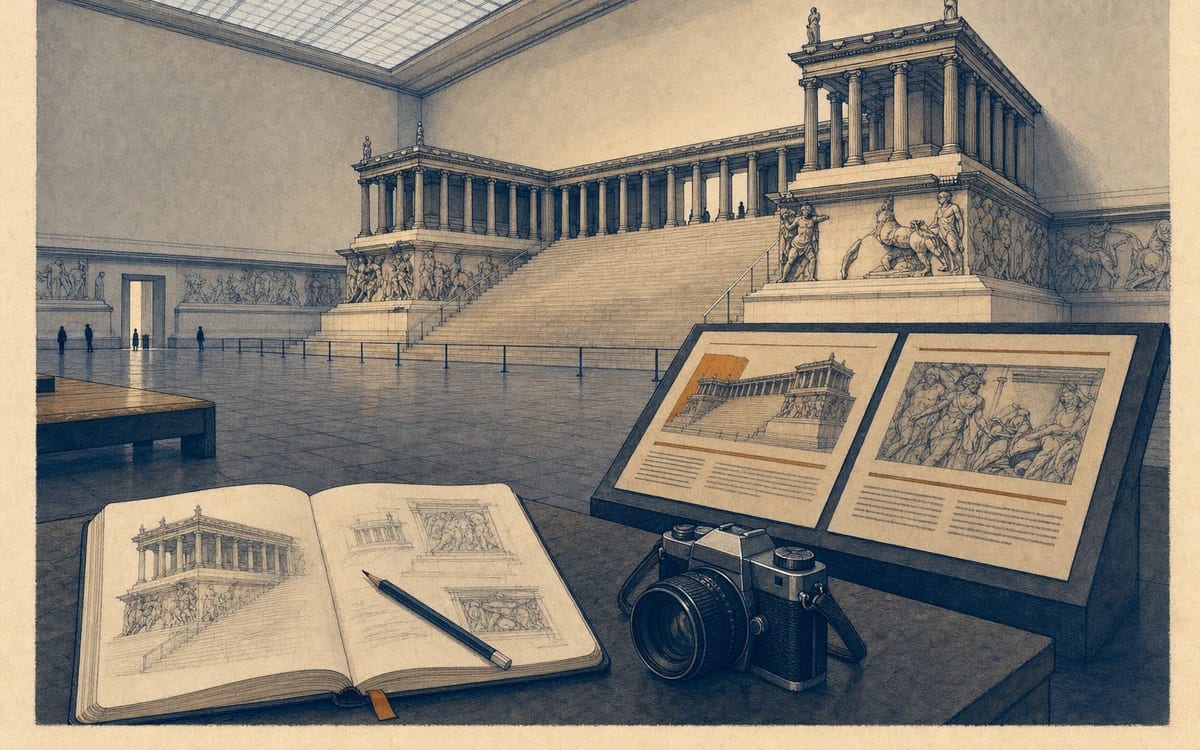
Felix entered the Pergamon Museum on a gloomy Thursday, not because TikTok recommended it, but because he wanted to experience history as a living space rather than cramming it…
What you'll learn
- Bilingual graded story
- Native narration
- 9 useful words
- 4 comprehension questions
Then shadow
Borrow the narrator’s rhythm
Pause after this line and repeat it aloud without translating. Aim for three clean repetitions.
1Listen first
Hear the whole story
Native German narration of this exact text. Keep the transcript visible on the first pass.
Playback speed: Natural
2Then shadow
Felix betrat an einem düsteren Donnerstag das Pergamonmuseum, nicht weil TikTok es empfahl, sondern weil er Geschichte als lebendigen Raum erleben wollte, statt sie wie eine trockene Fußnote zu pauken.Warm-up vocabulary
Preview 3 optional words before reading
Your German story
Read along with the narration, and tap any highlighted word for its meaning
Felix betrat an einem düsteren Donnerstag das Pergamonmuseum, nicht weil TikTok es empfahl, sondern weil er Geschichte als lebendigen Raum erleben wollte, statt sie wie eine trockene zu pauken.
Felix entered the Pergamon Museum on a gloomy Thursday, not because TikTok recommended it, but because he wanted to experience history as a living space rather than cramming it like a dry footnote.
Vor dem imposanten Altar hörte er Stimmen, die wie ein Echo zwischen Erklärung und Bewunderung schwankten, und entschied sich, die langsam zu studieren, anstatt mit dem Handy hektisch Fotos zu schießen.
In front of the imposing altar, he heard voices echoing between explanation and admiration, and decided to study the bilingual panels slowly instead of frantically snapping photos with his phone.
In seinem Notizbuch vermischten sich präzise Daten mit Skizzen, denn er erkannte, dass Begriffe wie „“ erst dann haften bleiben, wenn man ihre Tiefe mit den Augen nachzeichnet.
In his notebook, precise data mingled with sketches, as he realized that terms like "relief" only stick when you trace their depth with your eyes.
Als eine Gruppe laut über stritt, zog er sich in einen ruhigeren Teil der zurück und lauschte, wie Schritte wie gedämpfte Metronome über den Stein hallten.
When a group loudly argued about restitution, he retreated to a quieter part of the exhibit and listened to footsteps echoing like muted metronomes over the stone.
Felix verließ das Museum mit weniger Fotos, als er erwartet hatte, aber mit dem Gefühl, dass Geduld vor Kunst nicht altmodisch ist, sondern ehrlichen Respekt zeigt.
Felix left the museum with fewer photos than he had expected, but with the feeling that taking time with art is not old-fashioned; it shows genuine respect.
Im Museumscafé ordnete er seine Notizen und schrieb drei Fragen auf, die er noch recherchieren wollte.
In the museum café, he organized his notes and wrote down three questions he still wanted to research.
Auf dem Heimweg beschloss er, bald mit einer Freundin wiederzukommen und sich diesmal noch mehr Zeit zu nehmen.
On the way home, he decided to return soon with a friend and take even more time on his next visit.
Vocabulary recap
Reading Comprehension Exercise
B1 German Reading Comprehension Exercises
1. Why did Felix decide to read the bilingual information panels slowly?
Correct: Because he wanted more context instead of taking lots of photos
Felix wanted to better understand the story by thoroughly reading the information on the panels instead of relying only on photos.
2. What did Felix combine in his notebook?
Correct: Precise data and small drawings
Felix combined data with sketches to better process and retain the information.
3. Where did Felix go when the group argued loudly about restitution?
Correct: To a quieter part of the exhibition
Felix sought a quieter place to avoid the noise and enjoy the exhibition in peace.
4. Warum ist Felix ins Pergamonmuseum gegangen?
Correct: Weil er Geschichte als lebendigen Raum erleben wollte
Felix betrat das Pergamonmuseum, nicht weil TikTok es empfahl, sondern weil er Geschichte als lebendigen Raum erleben wollte.
Nailed the quiz? Start your own story in MeloLingua →
Line 1 / 7
0:00/–:––
Mini-lesson complete
You understood 4 of 4 questions.
That is 179 real German words read in context.
- ✓ 179 words read
- 9 new expressions
- 2 grammar patterns
- B1 level unlocked
- ○ Narration ready
- 0 shadowing reps
Ready for tomorrow’s story?Hear it, shadow the narrator, and lock these words into memory in MeloLingua.
Start learning with storiesOne story. The whole practice loop.
Reading this story for free is just the first rep. The MeloLingua app turns the same story into a full practice loop — understand every word, speak it back, build sentences, and keep stories coming that match what you actually care about.
| What you get | FreeThis story | Full loopMeloLingua app |
|---|---|---|
| Understand every sentence instantly | Bilingual reader, tap to translate | Interactive reader with word-by-word explanations |
| Know exactly why each word works | Basic translation in context | Translation, grammar, conjugation & usage examples |
| Train your ear with native audio | Studio narration — slow, normal, fast | Listen, follow along, and shadow the narrator |
| Speak like a native while reading | Read aloud on your own | Real-time pronunciation feedback |
| Turn what you read into what you can say | Not included | Build sentences from the story you just read |
| Never forget today's vocabulary | In-story glossary + comprehension quiz | Flashcards & spaced review from story lines |
| Read stories about your real life | Not included | Stories matched to your level and interests |
| Feel yourself improve every day | Not included | Streaks, goals, and your full learning history |
| Result | Enjoy a great story | Actually speak with confidence |
Understand every sentence instantly
Know exactly why each word works
Train your ear with native audio
Speak like a native while reading
Turn what you read into what you can say
Never forget today's vocabulary
Read stories about your real life
Feel yourself improve every day
Result
Make stories aboutyour life
Most language apps hand everyone the same content. MeloLingua lets you create stories around the things you actually enjoy — so staying consistent stops feeling like homework.
- “I love space and cooking”Your story
A chef opens the first restaurant on Mars.
- “I like football and history”Your story
A young striker time-travels to play the legendary teams.
- “I enjoy surfing and travel”Your story
A surfer hunts secret waves across the world.
- “I like Brazilian Jiu-Jitsu and sci-fi”Your story
An astronaut enters the first intergalactic grappling tournament.
Read it. Listen to it. Speak it back. The more it sounds likeyour world, the easier it is to keep going.
Generate your first storyMake it yours
Your next German story is one tap away
Turn today's read into a daily habit — personalized scenes, native audio, tap-to-translate vocabulary, and speaking drills matched to what you just understood.
Keep reading on-site

Der neue Mitbewohner
Today a new roommate moves into the apartment. His name is Tom and he comes from Munich. Tom has two large suitcases and a guitar. "Hello, I'm Tom. Nice to meet you!" he says.
Read story →
Die Wohnungssuche
A young professional finds a promising apartment in Munich, but the viewing reveals that the rent is not the only price to pay.
Read story →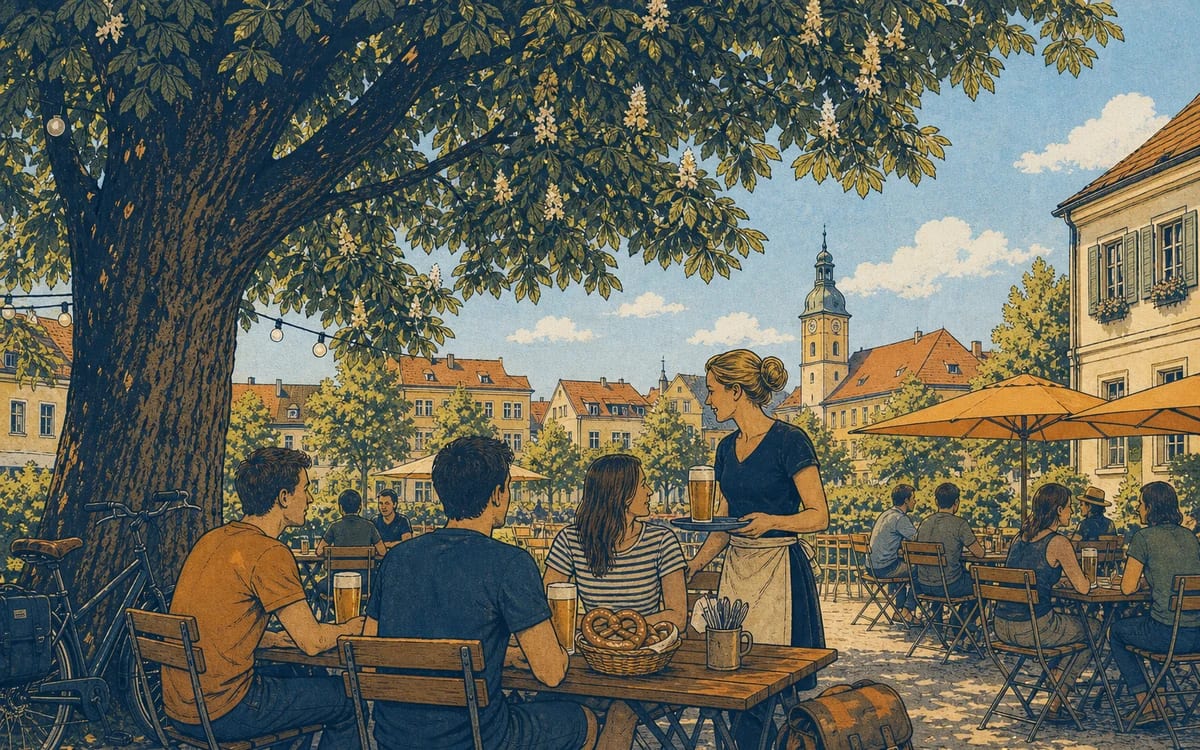
Im Biergarten
Es ist Freitagabend und Felix trifft seine Freunde im Biergarten. Die Luft duftet nach frisch gebackenem Brot und die Sonne scheint warm durch die Blätter des Kastanienbaums.
Read story →