Das Dorf im Schwarzwald
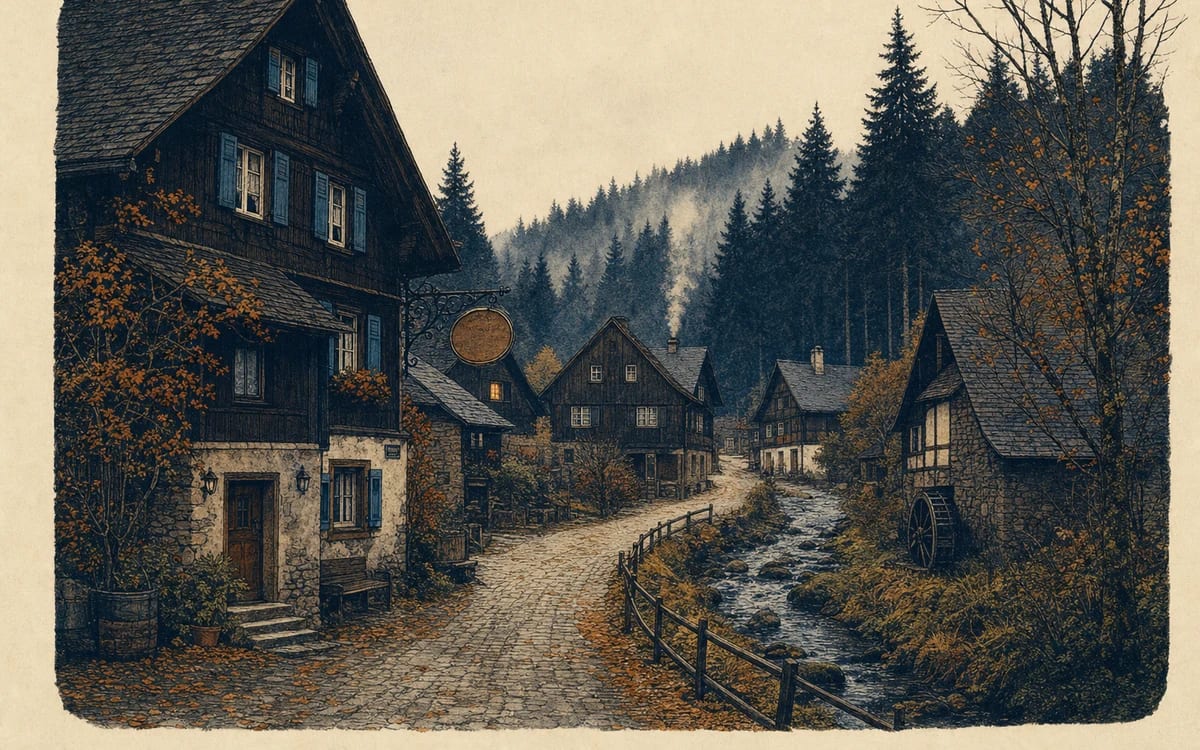
Deep in the Black Forest, where the firs stand so dense that even in high summer only half-light reaches the ground, lies a village that seemed to have forgotten time.
What you'll learn
- Bilingual graded story
- English translation
- 4 useful words
- 4 comprehension questions
Your German story
Tap highlighted words when you need help
Tief im , dort wo die so dicht stehen, dass selbst im Hochsommer nur halbes Licht den Boden erreicht, liegt ein Dorf, das die Zeit vergessen zu haben schien. Die Häuser waren aus dunklem Holz, die Fensterläden blau gestrichen, und einmal im Jahr feierten die Bewohner das „Fest der stillen Lichter.“
Deep in the Black Forest, where the firs stand so dense that even in high summer only half-light reaches the ground, lies a village that seemed to have forgotten time. The houses were made of dark wood, the shutters painted blue, and once a year the inhabitants celebrated the "Festival of Silent Lights."
das Fest gestoßen, als er in den Kirchenbüchern der Region forschte. Das Datum war ungewöhnlich — der 17. November, kein Heiligenfest, kein traditioneller Feiertag. Also war er angereist, um dem Geheimnis auf den Grund zu gehen.
Dr. Albrecht, a historian from Freiburg, had come across the festival while researching the region's church records. The date was unusual — November 17, no saint's day, no traditional holiday. So he had traveled there to get to the bottom of the mystery.
Im „Zum wilden Eber“ traf er die älteste Bewohnerin des Ortes: Frau Mösle, eine Frau von über neunzig Jahren, die jeden Abend am selben Tisch saß und den jungen Gästen zusah. Dr. Albrecht setzte sich zu ihr und bestellte zwei Gläser .
In the village inn "Zum wilden Eber" he met the oldest inhabitant of the village: Mrs. Mösle, a woman over ninety who sat at the same table every evening and watched the young guests. Dr. Albrecht sat down with her and ordered two glasses of kirsch.
„Sie wollen also wissen, warum wir Lichter anzünden“, sagte Frau Mösle, ohne ihn anzusehen. „Die Leute erzählen sich, es sei ein Erntedankfest. Aber das ist nur , nicht wahr?“ Dr. Albrecht schwieg und wartete.
"So you want to know why we light the candles," said Mrs. Mösle without looking at him. "People tell each other it's a harvest festival. But that's only half the truth, isn't it?" Dr. Albrecht was silent and waited.
Sie trank einen Schluck Kirschwasser und begann zu erzählen. „Vor zweihundert Jahren, im kalten November, geschah etwas, worüber man nicht spricht. Eine Lawine verschüttete damals den alten Weg durchs Tal — nicht durch Schnee, sondern durch Steine. Ein ganzer Hof stürzte ein. Sieben Menschen starben. Aber damals — er hieß Mösle, wie ich — verbot, darüber zu reden. Er fürchtete, die Leute würden das Dorf verlassen.“
She took a sip of kirsch and began to tell. "Two hundred years ago, in the cold November, something happened that people don't talk about. An avalanche back then buried the old path through the valley — not by snow, but by rocks. An entire farm collapsed. Seven people died. But the mayor back then — his name was Mösle, like mine — forbade talking about it. He feared people would leave the village."
Frau Mösle machte eine Pause. „Also erfand er das Fest. Lichter anzünden, um die zu trösten, sagte er. Aber wirklich — das Fest wurde eingeführt, damit niemand fragt, warum der Weg gesperrt und der Hof verschwunden war.“
Mrs. Mösle paused. "So he invented the festival. Light candles to comfort the souls, he said. But really — the festival was introduced so that no one would ask why the path was blocked and the farm had disappeared."
Dr. Albrecht war . Das Fest, das inzwischen Touristen aus ganz Deutschland anzog, war eine ? Eine Erfindung, um eine Katastrophe zu ? „Weiß das sonst jemand?“, fragte er leise.
Dr. Albrecht was stunned. The festival, which now attracted tourists from all over Germany, was a cover-up tactic? An invention to conceal a catastrophe? "Does anyone else know?" he asked quietly.
„Mein Großvater hat es mir erzählt, und ich hab's niemandem weitergegeben. Aber jetzt bin ich die Letzte. Wenn ich sterbe, stirbt die Wahrheit mit mir. Oder Sie erzählen sie Aber bedenken Sie: Wenn die Leute erfahren, dass ihr schönes Fest eine Lüge ist, wird das Dorf .“
"My grandfather told me, and I haven't passed it on to anyone. But now I'm the last one. When I die, the truth dies with me. Or you tell it further. But consider: if the people learn that their beautiful festival is a lie, the village will break apart."
Dr. Albrecht verbrachte die Nacht in seiner kleinen Pension und konnte nicht schlafen. Er sah die Fotos des Fests im Internet: glückliche Gesichter, bunte Kinder mit Eine ganze Region identifizierte sich mit diesem Fest. Würde die Wahrheit etwas verbessern? Oder würde sie nur zerstören, was funktionierte?
Dr. Albrecht spent the night in his small guesthouse and couldn't sleep. He saw the festival photos online: happy faces, colorful lanterns, children with paper lanterns. An entire region identified with this festival. Would the truth improve anything? Or would it only destroy what was working?
Am nächsten Morgen ging er zum alten hinter der Er fand die Gräber der sieben Verstorbenen — fast unsichtbar unter und Farn. Sie waren am Rand begraben, weit weg von den anderen Toten, als wollte man auch im Tod noch Abstand wahren.
The next morning he went to the old cemetery behind the church. He found the graves of the seven deceased — almost invisible under moss and fern. They were buried at the edge, far from the other dead, as if they wanted to keep distance even in death.
Er setzte sich auf eine Bank und schrieb einen langen Brief an sich selbst. Dann zerriss er ihn wieder. Als er schließlich abreiste, versprach er Frau Mösle: „Ich werde . Nicht, weil die Wahrheit nicht wichtig ist. Sondern weil das Fest den Lebenden gehört. Die Toten brauchen keine Lichter mehr. Aber die Lebenden brauchen etwas, an das sie glauben können.“
He sat down on a bench and wrote a long letter to himself. Then he tore it up again. When he finally left, he promised Mrs. Mösle: "I will remain silent. Not because the truth isn't important. But because the festival belongs to the living. The dead no longer need lights. But the living need something to believe in."
Frau Mösle nickte. Sie wusste, dass er das Richtige getan hatte — oder zumindest das menschlichste. Als Dr. Albrecht durch die dunklen Wälder zurück nach Freiburg fuhr, sah er im Rückspiegel die ersten Lichter des Fests, die im Tal zu begannen. Es sah aus, als ob die Tannen selbst leuchteten.
Mrs. Mösle nodded. She knew he had done the right thing — or at least the most humane thing. As Dr. Albrecht drove through the dark forests back to Freiburg, he saw in the rearview mirror the first lights of the festival beginning to flicker in the valley. It looked as if the firs themselves were glowing.
Vocabulary recap
Reading Comprehension Exercise
B2 German Reading Comprehension Exercises
1. What does Dr. Albrecht discover about the Festival of Silent Lights?
Correct: It was invented by a mayor to cover up a deadly landslide
The festival was invented by a mayor named Mösle to cover up a landslide that buried a farm and killed seven people. He feared the truth would cause people to abandon the village.
2. Why does Mrs. Mösle share the secret with Dr. Albrecht?
Correct: She is the last person who knows, and doesn't want the truth to die with her
Mrs. Mösle is the last living person who knows the truth. She shares it because if she dies without telling anyone, the truth about the seven victims would be lost forever.
3. What does Dr. Albrecht ultimately decide?
Correct: To remain silent because the living need the festival more than the dead need the truth
Dr. Albrecht decides to keep silent because the festival has become something meaningful for the living — a source of identity and community — even though its origins are a cover-up.
4. Was hat der Bürgermeister vor 200 Jahren erfunden?
Correct: Das Fest der stillen Lichter
Der Bürgermeister Mösle erfand das Fest der stillen Lichter, um den Erdrutsch zu vertuschen.
Nailed the quiz? Start your own story in MeloLingua →
Mini-lesson complete
You understood 4 of 4 questions.
That is 563 real German words read in context.
- ✓ 563 words read
- 4 new expressions
- 2 grammar patterns
- B2 level unlocked
Ready for tomorrow’s story?Hear it, shadow the narrator, and lock these words into memory in MeloLingua.
Start learning with storiesOne story. The whole practice loop.
Reading this story for free is just the first rep. The MeloLingua app turns the same story into a full practice loop — understand every word, speak it back, build sentences, and keep stories coming that match what you actually care about.
| What you get | FreeThis story | Full loopMeloLingua app |
|---|---|---|
| Understand every sentence instantly | Bilingual reader, tap to translate | Interactive reader with word-by-word explanations |
| Know exactly why each word works | Basic translation in context | Translation, grammar, conjugation & usage examples |
| Train your ear with native audio | Not included | Listen, follow along, and shadow the narrator |
| Speak like a native while reading | Read aloud on your own | Real-time pronunciation feedback |
| Turn what you read into what you can say | Not included | Build sentences from the story you just read |
| Never forget today's vocabulary | In-story glossary + comprehension quiz | Flashcards & spaced review from story lines |
| Read stories about your real life | Not included | Stories matched to your level and interests |
| Feel yourself improve every day | Not included | Streaks, goals, and your full learning history |
| Result | Enjoy a great story | Actually speak with confidence |
Understand every sentence instantly
Know exactly why each word works
Train your ear with native audio
Speak like a native while reading
Turn what you read into what you can say
Never forget today's vocabulary
Read stories about your real life
Feel yourself improve every day
Result
Make stories aboutyour life
Most language apps hand everyone the same content. MeloLingua lets you create stories around the things you actually enjoy — so staying consistent stops feeling like homework.
- “I love space and cooking”Your story
A chef opens the first restaurant on Mars.
- “I like football and history”Your story
A young striker time-travels to play the legendary teams.
- “I enjoy surfing and travel”Your story
A surfer hunts secret waves across the world.
- “I like Brazilian Jiu-Jitsu and sci-fi”Your story
An astronaut enters the first intergalactic grappling tournament.
Read it. Listen to it. Speak it back. The more it sounds likeyour world, the easier it is to keep going.
Generate your first storyMake it yours
Your next German story is one tap away
Turn today's read into a daily habit — personalized scenes, native audio, tap-to-translate vocabulary, and speaking drills matched to what you just understood.
Keep reading on-site
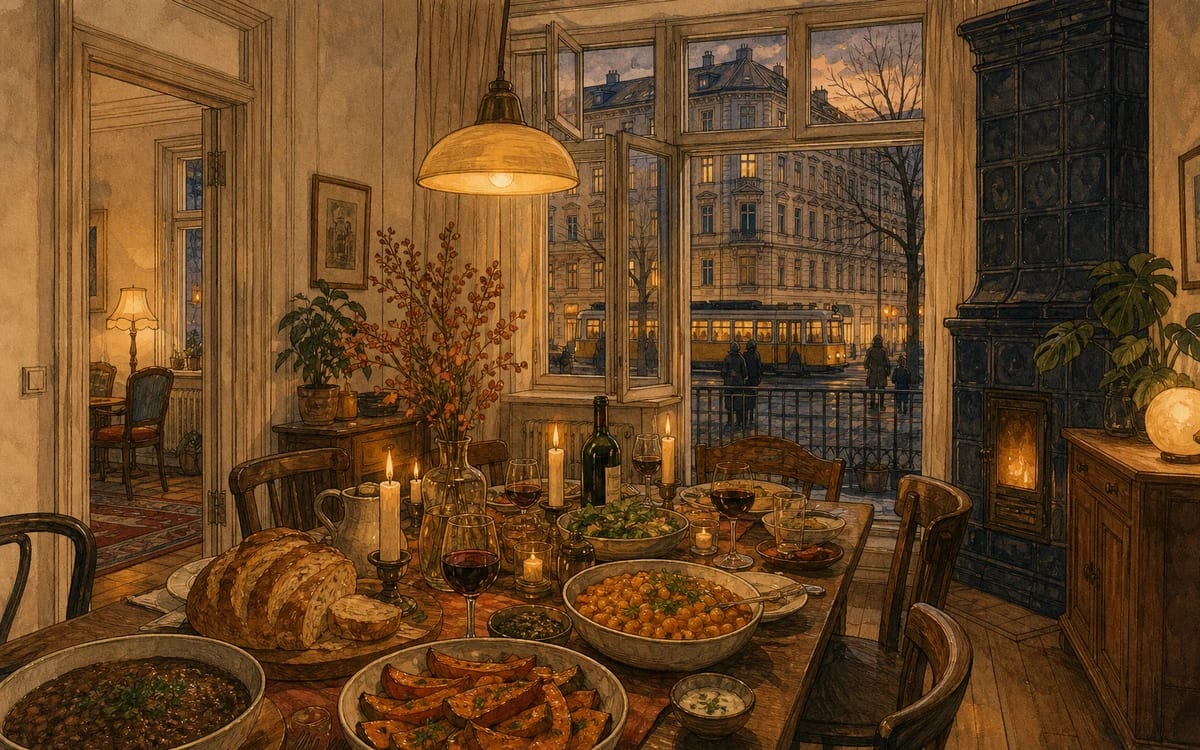
Das Abendessen mit Freunden
A dinner between old friends turns tense when dietary choices reveal deeper life divides — and a simmering disagreement finally surfaces.
Read story →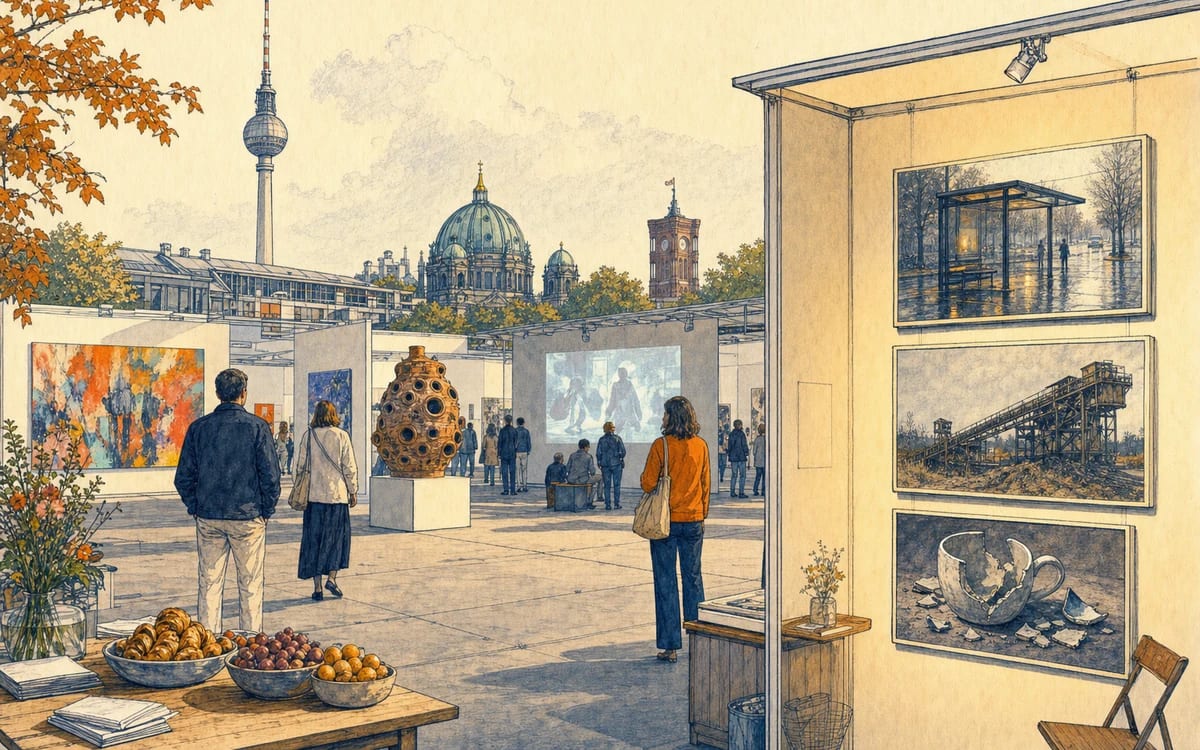
Der Kunstmarkt
A young artist's work catches fire on social media, but the gallery owner questions its originality — and a deeper conflict about art and commerce unfolds.
Read story →
Der Testtag
A routine product test at a Berlin startup uncovers a flaw that would have caused a major recall — but no one wants to hear bad news.
Read story →