Der Kunstmarkt
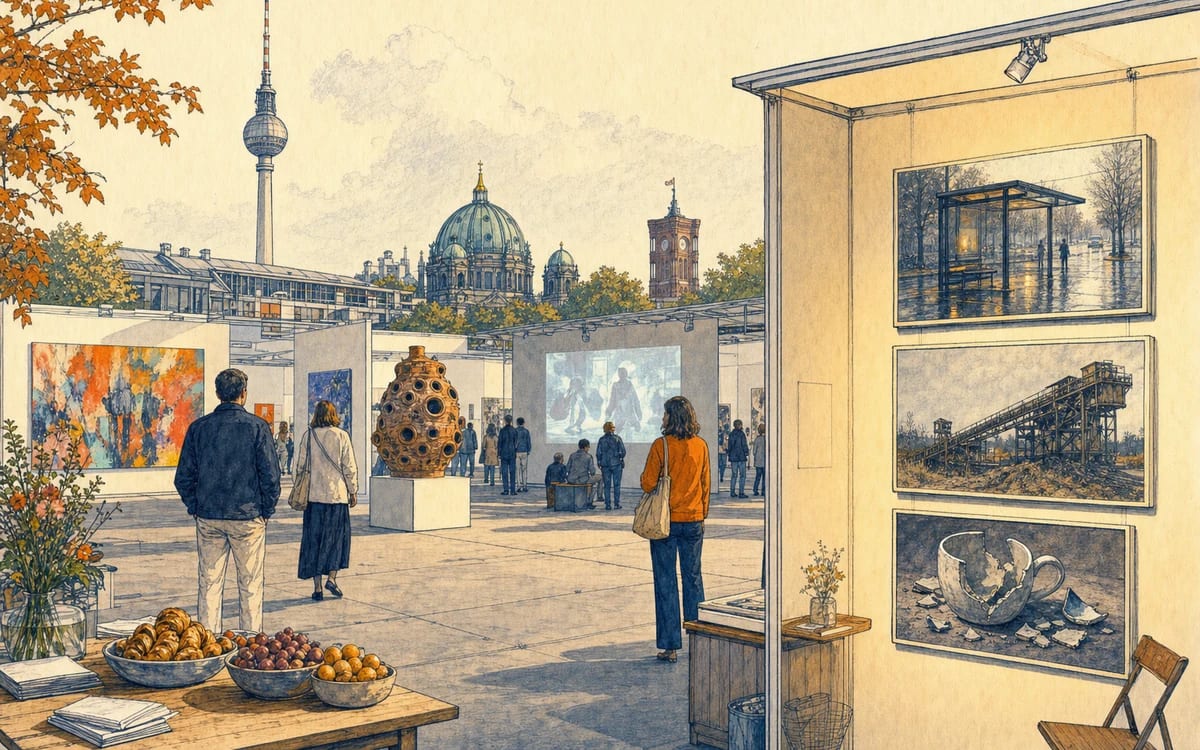
The Berlin art market in September was a sea of colors, voices, and harsh light.
What you'll learn
- Bilingual graded story
- English translation
- 5 useful words
- 4 comprehension questions
Warm-up vocabulary
Preview 1 optional words before reading
Your German story
Tap highlighted words when you need help
Der Berliner im September war ein Meer aus Farben, Stimmen und grellem Licht. Zwischen weißen Messeständen drängten sich Sammler, Kuratoren und Touristen, die nach dem nächsten großen Ding suchten. In Halle drei, zwischen einer Videoprojektion und einer riesigen Keramikskulptur, hing die erste Einzelausstellung von Nora Kessler.
The Berlin art market in September was a sea of colors, voices, and harsh light. Between white fair booths crowded collectors, curators, and tourists looking for the next big thing. In hall three, between a video projection and a giant ceramic sculpture, hung the first solo exhibition of Nora Kessler.
Noras Bilder waren eine Woche vor der gegangen. Ihre Motive: Alltagsgegenstände — ein regennasses Bushaltestellenhäuschen, ein verlassenes Einkaufsband, eine zerbrochene Tasse — in Öl gemalt mit einer solchen , dass man die Feuchtigkeit auf dem Asphalt zu spüren glaubte.
Nora's pictures had gone viral on Instagram a week before the fair. Her subjects: everyday objects — a rain-soaked bus shelter, an abandoned conveyor belt, a broken cup — painted in oil with such precision that you could feel the moisture on the asphalt.
, ein Mann Anfang sechzig mit einer Hornbrille und einem schwarzen Rollkragenpullover, stand neben ihrem Stand und beobachtete das Publikum. Die Leute blieben stehen. Sie machten Fotos. Sie diskutierten. Das gefiel ihm, aber etwas an den Bildern machte ihn .
The gallery owner, a man in his early sixties with horn-rimmed glasses and a black turtleneck, stood next to her booth and watched the audience. People stopped. They took photos. They discussed. He liked that, but something about the paintings made him uneasy.
Nora kam auf ihn zu. Sie war Mitte zwanzig, trug eine weite Leinenhose und einen Blick, der zwischen Stolz und schwankte. „Was sagen Sie?“, fragte sie. „Verkauft sich gut, oder?“
Nora approached him. She was in her mid-twenties, wore loose linen pants, and had a look that wavered between pride and uncertainty. "What do you say?" she asked. "Selling well, right?"
Der Galerist nickte langsam. „Ja, es verkauft sich. Die Frage ist nur: Was verkaufen wir hier eigentlich? Kunst oder ein -Ergebnis?“ Nora runzelte die Stirn. „Was meinen Sie damit? Ich male das. Mit der Hand. Seit Monaten.“
The gallery owner nodded slowly. "Yes, it's selling. The only question is: what are we actually selling here? Art or an algorithm result?" Nora frowned. "What do you mean by that? I paint it. By hand. For months."
„Ich weiß“, sagte er ruhig. „Aber die Leute kaufen das Bild, weil sie es auf Instagram gesehen haben, nicht weil sie es verstehen. Der Markt entscheidet über den Wert, nicht der Inhalt. Das ist ein Unterschied. Und zwar ein
"I know," he said calmly. "But people buy the painting because they saw it on Instagram, not because they understand it. The market decides the value, not the content. That's a difference. A fundamental one."
Nora schwieg. Sie wusste, dass er nicht unrecht hatte. Die ersten fünf Bilder waren innerhalb von Stunden verkauft worden — an Menschen, die sie nie getroffen hatte, die ihre vorherigen Arbeiten nicht kannten. „Aber wo bleibt ?“, fuhr der Galerist fort. „Wenn der Markt bestimmt, was gut ist, wer bestimmt dann, was echt ist?“
Nora was silent. She knew he wasn't wrong. The first five paintings had sold within hours — to people she had never met, who didn't know her previous work. "But where does originality remain?" the gallery owner continued. "If the market decides what is good, then who decides what is real?"
Draußen begann es zu regnen. Das Licht in der Halle veränderte sich, wurde weicher. Nora sah auf ihre Hände — Farbreste unter den Fingernägeln. Sie hatte jedes dieser Bilder in einem kleinen in Neukölln gemalt, bei offenem Fenster, während draußen die S-Bahn vorbeifuhr.
Outside it started to rain. The light in the hall changed, grew softer. Nora looked at her hands — paint residue under her fingernails. She had painted each of these pictures in a small studio in Neukölln, with the window open, while the S-Bahn passed by outside.
„Weißt du, was der Unterschied zwischen dir und einem KI-Bildgenerator ist?“, fragte der Galerist leise. Nora sah auf. „Dass ich lebe“, sagte sie. Er lächelte. „Das allein reicht nicht. Der Unterschied ist, dass du eine hast. Dass du Entscheidungen triffst, die kein Algorithmus kann. Aber die Frage ist: Zeigst du diese in deinen Bildern? Oder zeigst du nur, was gut ankommt?“
"Do you know what the difference between you and an AI image generator is?" the gallery owner asked quietly. Nora looked up. "That I'm alive," she said. He smiled. "That alone isn't enough. The difference is that you have an attitude. That you make decisions no algorithm can replicate. But the question is: do you show this attitude in your pictures? Or do you only show what goes over well?"
Nora atmete tief ein. Sie dachte an die verlassenen Bushaltestellen, an die zerbrochene Tasse in ihrer Küche, an die Nacht, in der sie das Bild gemalt hatte, weil sie nicht schlafen konnte. „Ich male das, was ich sehe“, sagte sie. „Und ich male es so, wie ich es fühle. Wenn das gut ankommt, ist das doch nicht mein Problem.“
Nora took a deep breath. She thought of the abandoned bus stops, of the broken cup in her kitchen, of the night she had painted the picture because she couldn't sleep. "I paint what I see," she said. "And I paint it the way I feel it. If that goes over well, that's not my problem."
Der Galerist lachte leise. „Nein, das ist nicht dein Problem. Aber es ist deine .“ Er drehte sich um und ging. Am Ende des Tages waren alle Bilder verkauft. Nora war reicher als je zuvor, aber die Frage des Galeristen hing in der Luft wie der Geruch von Ölfarbe und Regen.
The gallery owner laughed quietly. "No, that's not your problem. But it is your responsibility." He turned and left. At the end of the day all the pictures were sold. Nora was richer than ever before, but the gallery owner's question hung in the air like the smell of oil paint and rain.
Zu Hause, in ihrem Atelier, stellte Nora eine leere Leinwand auf. Sie mischte Farben, die sie noch nie verwendet hatte. Und sie begann, etwas zu malen, das niemand auf Instagram sehen würde.
At home, in her studio, Nora set up an empty canvas. She mixed colors she had never used before. And she began to paint something that no one would see on Instagram.
Vocabulary recap
Reading Comprehension Exercise
B2 German Reading Comprehension Exercises
1. Why did Nora's paintings sell so quickly?
Correct: They went viral on Instagram a week before the fair
Nora's paintings went viral on Instagram before the fair, which drove the sales — the gallery owner questions whether people are buying art or an 'algorithm result.'
2. What concern does the gallery owner express to Nora?
Correct: That the market is deciding the value instead of the content
The gallery owner challenges Nora: 'the market decides the value, not the content.' He worries that commercial success is eclipsing artistic authenticity.
3. How does Nora respond at the end of the story?
Correct: She begins painting something personal, not intended for social media
At the end, Nora sets up an empty canvas in her studio and begins to paint something 'that no one would see on Instagram' — reclaiming her artistic autonomy.
4. Warum verkaufen sich Noras Bilder so schnell?
Correct: Sie sind auf Instagram viral gegangen
Noras Bilder waren eine Woche vor der Messe auf Instagram viral gegangen.
Nailed the quiz? Start your own story in MeloLingua →
Mini-lesson complete
You understood 4 of 4 questions.
That is 544 real German words read in context.
- ✓ 544 words read
- 5 new expressions
- 2 grammar patterns
- B2 level unlocked
Ready for tomorrow’s story?Hear it, shadow the narrator, and lock these words into memory in MeloLingua.
Start learning with storiesOne story. The whole practice loop.
Reading this story for free is just the first rep. The MeloLingua app turns the same story into a full practice loop — understand every word, speak it back, build sentences, and keep stories coming that match what you actually care about.
| What you get | FreeThis story | Full loopMeloLingua app |
|---|---|---|
| Understand every sentence instantly | Bilingual reader, tap to translate | Interactive reader with word-by-word explanations |
| Know exactly why each word works | Basic translation in context | Translation, grammar, conjugation & usage examples |
| Train your ear with native audio | Not included | Listen, follow along, and shadow the narrator |
| Speak like a native while reading | Read aloud on your own | Real-time pronunciation feedback |
| Turn what you read into what you can say | Not included | Build sentences from the story you just read |
| Never forget today's vocabulary | In-story glossary + comprehension quiz | Flashcards & spaced review from story lines |
| Read stories about your real life | Not included | Stories matched to your level and interests |
| Feel yourself improve every day | Not included | Streaks, goals, and your full learning history |
| Result | Enjoy a great story | Actually speak with confidence |
Understand every sentence instantly
Know exactly why each word works
Train your ear with native audio
Speak like a native while reading
Turn what you read into what you can say
Never forget today's vocabulary
Read stories about your real life
Feel yourself improve every day
Result
Make stories aboutyour life
Most language apps hand everyone the same content. MeloLingua lets you create stories around the things you actually enjoy — so staying consistent stops feeling like homework.
- “I love space and cooking”Your story
A chef opens the first restaurant on Mars.
- “I like football and history”Your story
A young striker time-travels to play the legendary teams.
- “I enjoy surfing and travel”Your story
A surfer hunts secret waves across the world.
- “I like Brazilian Jiu-Jitsu and sci-fi”Your story
An astronaut enters the first intergalactic grappling tournament.
Read it. Listen to it. Speak it back. The more it sounds likeyour world, the easier it is to keep going.
Generate your first storyMake it yours
Your next German story is one tap away
Turn today's read into a daily habit — personalized scenes, native audio, tap-to-translate vocabulary, and speaking drills matched to what you just understood.
Keep reading on-site
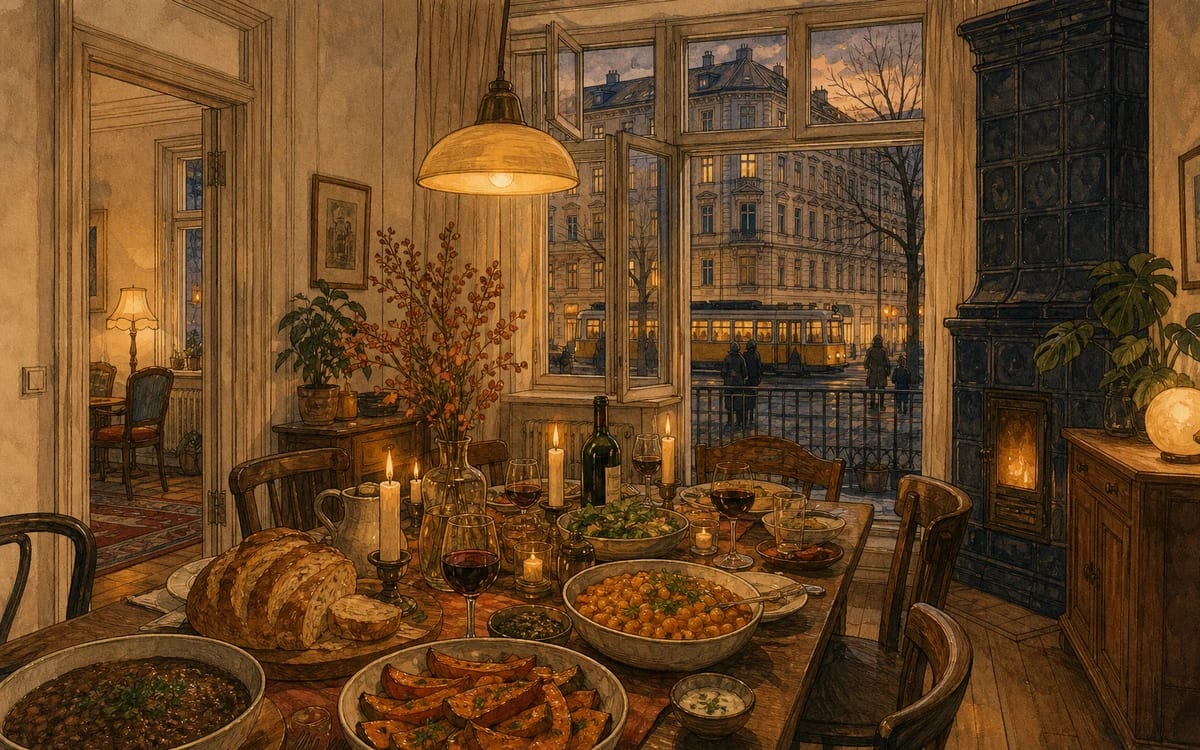
Das Abendessen mit Freunden
A dinner between old friends turns tense when dietary choices reveal deeper life divides — and a simmering disagreement finally surfaces.
Read story →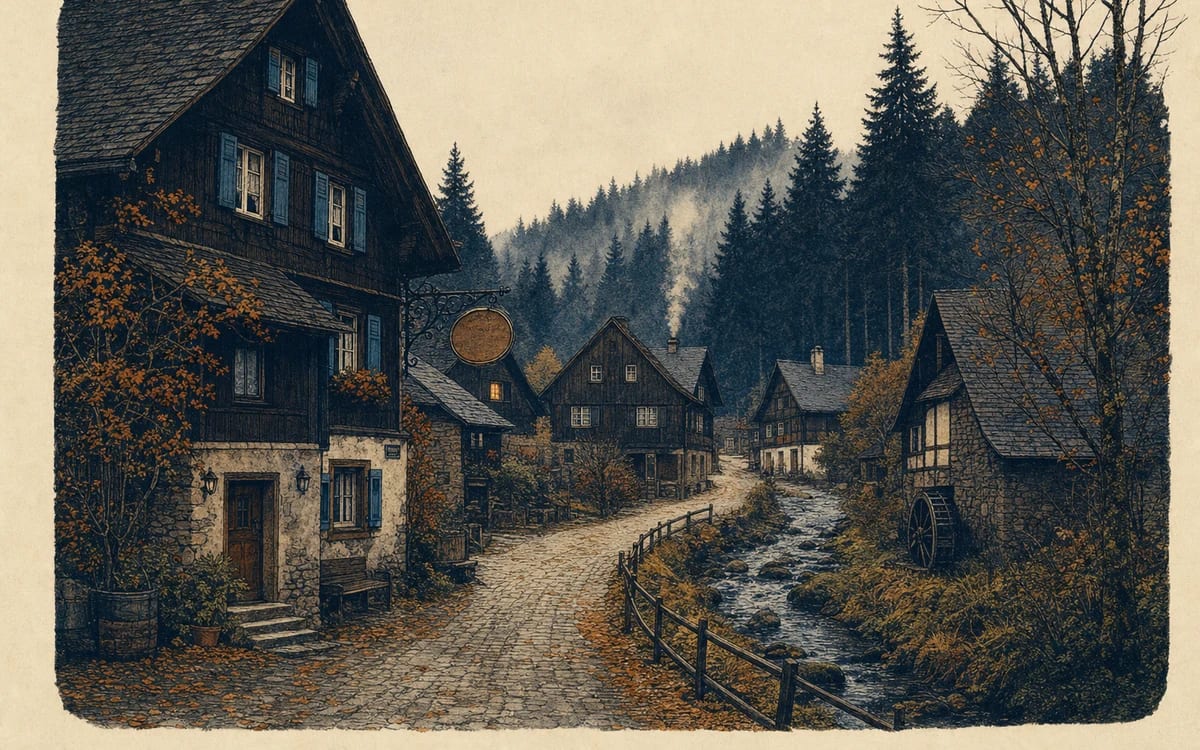
Das Dorf im Schwarzwald
A historian discovers that an annual village festival commemorates an event the town would prefer to keep buried — and must decide whether to reveal the truth.
Read story →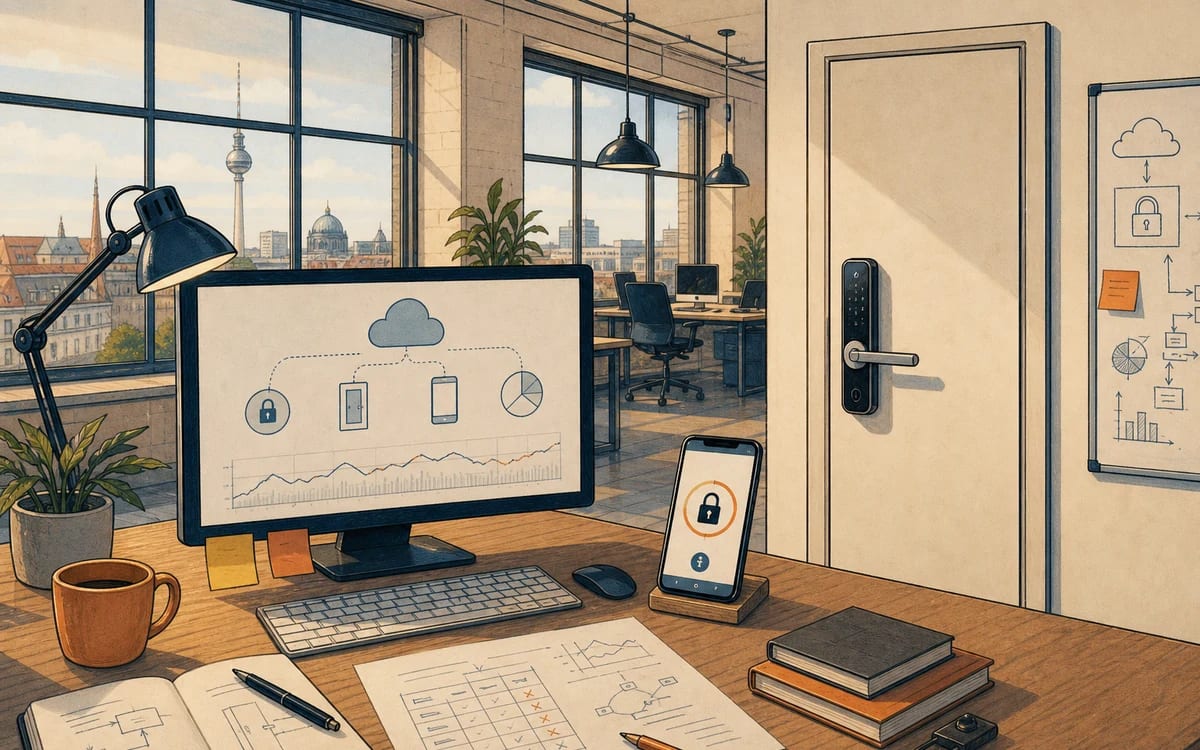
Der Testtag
A routine product test at a Berlin startup uncovers a flaw that would have caused a major recall — but no one wants to hear bad news.
Read story →