Zugfahrt nach München
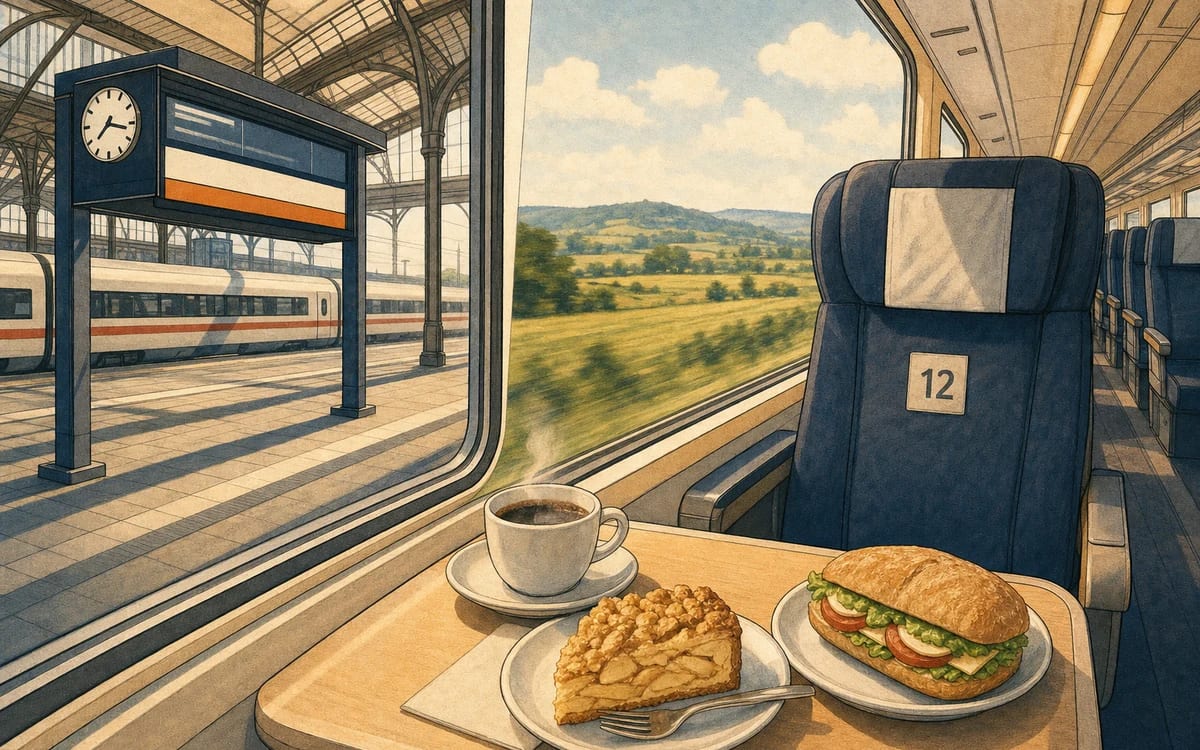
Laura stands at Frankfurt central, her light backpack on her shoulders, holding a reservation for the ICE to Munich.
What you'll learn
- Bilingual graded story
- Native narration
- 9 useful words
- 4 comprehension questions
Then shadow
Borrow the narrator’s rhythm
Pause after this line and repeat it aloud without translating. Aim for three clean repetitions.
1Listen first
Hear the whole story
Native German narration of this exact text. Keep the transcript visible on the first pass.
Playback speed: Natural
2Then shadow
Laura steht am Frankfurter Hauptbahnhof, ihr leichter Rucksack auf dem Rücken, und hält eine Reservierung für den ICE nach München in der Hand.Warm-up vocabulary
Preview 3 optional words before reading
Your German story
Read along with the narration, and tap any highlighted word for its meaning
Laura steht am Frankfurter Hauptbahnhof, ihr leichter Rucksack auf dem Rücken, und hält eine für den ICE nach München in der Hand.
Laura stands at Frankfurt central, her light backpack on her shoulders, holding a reservation for the ICE to Munich.
Eine plötzliche ändert das , also eilt sie los und fragt einen nach dem richtigen Wagen für Platz zwölf.
A sudden announcement changes the platform, so she hurries and asks a conductor about the right coach for seat twelve.
Im duftet es nach frisch gebrühtem Kaffee; eine ältere Dame bietet ihr ein Stück Apfelkuchen an, aber Laura entscheidet sich später für ein Sandwich aus dem Bistro.
In the compartment, the aroma of freshly brewed coffee fills the air; an older lady offers her a slice of apple cake, but Laura opts for a bistro sandwich later.
Zwischen weiten Feldern und dichten Wäldern murmelt sie neue Wörter wie „“, „pünktlich“ und „Ausweis“, damit Deutsch nicht nur im Unterricht bleibt.
Between vast fields and dense forests, she murmurs new words like "exit," "punctual," and "ID," so German doesn't stay just in class.
Als der Zug in München einfährt, wagt sie es, ohne Englisch zu fragen: „Entschuldigung, wo ist hier der Ausgang zur U-Bahn?“
As the train pulls into Munich, she dares to ask without English: "Excuse me, where is the subway exit?"
Vocabulary recap
Reading Comprehension Exercise
A2 German Reading Comprehension Exercises
1. Why does Laura have to walk faster?
Correct: Because an announcement changes the platform
Laura has to walk faster because a sudden announcement changes the platform. Such changes are not unusual at large stations like Frankfurt.
2. Who does she ask for the right carriage?
Correct: A conductor
Laura asks a conductor for the right carriage. Conductors help travelers with such information.
3. What does she ask in German at the end?
Correct: Where the subway exit is
At the end, Laura asks in German where the subway exit is. This shows her progress in language learning.
4. Wo ist Laura am Ende angekommen?
Correct: In München
Laura ist mit dem ICE von Frankfurt nach München gefahren und dort angekommen.
Nailed the quiz? Start your own story in MeloLingua →
Line 1 / 5
0:00/–:––
Mini-lesson complete
You understood 4 of 4 questions.
That is 115 real German words read in context.
- ✓ 115 words read
- 9 new expressions
- 2 grammar patterns
- A2 level unlocked
- ○ Narration ready
- 0 shadowing reps
Ready for tomorrow’s story?Hear it, shadow the narrator, and lock these words into memory in MeloLingua.
Start learning with storiesOne story. The whole practice loop.
Reading this story for free is just the first rep. The MeloLingua app turns the same story into a full practice loop — understand every word, speak it back, build sentences, and keep stories coming that match what you actually care about.
| What you get | FreeThis story | Full loopMeloLingua app |
|---|---|---|
| Understand every sentence instantly | Bilingual reader, tap to translate | Interactive reader with word-by-word explanations |
| Know exactly why each word works | Basic translation in context | Translation, grammar, conjugation & usage examples |
| Train your ear with native audio | Studio narration — slow, normal, fast | Listen, follow along, and shadow the narrator |
| Speak like a native while reading | Read aloud on your own | Real-time pronunciation feedback |
| Turn what you read into what you can say | Not included | Build sentences from the story you just read |
| Never forget today's vocabulary | In-story glossary + comprehension quiz | Flashcards & spaced review from story lines |
| Read stories about your real life | Not included | Stories matched to your level and interests |
| Feel yourself improve every day | Not included | Streaks, goals, and your full learning history |
| Result | Enjoy a great story | Actually speak with confidence |
Understand every sentence instantly
Know exactly why each word works
Train your ear with native audio
Speak like a native while reading
Turn what you read into what you can say
Never forget today's vocabulary
Read stories about your real life
Feel yourself improve every day
Result
Make stories aboutyour life
Most language apps hand everyone the same content. MeloLingua lets you create stories around the things you actually enjoy — so staying consistent stops feeling like homework.
- “I love space and cooking”Your story
A chef opens the first restaurant on Mars.
- “I like football and history”Your story
A young striker time-travels to play the legendary teams.
- “I enjoy surfing and travel”Your story
A surfer hunts secret waves across the world.
- “I like Brazilian Jiu-Jitsu and sci-fi”Your story
An astronaut enters the first intergalactic grappling tournament.
Read it. Listen to it. Speak it back. The more it sounds likeyour world, the easier it is to keep going.
Generate your first storyMake it yours
Your next German story is one tap away
Turn today's read into a daily habit — personalized scenes, native audio, tap-to-translate vocabulary, and speaking drills matched to what you just understood.
Keep reading on-site

Das Team-Meeting am Montag
Nico shares a five-minute update, dodges jargon overload, and follows up with a concise email that actually matches what was agreed.
Read story →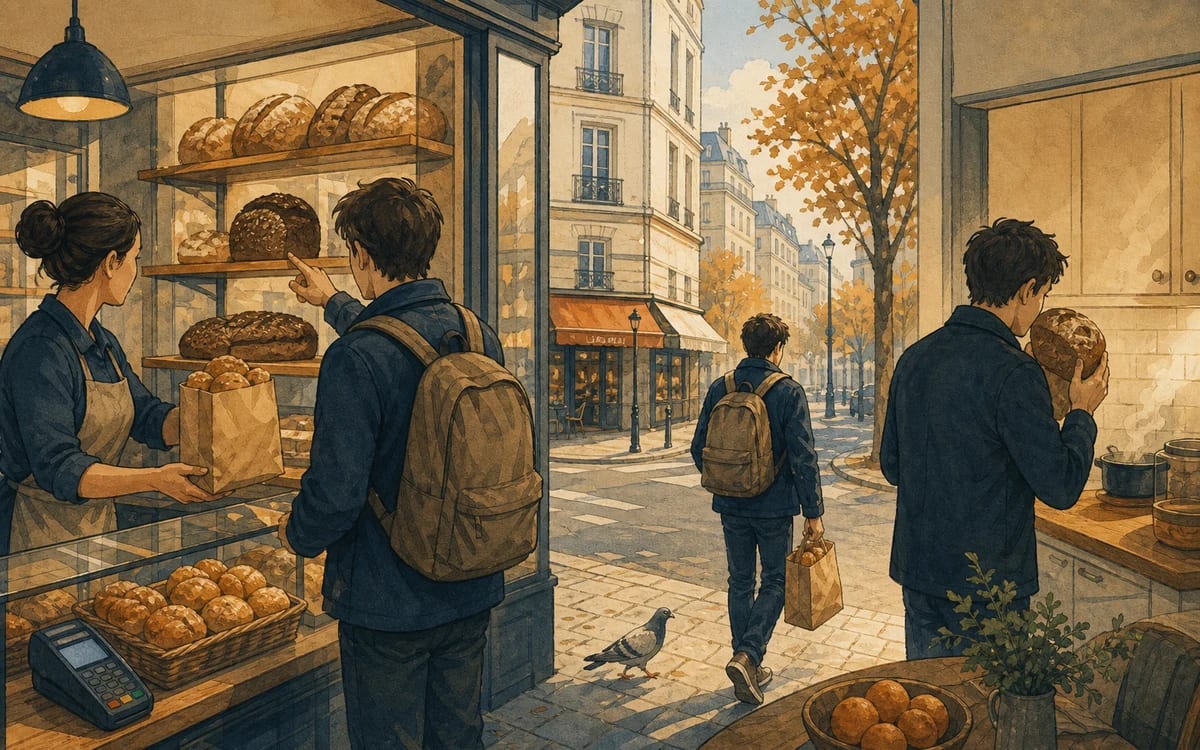
Der Bäcker an der Ecke
Tim steht in der Schlange für warme Brötchen, erkennt ein Roggenbrot am Geruch und verlässt die Bäckerei mit Krümeln auf dem Schal und besserem Deutsch.
Read story →
Die Neue Kollegin
Mira starts a new job and finds confidence through a small team project.
Read story →