El ascensor que no llega
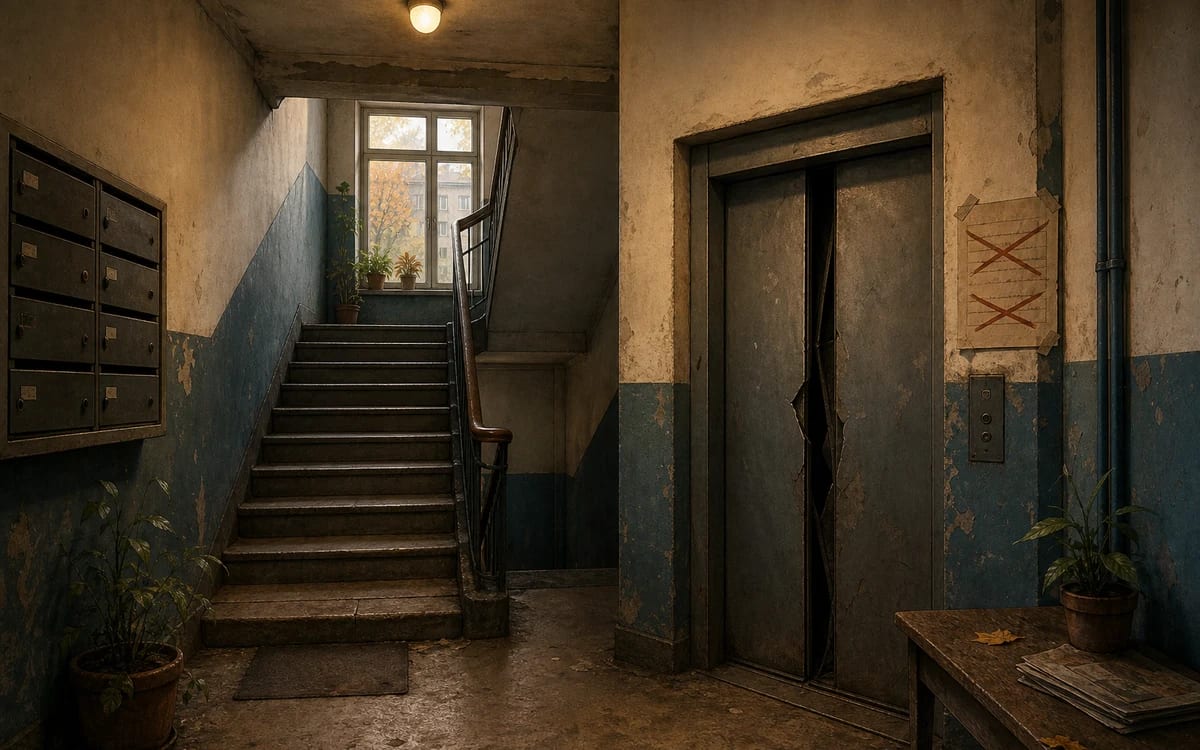
The building's elevator had been broken for three days and the sign stuck on the lobby door said 'Soon to be repaired' in handwriting that someone had crossed out twice.
What you'll learn
- Bilingual graded story
- English translation
- 7 useful words
- 5 comprehension questions
Warm-up vocabulary
Preview 4 optional words before reading
Your Spanish story
Tap highlighted words when you need help
El del edificio llevaba tres días y el cartel pegado en la puerta del lobby decía «Próximamente reparado» con una letra que alguien había tachado dos veces.
The building's elevator had been broken for three days and the sign stuck on the lobby door said 'Soon to be repaired' in handwriting that someone had crossed out twice.
Eran las ocho de la tarde de un jueves húmedo de noviembre. Paula, que vivía en el sexto, subía las escaleras cargada con una mochila y una bolsa de deporte cuando se encontró a don Ricardo en el del tercero.
It was eight o'clock on a humid Thursday evening in November. Paula, who lived on the sixth floor, was climbing the stairs with a backpack and a gym bag when she ran into Don Ricardo on the third-floor landing.
Don Ricardo tenía ochenta y dos años, vivía en el cuarto y salía. También regresaba a casa, con una bolsa de pan y un sobre en la mano. Se miraron: a ninguno le quedaba mucha energía para seguir subiendo.
Don Ricardo was eighty-two, lived on the fourth floor, and rarely went out. He too was returning home, with a bag of bread and an envelope in his hand. They looked at each other: neither had much energy left to keep climbing.
—¿Quiere que le ayude? —dijo Paula señalando la bolsa. Don Ricardo dudó. «Bueno, si no es mucha ...»
'Would you like me to help you?' Paula said, pointing at the bag. Don Ricardo hesitated. 'Well, if it's not too much trouble...'
Siguieron subiendo juntos. Paula caminaba despacio para que don Ricardo pudiera seguirle el ritmo. En el siguiente tramo, él se detuvo y dijo: «Antes de , trabajaba en una . Llevo cuarenta años en este edificio».
They continued climbing together. Paula walked slowly so Don Ricardo could keep pace. On the next flight, he stopped and said, 'Before I retired, I worked at a printing press. I've lived in this building for forty years.'
Paula nunca había cruzado más de un «buenos días» con él. Ahora, en el silencio de la escalera, escuchaba cómo don Ricardo describía el Buenos Aires de los años setenta con una que la sorprendió.
Paula had never exchanged more than a 'good morning' with him. Now, in the silence of the stairwell, she listened as Don Ricardo described the Buenos Aires of the seventies with a precision that surprised her.
—Usted sabe cómo era la ciudad antes de que pusieran esos grises por todas partes —dijo él señalando la calle a través de la ventana del —. Todo era más humano.
'You know how the city was before they put those grey containers everywhere,' he said, pointing at the street through the landing window. 'Everything was more human.'
—A veces pienso que la ciudad no hubiera cambiado tanto —dijo Paula casi sin pensarlo. Don Ricardo la miró como si acabara de descubrir que la chica del sexto tenía opiniones.
'Sometimes I think I wish the city hadn't changed so much,' Paula said almost without thinking. Don Ricardo looked at her as if he had just discovered that the girl from the sixth floor had opinions.
Llegaron al cuarto piso. Don Ricardo abrió la puerta de su y, en lugar de despedirse, dijo: «Si el ascensor no se arregla pronto, mañana a las seis la espero abajo. Así no sube sola».
They reached the fourth floor. Don Ricardo opened his apartment door and, instead of saying goodbye, said, 'If the elevator isn't fixed soon, I'll wait for you downstairs tomorrow at six. That way you won't climb alone.'
Paula sonrió. «Ojalá el ascensor tarde un poco más en arreglarse», pensó mientras subía los últimos . No recordaba la última vez que alguien la había esperado al pie de las escaleras.
Paula smiled. 'I hope the elevator takes a little longer to get fixed,' she thought as she climbed the last flights. She couldn't remember the last time someone had waited for her at the bottom of the stairs.
Al día siguiente, cuando Paula volvía del trabajo, vio a don Ricardo sentado en el banco del lobby con un libro en la mano. Al verla, sonrió y dijo: « lo arreglaron. La estaba esperando».
The next day, as Paula returned from work, she saw Don Ricardo sitting on the lobby bench with a book in his hand. When he saw her, he smiled and said, 'They still haven't fixed it. I was waiting for you.'
Subieron juntos y don Ricardo le contó que su nieta estudiaba , casi lo mismo que hacía Paula. Al llegar al cuarto, Paula dijo: «Mañana lo espero yo a usted».
They climbed together, and Don Ricardo told her that his granddaughter studied graphic design, almost the same field Paula worked in. When they reached the fourth floor, Paula said, 'Tomorrow I'll wait for you.'
Reading Comprehension Exercise
B2 Spanish Reading Comprehension Exercises
1. What makes Paula and Don Ricardo's encounter in the stairwell different from their usual interactions?
Correct: The broken elevator forces them to walk together and have an actual conversation
Paula had never exchanged more than 'buenos días' with him. The forced proximity of the stairs creates a space for real conversation.
2. What does Don Ricardo reveal about himself during the climb?
Correct: He used to work at a printing press and has lived in the building for forty years
Don Ricardo states 'Antes de jubilarme, trabajaba en una imprenta. Llevo cuarenta años en este edificio' — two biographical details that humanize him.
3. What does the phrase 'ojalá la ciudad no hubiera cambiado tanto' reveal about Paula?
Correct: She actually shares Don Ricardo's sentiment about urban change, using the pluperfect subjunctive
Paula's use of 'ojalá... no hubiera cambiado' (pluperfect subjunctive with ojalá) shows she shares his regret about urban transformation, expressing a wish for a counterfactual past.
4. What does Don Ricardo offer to do at the end of their encounter?
Correct: Wait for her at six the next day so she doesn't walk alone
Don Ricardo says 'Si el ascensor no se arregla pronto, mañana a las seis la espero para bajar. Así no sube sola' — an offer of companionship born from their conversation.
5. What is the significance of Paula's final thought, 'Ojalá el ascensor tarde un poco más en arreglarse'?
Correct: She secretly hopes the elevator stays broken so they keep meeting
Paula's ironic wish that the elevator take longer to fix reveals that the broken elevator has created a human connection she values — a subtle, B2-level emotional insight.
Nailed the quiz? Start your own story in MeloLingua →
Mini-lesson complete
You understood 5 of 5 questions.
That is 400 real Spanish words read in context.
- ✓ 400 words read
- 7 new expressions
- 4 grammar patterns
- B2 level unlocked
Ready for tomorrow’s story?Hear it, shadow the narrator, and lock these words into memory in MeloLingua.
Start learning with storiesOne story. The whole practice loop.
Reading this story for free is just the first rep. The MeloLingua app turns the same story into a full practice loop — understand every word, speak it back, build sentences, and keep stories coming that match what you actually care about.
| What you get | FreeThis story | Full loopMeloLingua app |
|---|---|---|
| Understand every sentence instantly | Bilingual reader, tap to translate | Interactive reader with word-by-word explanations |
| Know exactly why each word works | Basic translation in context | Translation, grammar, conjugation & usage examples |
| Train your ear with native audio | Not included | Listen, follow along, and shadow the narrator |
| Speak like a native while reading | Read aloud on your own | Real-time pronunciation feedback |
| Turn what you read into what you can say | Not included | Build sentences from the story you just read |
| Never forget today's vocabulary | In-story glossary + comprehension quiz | Flashcards & spaced review from story lines |
| Read stories about your real life | Not included | Stories matched to your level and interests |
| Feel yourself improve every day | Not included | Streaks, goals, and your full learning history |
| Result | Enjoy a great story | Actually speak with confidence |
Understand every sentence instantly
Know exactly why each word works
Train your ear with native audio
Speak like a native while reading
Turn what you read into what you can say
Never forget today's vocabulary
Read stories about your real life
Feel yourself improve every day
Result
Make stories aboutyour life
Most language apps hand everyone the same content. MeloLingua lets you create stories around the things you actually enjoy — so staying consistent stops feeling like homework.
- “I love space and cooking”Your story
A chef opens the first restaurant on Mars.
- “I like football and history”Your story
A young striker time-travels to play the legendary teams.
- “I enjoy surfing and travel”Your story
A surfer hunts secret waves across the world.
- “I like Brazilian Jiu-Jitsu and sci-fi”Your story
An astronaut enters the first intergalactic grappling tournament.
Read it. Listen to it. Speak it back. The more it sounds likeyour world, the easier it is to keep going.
Generate your first storyMake it yours
Your next Spanish story is one tap away
Turn today's read into a daily habit — personalized scenes, native audio, tap-to-translate vocabulary, and speaking drills matched to what you just understood.
Keep reading on-site
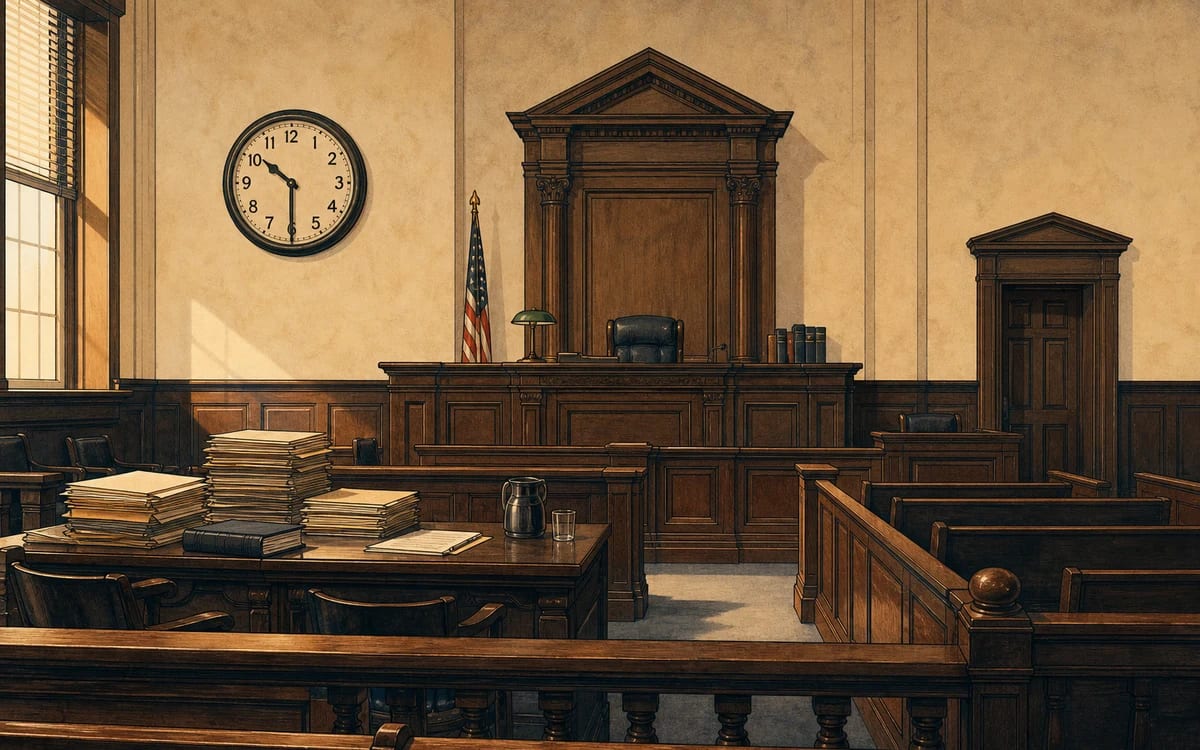
El juicio
A minor property dispute in a small-town courtroom reveals a decades-old neighborhood secret during cross-examination that no one expected.
Read story →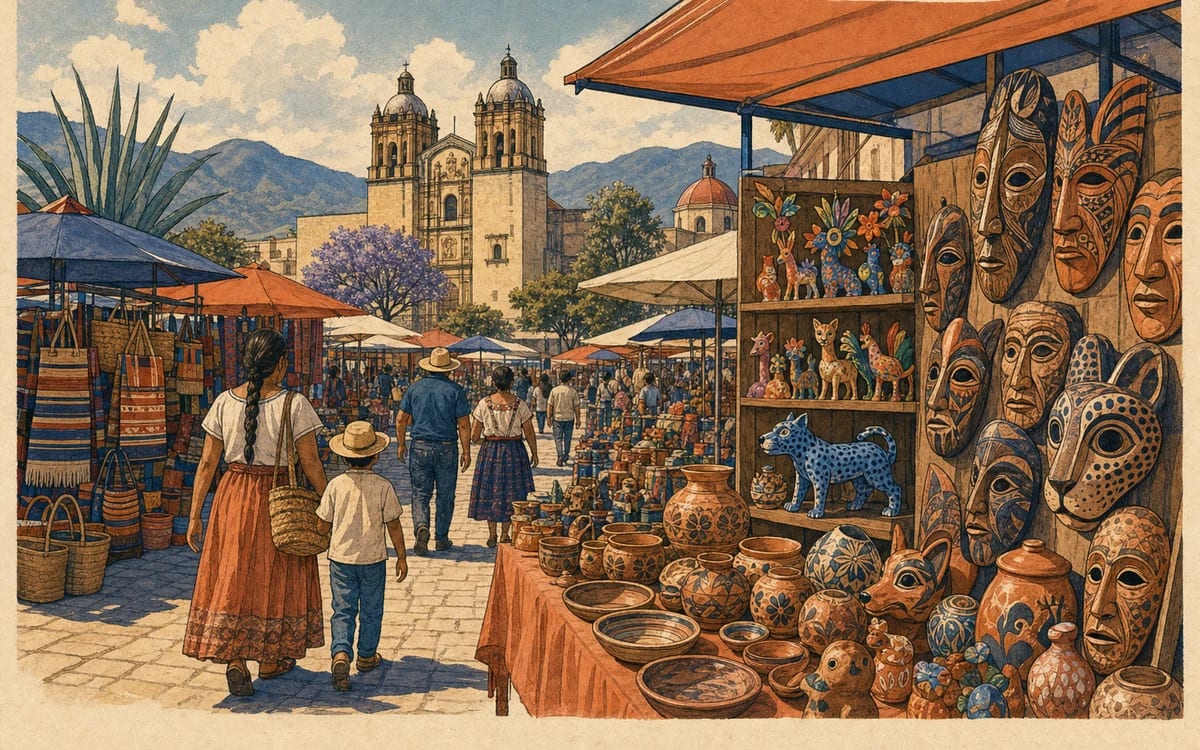
El mercado de artesanos
A visitor at an Oaxaca artisan market discovers that a seemingly simple ceramic piece carries a story her local guide won't translate.
Read story →
El vuelo reprogramado
After his flight is cancelled at the airport, Pablo goes to Atocha to book a train and bus route to Lisbon.
Read story →