El juicio
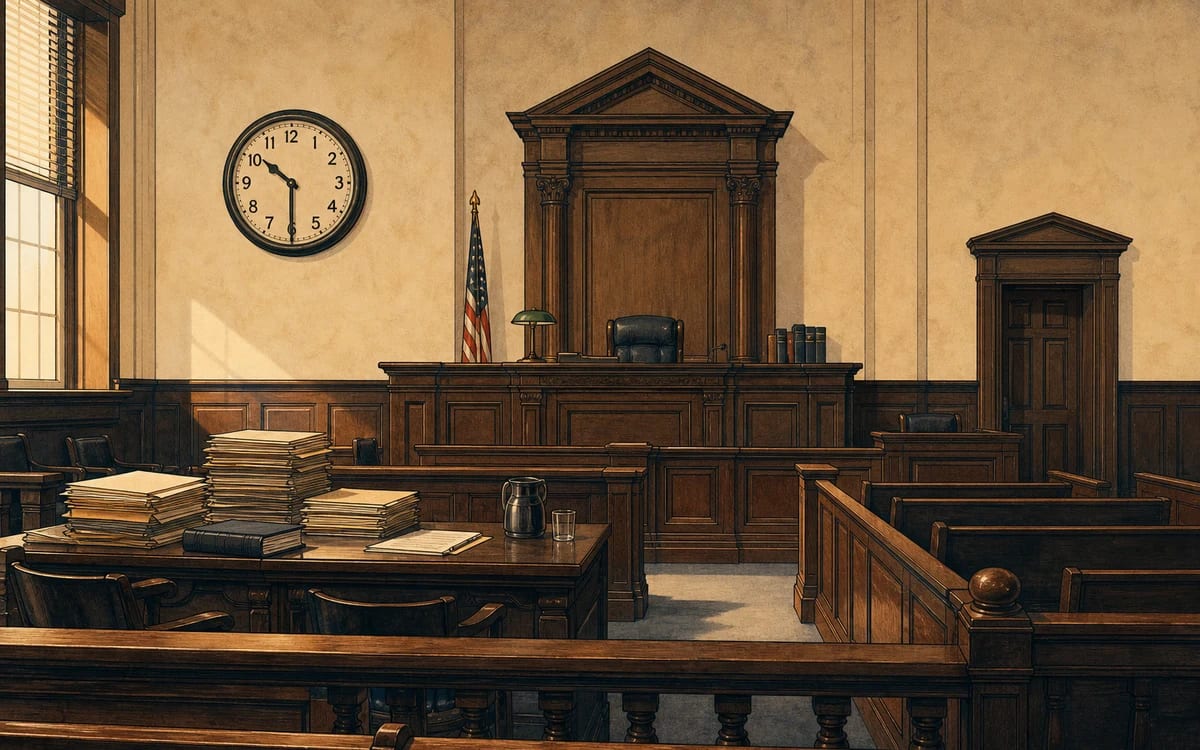
The courtroom smelled of old wood and papers accumulated over decades. The wall clock read ten thirty and the thermostat was malfunctioning, as always.
What you'll learn
- Bilingual graded story
- English translation
- 7 useful words
- 5 comprehension questions
Warm-up vocabulary
Preview 1 optional words before reading
Your Spanish story
Tap highlighted words when you need help
La sala del olía a madera vieja y a papeles acumulados durante décadas. El reloj de pared marcaba las diez y media y el funcionaba mal, como siempre.
The courtroom smelled of old wood and papers accumulated over decades. The wall clock read ten thirty and the thermostat was malfunctioning, as always.
La abogada joven, Andrea, colocó sus papeles sobre la mesa y respiró hondo. Su cliente, un señor mayor llamado don Emilio, la miraba con confianza. La parecía sencilla: un límite de finca mal medido.
The young lawyer, Andrea, placed her papers on the table and took a deep breath. Her client, an elderly man named Don Emilio, looked at her with confidence. The lawsuit seemed simple: a poorly measured property boundary.
El juez, un hombre canoso de gesto serio, dio inicio al juicio con un golpe seco de martillo. «, si me permite», comenzó Andrea, «me gustaría exponer los hechos ».
The judge, a grey-haired man with a serious expression, began the trial with a sharp bang of the gavel. 'Your Honor, if you'll allow me,' Andrea began, 'I would like to present the facts chronologically.'
La parte contraria, representada por un abogado de la ciudad, insistía en que don Emilio había construido un muro que invadía la propiedad del .
The opposing party, represented by a city lawyer, insisted that Don Emilio had built a wall that encroached on the plaintiff's property.
«», respondió Andrea, «insisto en que mi cliente actuó de buena fe. El muro se levantó donde, según la de 1952, siempre estuvo el límite».
'With all due respect,' Andrea replied, 'I insist that my client acted in good faith. The wall was built where, according to the 1952 deed, the boundary always was.'
El abogado contrario llamó al primer : una vecina del barrio que vivía en el número 12 desde hacía más de cuarenta años.
The opposing lawyer called the first witness: a neighbor from the neighborhood who had lived at number 12 for over forty years.
La mujer que recordaba perfectamente el límite original porque, de niña, jugaba en ese terreno. Pero cuando el abogado le preguntó si estaba segura, ella dudó.
The woman testified that she clearly remembered the original boundary because, as a child, she played on that land. But when the lawyer asked if she was sure, she hesitated.
Fue entonces, durante el , cuando la testigo mencionó algo que no estaba en el expediente: «Don Emilio no es el dueño original. La finca era de su hermano, pero hubo un que nunca se escribió».
It was then, during cross-examination, that the witness mentioned something that wasn't in the file: 'Don Emilio isn't the original owner. The estate belonged to his brother, but there was a verbal agreement that was never written down.'
Andrea sintió que el suelo se movía bajo sus pies. Nadie le había hablado de un hermano. Miró a don Emilio, que tenía la mirada fija en la mesa y las manos .
Andrea felt the ground move beneath her feet. No one had told her about a brother. She looked at Don Emilio, who was staring fixedly at the table with trembling hands.
Andrea pidió un . En el pasillo, don Emilio : «Mi hermano se fue a América en los años sesenta y me dejó la casa. Nunca hicimos papeles. Éramos familia».
Andrea requested a recess. In the hallway, Don Emilio confessed: 'My brother went to America in the sixties and left me the house. We never did the paperwork. We were family.'
Andrea respiró hondo y volvió a la sala. Sabía que el caso ya no trataba de un muro, sino de algo más delicado: una entre hermanos que el derecho no reconocía.
Andrea took a deep breath and returned to the courtroom. She knew the case was no longer about a wall, but about something more delicate: a promise between brothers that the law didn't recognize.
Andrea decidió cambiar de estrategia. Ya no discutiría el límite del terreno; pediría al juez que considerara la durante más de cincuenta años como título suficiente.
Andrea decided to change strategy. She would no longer argue the boundary; she would ask the judge to consider continuous possession for over fifty years as sufficient title.
El juez escuchó los argumentos, las gafas y guardó silencio durante un minuto que a Andrea le pareció una hora.
The judge listened to the arguments, adjusted his glasses, and remained silent for a minute that felt like an hour to Andrea.
Al final, el juez dictó un fallo que sorprendió a ambos lados: reconoció el derecho de don Emilio, pero le ordenó pagar una simbólica al demandante por la falta de documentación.
In the end, the judge issued a ruling that surprised both sides: he recognized Don Emilio's right but ordered him to pay a symbolic compensation to the plaintiff for the lack of documentation.
Vocabulary recap
Reading Comprehension Exercise
B2 Spanish Reading Comprehension Exercises
1. What makes the lawsuit seem simple at first?
Correct: It is about a poorly measured property boundary
The story states 'La demanda parecía sencilla: un límite de finca mal medido' — a simple boundary dispute.
2. What unexpected information does the witness reveal during cross-examination?
Correct: That Don Emilio has a brother who was the original owner with a verbal agreement
The witness mentions Don Emilio is not the original owner — his brother was, with an unwritten verbal agreement: 'un acuerdo verbal que nunca se escribió.'
3. Why does Andrea change her legal strategy?
Correct: She realizes the case is about an oral promise, not just a wall boundary
Andrea realizes 'el caso ya no trataba de un muro, sino de algo más delicado: una promesa entre hermanos' and shifts to arguing 'posesión continuada' instead.
4. What is the judge's final ruling?
Correct: He recognizes Don Emilio's right but orders symbolic compensation
The judge issues a split ruling: 'reconoció el derecho de don Emilio, pero le ordenó pagar una indemnización simbólica al demandante por la falta de documentación.'
5. Which grammatical structure is used in 'Andrea insistió en que su cliente actuó de buena fe' that signals formal legal discourse?
Correct: Preterite indicative after 'insistir en que' for a factual claim
'Insistir en que' is followed by the indicative ('actuó') because Andrea is asserting a fact, not expressing doubt. In legal Spanish, this choice of mood carries evidentiary weight.
Nailed the quiz? Start your own story in MeloLingua →
Mini-lesson complete
You understood 5 of 5 questions.
That is 414 real Spanish words read in context.
- ✓ 414 words read
- 7 new expressions
- 3 grammar patterns
- B2 level unlocked
Ready for tomorrow’s story?Hear it, shadow the narrator, and lock these words into memory in MeloLingua.
Start learning with storiesOne story. The whole practice loop.
Reading this story for free is just the first rep. The MeloLingua app turns the same story into a full practice loop — understand every word, speak it back, build sentences, and keep stories coming that match what you actually care about.
| What you get | FreeThis story | Full loopMeloLingua app |
|---|---|---|
| Understand every sentence instantly | Bilingual reader, tap to translate | Interactive reader with word-by-word explanations |
| Know exactly why each word works | Basic translation in context | Translation, grammar, conjugation & usage examples |
| Train your ear with native audio | Not included | Listen, follow along, and shadow the narrator |
| Speak like a native while reading | Read aloud on your own | Real-time pronunciation feedback |
| Turn what you read into what you can say | Not included | Build sentences from the story you just read |
| Never forget today's vocabulary | In-story glossary + comprehension quiz | Flashcards & spaced review from story lines |
| Read stories about your real life | Not included | Stories matched to your level and interests |
| Feel yourself improve every day | Not included | Streaks, goals, and your full learning history |
| Result | Enjoy a great story | Actually speak with confidence |
Understand every sentence instantly
Know exactly why each word works
Train your ear with native audio
Speak like a native while reading
Turn what you read into what you can say
Never forget today's vocabulary
Read stories about your real life
Feel yourself improve every day
Result
Make stories aboutyour life
Most language apps hand everyone the same content. MeloLingua lets you create stories around the things you actually enjoy — so staying consistent stops feeling like homework.
- “I love space and cooking”Your story
A chef opens the first restaurant on Mars.
- “I like football and history”Your story
A young striker time-travels to play the legendary teams.
- “I enjoy surfing and travel”Your story
A surfer hunts secret waves across the world.
- “I like Brazilian Jiu-Jitsu and sci-fi”Your story
An astronaut enters the first intergalactic grappling tournament.
Read it. Listen to it. Speak it back. The more it sounds likeyour world, the easier it is to keep going.
Generate your first storyMake it yours
Your next Spanish story is one tap away
Turn today's read into a daily habit — personalized scenes, native audio, tap-to-translate vocabulary, and speaking drills matched to what you just understood.
Keep reading on-site
El ascensor que no llega
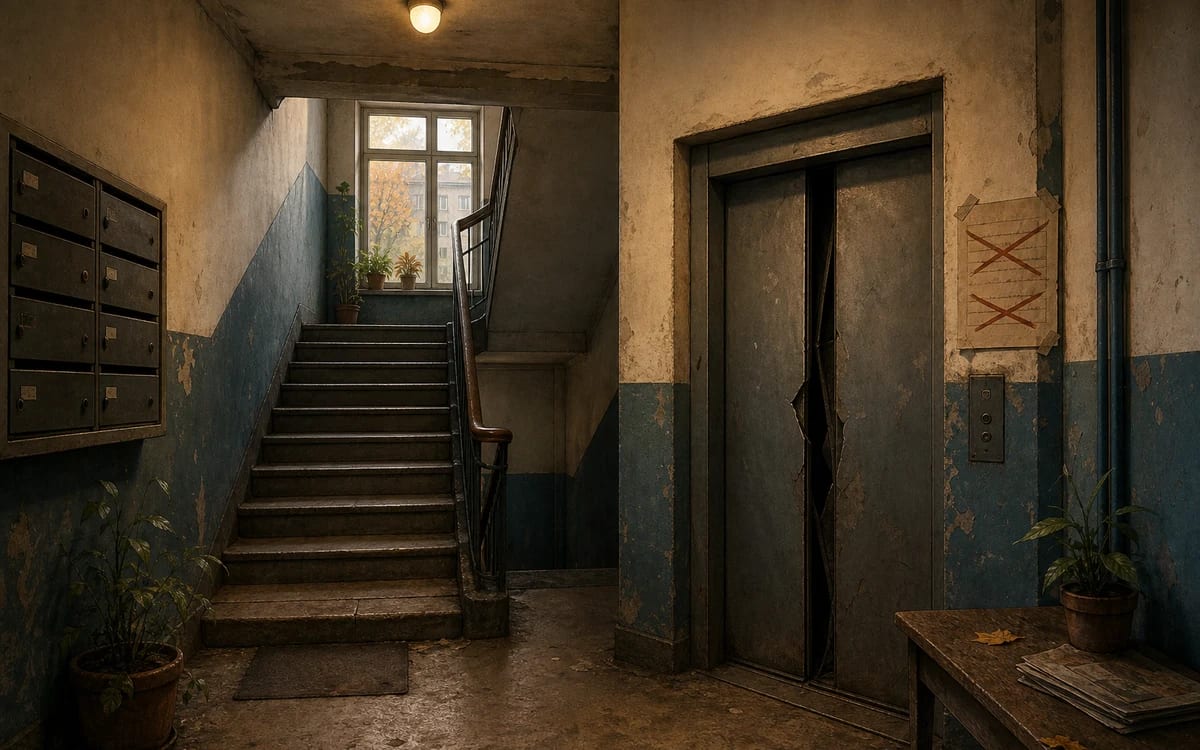
A broken elevator in a Buenos Aires apartment building forces two neighbors from different generations into an unexpected conversation that changes their view of each other.
Read story →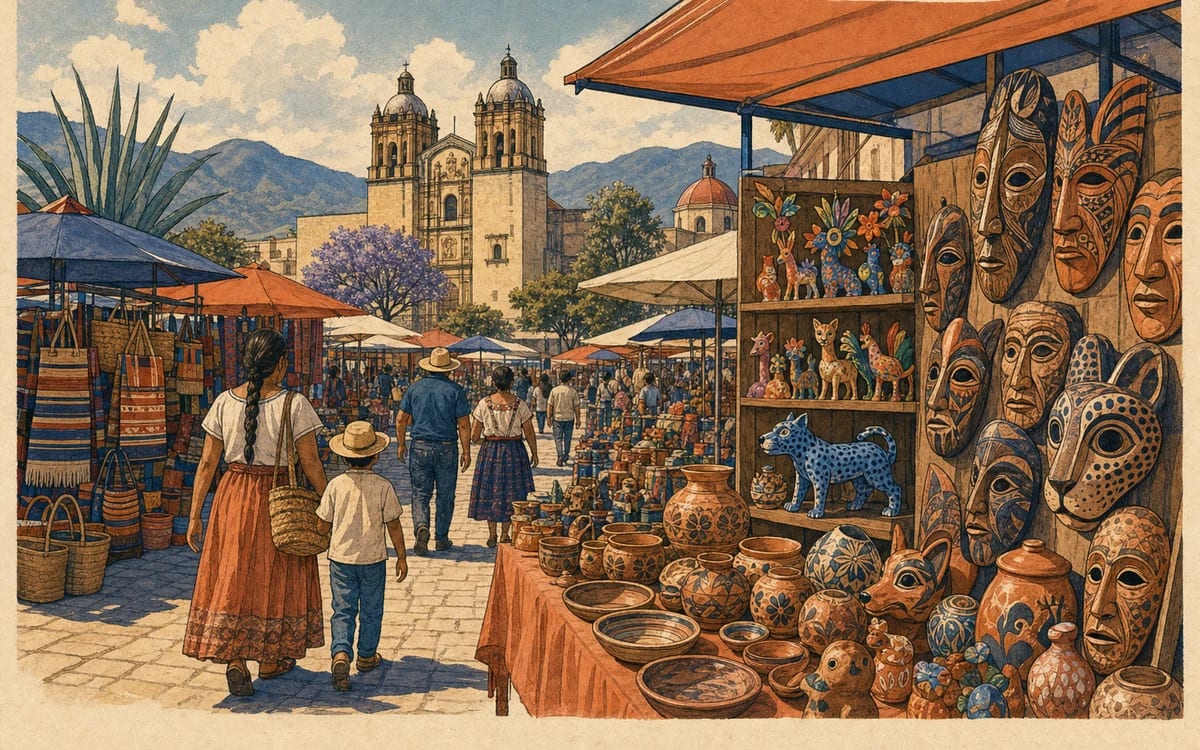
El mercado de artesanos
A visitor at an Oaxaca artisan market discovers that a seemingly simple ceramic piece carries a story her local guide won't translate.
Read story →
El vuelo reprogramado
After his flight is cancelled at the airport, Pablo goes to Atocha to book a train and bus route to Lisbon.
Read story →