Spanish Literature and Arts Through Short Stories
Arts and literature stories stretch your Spanish beyond survival phrases into description, mood, interpretation, and the language of creative attention.
Read in Spanish, then check the full English line
Try the story
Tap underlined words for a short gloss. Open the translation panel when you want the full English paragraph, then work through the comprehension prompts.
El Cuadro que Cambia
In a quiet museum, Ines notices that a painting seems different every time she looks away.
3 min read
Ines entra en la sala pequena del museum y se detiene frente a un azul.
Al principio ve un puerto, pero despues aparece una calle .
Un guardia sonrie y le dice que cada encuentra una escena distinta.
Ines escribe una en su cuaderno: "El arte tambien escucha."
Cuando sale del museo, la ciudad parece un poco mas .
Show English Translation
Ines enters the small room of the museum and stops in front of a blue painting. At first she sees a harbor, but later a narrow street appears. A guard smiles and tells her that each visitor finds a different scene. Ines writes a sentence in her notebook: "Art also listens." When she leaves the museum, the city seems a little more mysterious.
Comprehension Questions
1. ¿Dónde se detiene Inés al entrar?
Correct: Frente a un cuadro azul
Correct: cuadro azul. Opening movement places her “se detiene frente a un cuadro azul.”
2. ¿Qué cambia en la obra según los versos narrativos?
Correct: De un puerto pasa a una calle angosta
Correct: contraste puerto versus calle. Second line describes ver un puerto y luego “una calle estrecha.”
3. ¿Qué papel cumple la frase sobre el arte que escucha?
Correct: Resume su interpretación emocional de la sala
Correct: síntesis personal. Inés captura reflexión en notebook with “El arte también escucha,” signalling interpretive journaling.
4. ¿Cómo cambia la percepción de la ciudad al salir?
Correct: Parece un poco más misteriosa
Correct: ciudad más enigmática. Epilogue contrasts museum exit with ciudad “mas misteriosa,” mirroring tonal shift.
Vocabulary recap
Stories in this theme
Spanish Literature and Arts stories to read
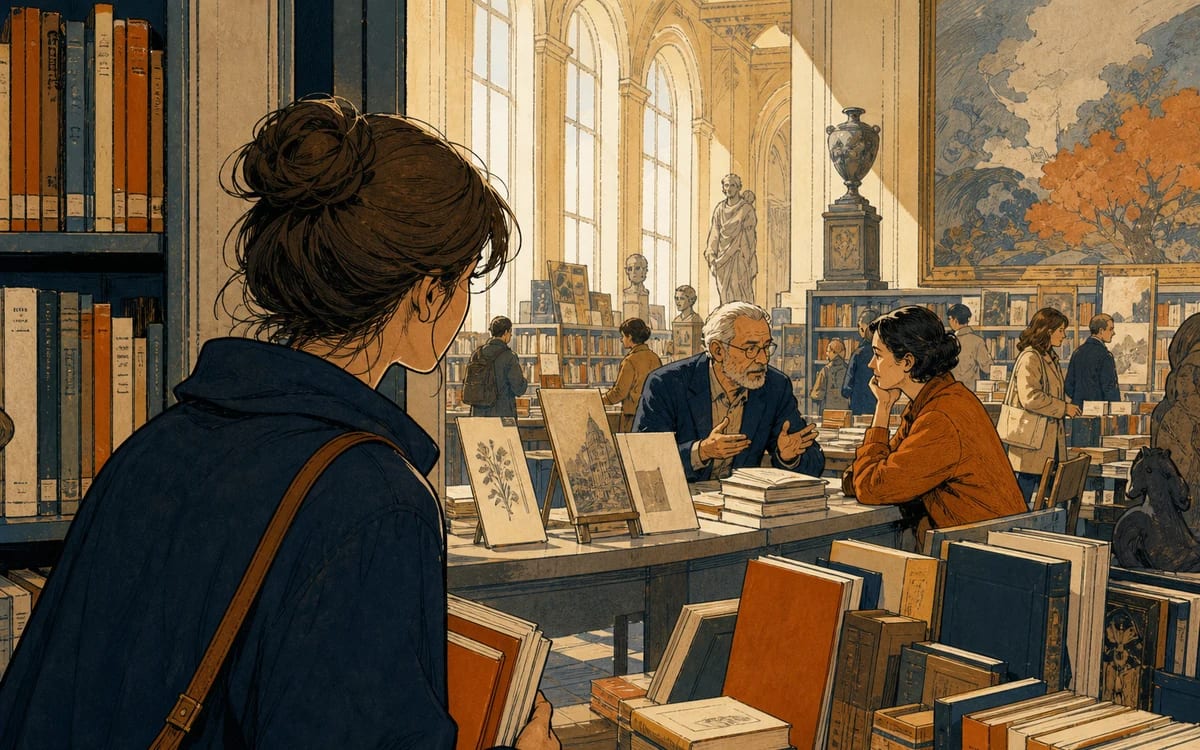
Una Tarde en la Biblioteca
Clara busca un rincón tranquilo para estudiar y se encuentra con una conversación inesperada en la biblioteca.
Open story →
El juicio
A minor property dispute in a small-town courtroom reveals a decades-old neighborhood secret during cross-examination that no one expected.
Open story →Answers
Spanish Literature and Arts stories — FAQ
Q01What is the Literature and Arts theme on MeloLingua?
What is the Literature and Arts theme on MeloLingua?
Arts and literature stories stretch your Spanish beyond survival phrases into description, mood, interpretation, and the language of creative attention. You can read a sample story on this page with glossed vocabulary and comprehension prompts before continuing in the app.
Q02What level is this Spanish story sample?
What level is this Spanish story sample?
This sample is labeled A2 and takes about 3 min read. Open related stories below to compare levels in the same theme.
Q03How should I read this Spanish story sample?
How should I read this Spanish story sample?
Read for gist first, tap underlined words only when meaning is blocked, then open the English line to confirm. Finish with the comprehension prompts before moving to the next story.
Q04Are there more Spanish stories in this theme?
Are there more Spanish stories in this theme?
Yes. Browse the story list at the bottom of this page or return to the main Spanish page for level-based libraries and reading practice.
Q05Can I continue this theme in the MeloLingua app?
Can I continue this theme in the MeloLingua app?
Yes. The app adds native audio, shadow and speak drills, vocabulary review, and daily sessions tied to the stories you finish.
Keep the session going
Continue learning Spanish through your own stories
Read the sample here, then continue with native audio, shadow and speak drills, vocabulary review, and progress tied to the stories you finish.