La rencontre au marché
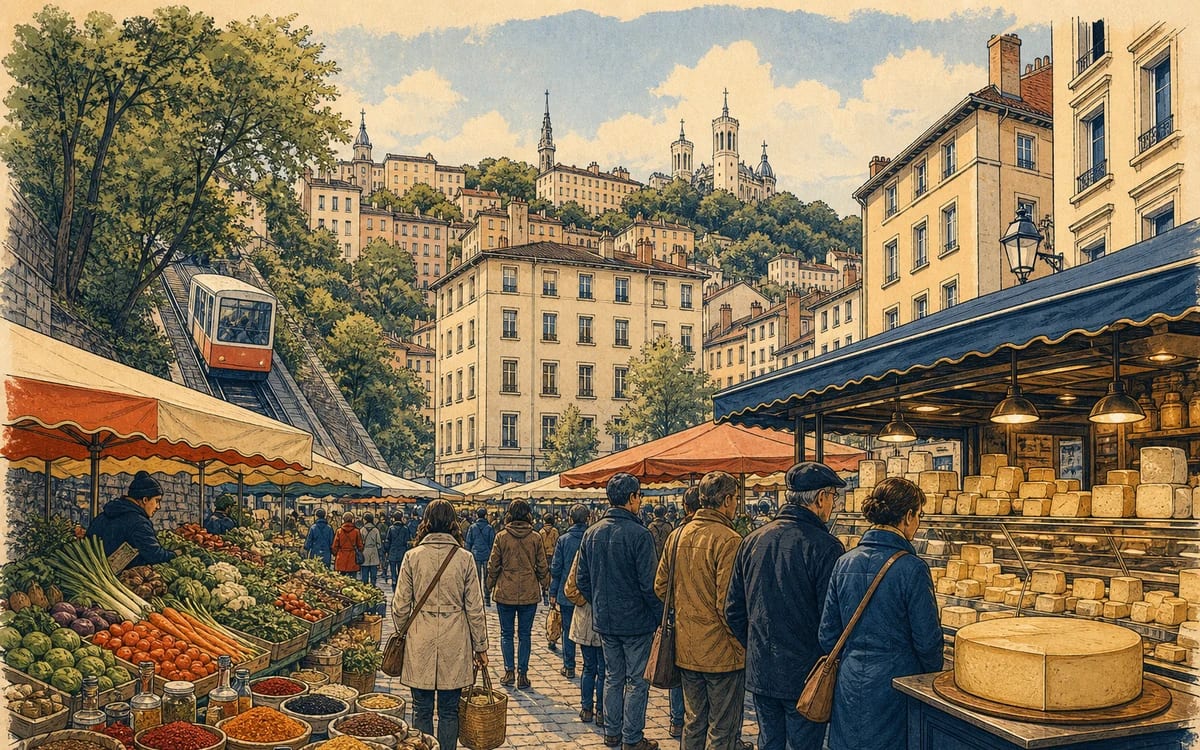
It was Saturday morning, and the Croix-Rousse market was in full swing. The stalls overflowed with colorful vegetables and fragrant spices.
What you'll learn
- Bilingual graded story
- Native narration
- 6 useful words
- 5 comprehension questions
Then shadow
Borrow the narrator’s rhythm
Pause after this line and repeat it aloud without translating. Aim for three clean repetitions.
1Listen first
Hear the whole story
Native French narration of this exact text. Keep the transcript visible on the first pass.
Playback speed: Natural
2Then shadow
C'était samedi matin, et le marché de la Croix-Rousse battait son plein. Les étals débordaient de légumes colorés et d'épices odorantes.Warm-up vocabulary
Preview 2 optional words before reading
Your French story
Read along with the narration, and tap any highlighted word for its meaning
C'était samedi matin, et le marché de la Croix-Rousse battait son plein. Les étals débordaient de légumes colorés et d'épices odorantes.
It was Saturday morning, and the Croix-Rousse market was in full swing. The stalls overflowed with colorful vegetables and fragrant spices.
Devant de fromages, une dizaine de personnes attendaient leur tour. Chloé regardait la dernière portion de Comté avec envie.
In front of the cheese stall, about ten people were waiting their turn. Chloé eyed the last portion of Comté eagerly.
« Il ne me reste qu'une portion de Comté », annonça .
“I only have one portion of Comté left,” the cheesemonger announced.
Quand leur tour arriva, Chloé et un jeune homme — Hugo — demandèrent le Comté en même temps. Ils échangèrent un regard gêné.
When their turn came, Chloé and a young man—Hugo—asked for the Comté at the same time. They exchanged an awkward look.
« Après vous, madame, » proposa Hugo poliment. Chloé hésita. « Non, vraiment, vous étiez là avant moi, je crois. »
"After you, madam," Hugo offered politely. Chloé hesitated. "No, really, you were here before me, I think."
Finalement, Hugo fit un geste élégant et dit : « Je vous cède la place. Mais peut-être pourrions-nous partager ? »
Finally, Hugo made an elegant gesture and said, “I'll let you go first. But perhaps we could share the portion?”
Chloé sourit. « Partager ? C'est une idée qui me plaît. » Le fromager les regarda, amusé, et coupa la portion en deux.
Chloé smiled. “Share? That's an idea I like.” The cheesemonger watched them, amused, and cut the portion in two.
Pendant qu'il emballait les parts, Hugo et Chloé se mirent à discuter. Il était architecte ; elle travaillait dans une librairie du Vieux Lyon.
While he wrapped the portions, Hugo and Chloé started chatting. He was an architect; she worked in a bookshop in Old Lyon.
« Vous connaissez un bon endroit pour déguster du Comté avec un verre de vin ? » demanda Hugo. Chloé réfléchit une seconde.
"Do you know a good place to taste Comté with a glass of wine?" asked Hugo. Chloé thought for a second.
« Oui, justement, le bistro en bas de ma rue. Si vous voulez, je vous montrerai. » Leur compétition s'était transformée en rendez-vous.
"Yes, actually, the bistro at the bottom of my street. If you want, I'll show you." Their competition had turned into a date.
Vocabulary recap
Reading Comprehension Exercise
B1 French Reading Comprehension Exercises
1. Where does the story take place?
Correct: At the Croix-Rousse market in Lyon
The story takes place at the Croix-Rousse market, a famous Lyon market, on a Saturday morning.
2. Why do Chloé and Hugo end up competing?
Correct: For the last portion of Comté
There is only one portion of Comté left, and they both ask for it when their turn comes.
3. What solution does Hugo propose?
Correct: To share the portion
Hugo suggests sharing the last portion of Comté.
4. What is Hugo's profession?
Correct: Architect
Hugo says he is an architect, while Chloé works in a bookshop in Old Lyon.
5. How does their meeting end?
Correct: They decide to taste Comté together
Their competition turns into a friendly date: Chloé offers to show Hugo a bistro where they can taste the Comté.
Nailed the quiz? Start your own story in MeloLingua →
Line 1 / 10
0:00/–:––
Mini-lesson complete
You understood 5 of 5 questions.
That is 215 real French words read in context.
- ✓ 215 words read
- 6 new expressions
- 3 grammar patterns
- B1 level unlocked
- ○ Narration ready
- 0 shadowing reps
Ready for tomorrow’s story?Hear it, shadow the narrator, and lock these words into memory in MeloLingua.
Start learning with storiesOne story. The whole practice loop.
Reading this story for free is just the first rep. The MeloLingua app turns the same story into a full practice loop — understand every word, speak it back, build sentences, and keep stories coming that match what you actually care about.
| What you get | FreeThis story | Full loopMeloLingua app |
|---|---|---|
| Understand every sentence instantly | Bilingual reader, tap to translate | Interactive reader with word-by-word explanations |
| Know exactly why each word works | Basic translation in context | Translation, grammar, conjugation & usage examples |
| Train your ear with native audio | Studio narration — slow, normal, fast | Listen, follow along, and shadow the narrator |
| Speak like a native while reading | Read aloud on your own | Real-time pronunciation feedback |
| Turn what you read into what you can say | Not included | Build sentences from the story you just read |
| Never forget today's vocabulary | In-story glossary + comprehension quiz | Flashcards & spaced review from story lines |
| Read stories about your real life | Not included | Stories matched to your level and interests |
| Feel yourself improve every day | Not included | Streaks, goals, and your full learning history |
| Result | Enjoy a great story | Actually speak with confidence |
Understand every sentence instantly
Know exactly why each word works
Train your ear with native audio
Speak like a native while reading
Turn what you read into what you can say
Never forget today's vocabulary
Read stories about your real life
Feel yourself improve every day
Result
Make stories aboutyour life
Most language apps hand everyone the same content. MeloLingua lets you create stories around the things you actually enjoy — so staying consistent stops feeling like homework.
- “I love space and cooking”Your story
A chef opens the first restaurant on Mars.
- “I like football and history”Your story
A young striker time-travels to play the legendary teams.
- “I enjoy surfing and travel”Your story
A surfer hunts secret waves across the world.
- “I like Brazilian Jiu-Jitsu and sci-fi”Your story
An astronaut enters the first intergalactic grappling tournament.
Read it. Listen to it. Speak it back. The more it sounds likeyour world, the easier it is to keep going.
Generate your first storyMake it yours
Your next French story is one tap away
Turn today's read into a daily habit — personalized scenes, native audio, tap-to-translate vocabulary, and speaking drills matched to what you just understood.
Keep reading on-site
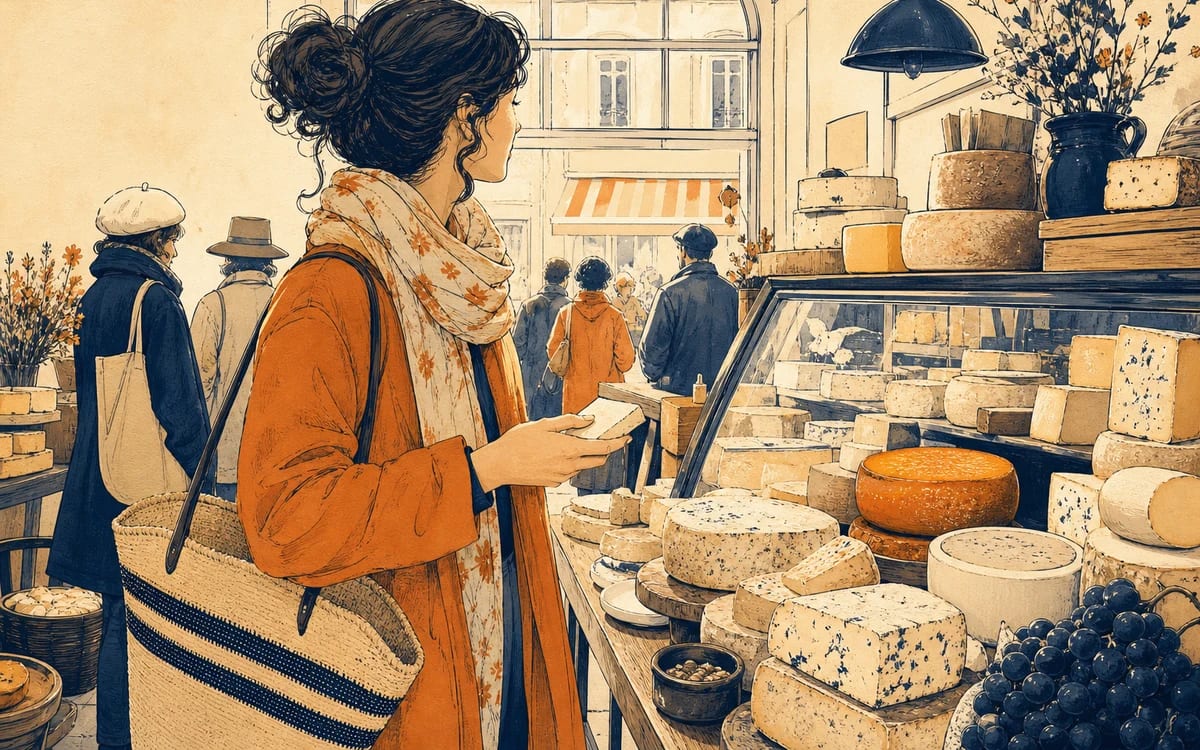
Au marché
Claire navigates a vibrant market, her senses alive with colors and sounds, as she fills her bag with fresh produce and flowers.
Read story →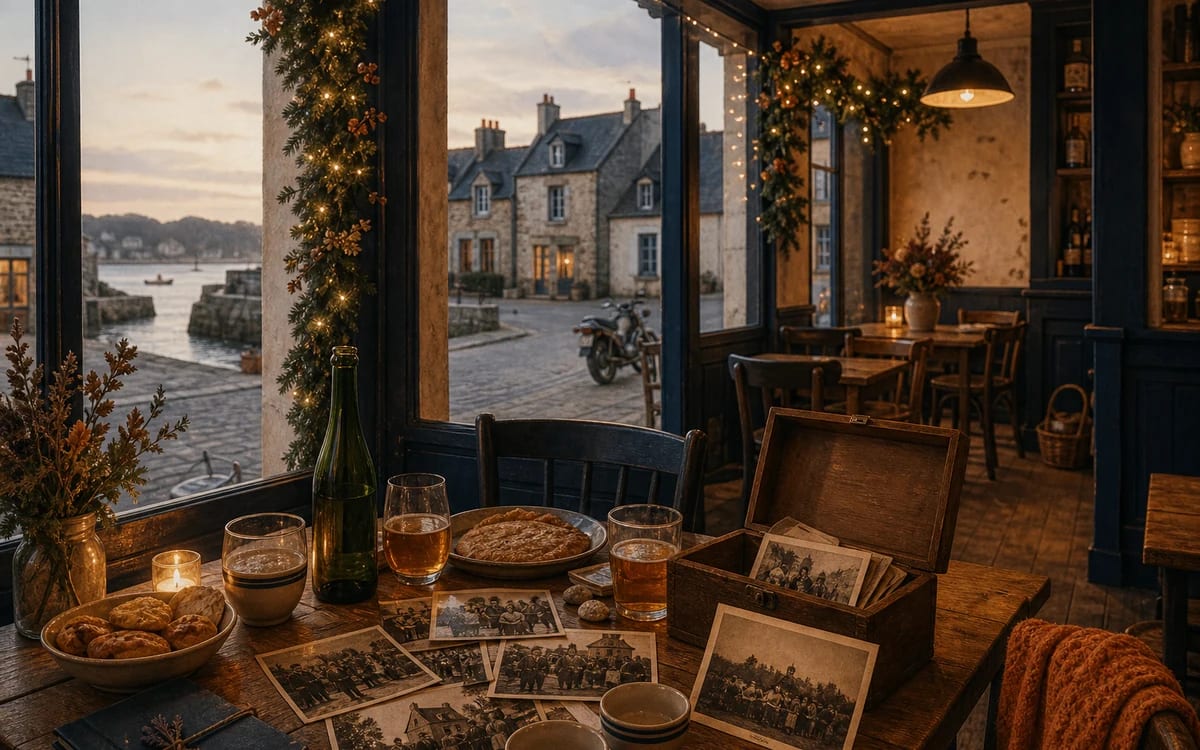
La réunion des anciens
At a class reunion in Brittany, an old photograph forces former classmates to confront a silence they have carried for twenty years.
Read story →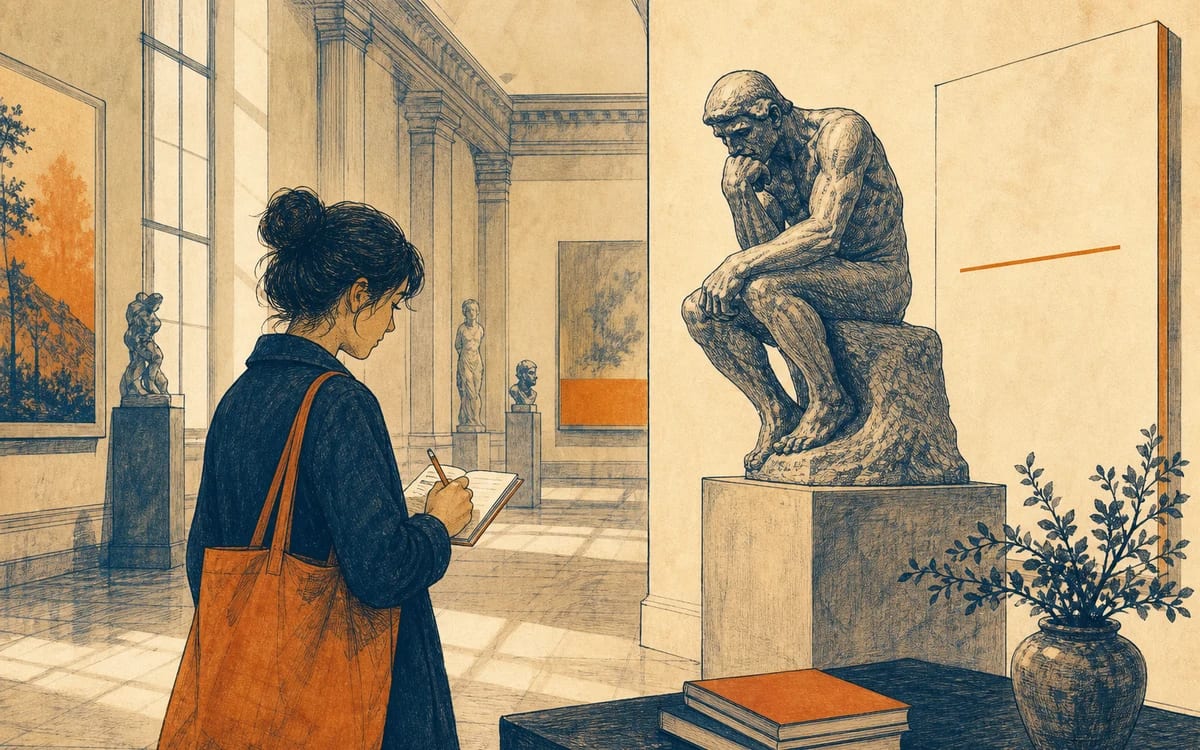
Le musée Rodin en octobre
Sara visits on a grey Tuesday, copies one line from a cartel beside Le Penseur, and leaves believing marble can still argue gently.
Read story →