Il Caffè della Mattina
Every morning, Marco wakes up at seven, with the sun filtering through the curtains. He gets dressed quickly and leaves the house, feeling the fresh morning air.

What you'll learn
- Bilingual graded story
- Native narration
- 9 useful words
- 5 comprehension questions
Then shadow
Borrow the narrator’s rhythm
Pause after this line and repeat it aloud without translating. Aim for three clean repetitions.
1Listen first
Hear the whole story
Native Italian narration of this exact text. Keep the transcript visible on the first pass.
Playback speed: Natural
2Then shadow
Ogni mattina, Marco si sveglia alle sette, con il sole che filtra attraverso le tende.Warm-up vocabulary
Preview 3 optional words before reading
Your Italian story
Read along with the narration, and tap any highlighted word for its meaning
Ogni mattina, Marco alle sette, con il sole che filtra attraverso le tende.
Every morning, Marco wakes up at seven, with the sun filtering through the curtains.
Si veste velocemente e esce di casa, sentendo l'aria fresca del mattino.
He gets dressed quickly and leaves the house, feeling the fresh morning air.
Cammina per la strada fino al bar sotto casa, ascoltando il canto degli uccelli.
He walks down the street to the bar below his home, listening to the birds singing.
si chiama "Bar Roma" ed è molto piccolo, ma sempre pieno di voci e risate.
The bar is called "Bar Roma" and it is very small, but always full of voices and laughter.
Marco entra e dice: "Buongiorno! Un caffè, per favore." Il barista sorride e prepara un espresso.
Marco enters and says: "Good morning! A coffee, please." The barista smiles and prepares an espresso.
Il caffè è forte e caldo, con un aroma che riempie l'aria.
The coffee is strong and hot, with an aroma that fills the air.
Marco beve il caffè al bancone, come molti clienti abituali, godendosi il momento.
Marco drinks his coffee at the counter, like many regular customers, savoring the moment.
Mangia anche un cornetto con la marmellata, dolce e friabile. " Quanto costa?" chiede Marco, con un sorriso.
He also eats a croissant with jam, sweet and flaky. " How much does it cost?" Marco asks, with a smile.
"Un euro e cinquanta," risponde il barista, con un cenno del capo.
"One euro and fifty cents," the barista answers, with a nod.
Marco paga e lascia una piccola , apprezzando il servizio. " Grazie, a domani!" dice Marco, mentre si avvia verso la porta.
Marco pays and leaves a small tip, appreciating the service. " Thanks, see you tomorrow!" Marco says, as he heads for the door.
Poi cammina verso l'ufficio, con il profumo del caffè ancora nel naso. La mattina comincia bene con un buon caffè e un sorriso.
Then he walks toward the office, with the scent of coffee still in his nose. The morning starts well with a good coffee and a smile.
Mentre esce, Marco decide che il giorno seguente proverà il caffè senza zucchero, seguendo il consiglio del barista.
As he leaves, Marco decides that the next day he will try his coffee without sugar, following the barista’s advice.
Vocabulary recap
Reading Comprehension Exercise
B1 Italian Reading Comprehension Exercises
1. What is the name of the bar Marco visits every morning?
Correct: Bar Roma
The bar is called "Bar Roma" and it's a small but lively place, always full of voices and laughter.
2. What does Marco order at the bar?
Correct: A coffee
Marco orders a coffee, a typical Italian drink, strong and hot.
3. How much does the coffee and croissant that Marco has cost?
Correct: One euro and fifty
The cost of the coffee and croissant is one euro and fifty, a common price for an Italian breakfast.
4. What does Marco do after drinking his coffee?
Correct: He goes to the office
After enjoying his coffee, Marco heads to the office, ready to start the day.
5. How does Marco feel as he walks to the office?
Correct: Happy
Marco feels happy, with the aroma of coffee still in his nose and a smile on his face.
Nailed the quiz? Start your own story in MeloLingua →
Line 1 / 12
0:00/–:––
Mini-lesson complete
You understood 5 of 5 questions.
That is 192 real Italian words read in context.
- ✓ 192 words read
- 9 new expressions
- 2 grammar patterns
- B1 level unlocked
- ○ Narration ready
- 0 shadowing reps
Ready for tomorrow’s story?Hear it, shadow the narrator, and lock these words into memory in MeloLingua.
Start learning with storiesOne story. The whole practice loop.
Reading this story for free is just the first rep. The MeloLingua app turns the same story into a full practice loop — understand every word, speak it back, build sentences, and keep stories coming that match what you actually care about.
| What you get | FreeThis story | Full loopMeloLingua app |
|---|---|---|
| Understand every sentence instantly | Bilingual reader, tap to translate | Interactive reader with word-by-word explanations |
| Know exactly why each word works | Basic translation in context | Translation, grammar, conjugation & usage examples |
| Train your ear with native audio | Studio narration — slow, normal, fast | Listen, follow along, and shadow the narrator |
| Speak like a native while reading | Read aloud on your own | Real-time pronunciation feedback |
| Turn what you read into what you can say | Not included | Build sentences from the story you just read |
| Never forget today's vocabulary | In-story glossary + comprehension quiz | Flashcards & spaced review from story lines |
| Read stories about your real life | Not included | Stories matched to your level and interests |
| Feel yourself improve every day | Not included | Streaks, goals, and your full learning history |
| Result | Enjoy a great story | Actually speak with confidence |
Understand every sentence instantly
Know exactly why each word works
Train your ear with native audio
Speak like a native while reading
Turn what you read into what you can say
Never forget today's vocabulary
Read stories about your real life
Feel yourself improve every day
Result
Make stories aboutyour life
Most language apps hand everyone the same content. MeloLingua lets you create stories around the things you actually enjoy — so staying consistent stops feeling like homework.
- “I love space and cooking”Your story
A chef opens the first restaurant on Mars.
- “I like football and history”Your story
A young striker time-travels to play the legendary teams.
- “I enjoy surfing and travel”Your story
A surfer hunts secret waves across the world.
- “I like Brazilian Jiu-Jitsu and sci-fi”Your story
An astronaut enters the first intergalactic grappling tournament.
Read it. Listen to it. Speak it back. The more it sounds likeyour world, the easier it is to keep going.
Generate your first storyMake it yours
Your next Italian story is one tap away
Turn today's read into a daily habit — personalized scenes, native audio, tap-to-translate vocabulary, and speaking drills matched to what you just understood.
Keep reading on-site

Colloquio per lo stage
Giulia arriva in anticipo, spiega progetti universitari e mediazione di gruppo, e aspetta l'email del venerdì con l'esito.
Read story →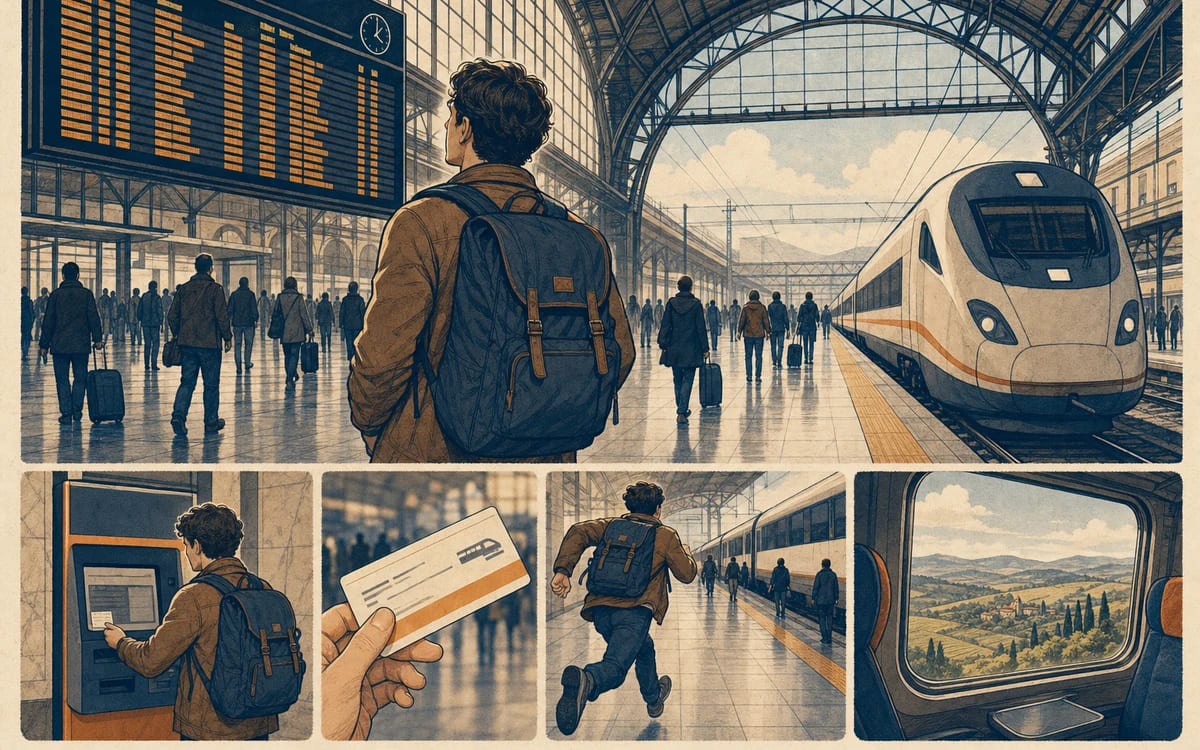
In Treno verso Firenze
Luca embarks on a train journey from bustling Rome to the enchanting city of Florence, where the adventure truly begins.
Read story →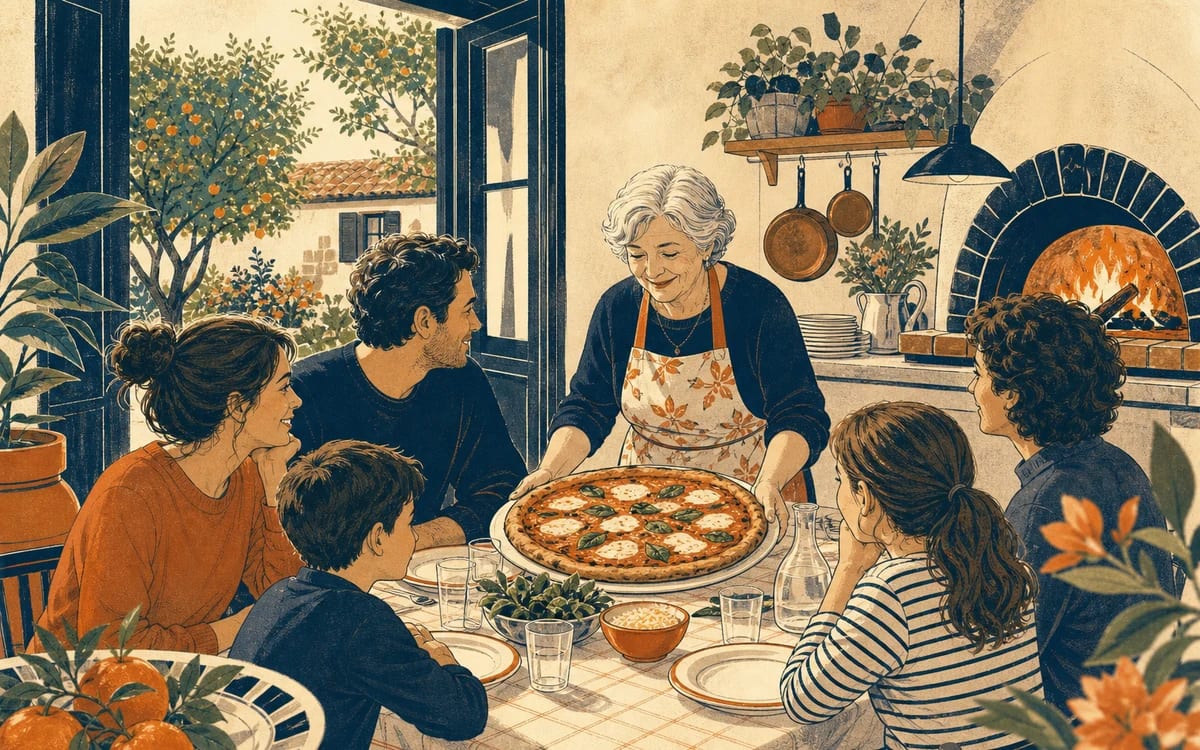
La Cena della Nonna
Every Sunday, the Rossi family gathers at Nonna Teresa's cozy home for a feast filled with laughter, love, and the aroma of lasagna.
Read story →