La Cena della Nonna
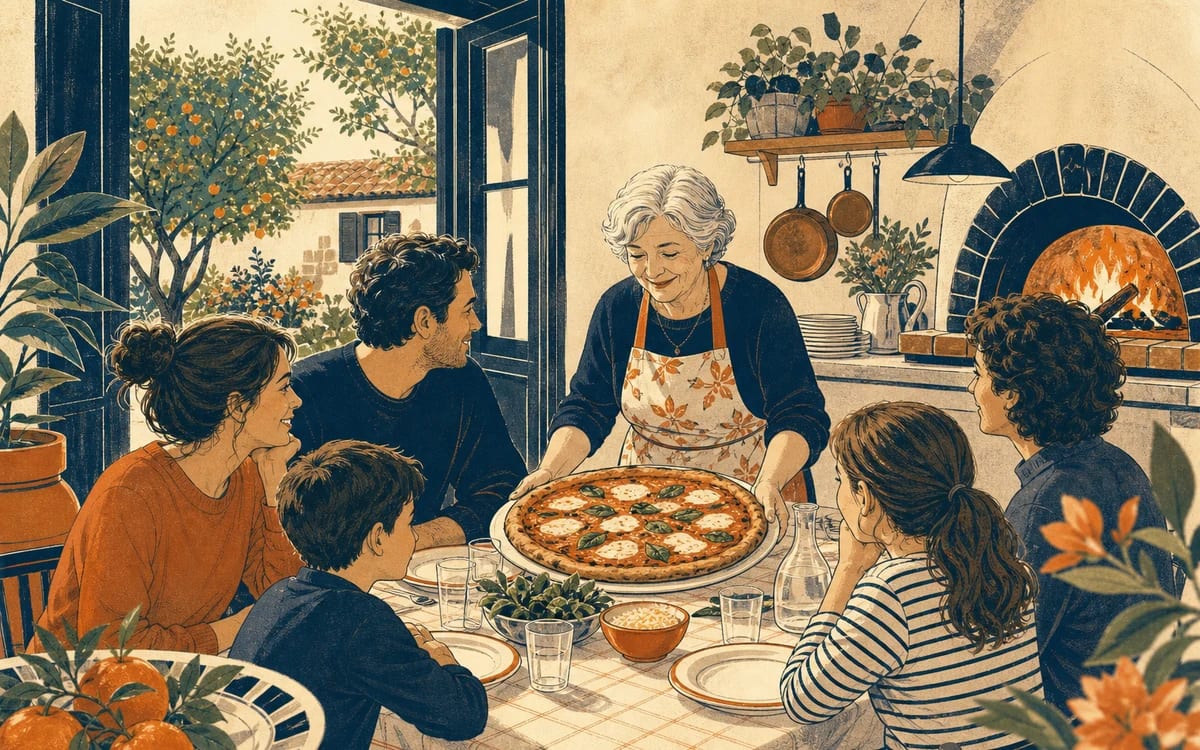
Every Sunday, the Rossi family goes to dinner at grandmother's house. Grandmother's name is Teresa, and she lives in a small house with a big garden.
What you'll learn
- Bilingual graded story
- Native narration
- 9 useful words
- 3 comprehension questions
Then shadow
Borrow the narrator’s rhythm
Pause after this line and repeat it aloud without translating. Aim for three clean repetitions.
1Listen first
Hear the whole story
Native Italian narration of this exact text. Keep the transcript visible on the first pass.
Playback speed: Natural
2Then shadow
Ogni domenica, la famiglia Rossi va a cena dalla nonna.Warm-up vocabulary
Preview 3 optional words before reading
Your Italian story
Read along with the narration, and tap any highlighted word for its meaning
Ogni domenica, la famiglia Rossi va a cena dalla nonna.
Every Sunday, the Rossi family goes to dinner at grandmother's house.
La nonna si chiama Teresa e vive in una casa piccola con un grande giardino.
Grandmother's name is Teresa, and she lives in a small house with a big garden.
Quando i nipoti arrivano, la nonna li abbraccia forte. " Benvenuti, i miei tesori!" dice sempre.
When the grandchildren arrive, she hugs them tightly. " Welcome, my treasures!" she always says.
La è calda e profuma di sugo e pane fresco. La nonna prepara le lasagne, il suo piatto famoso.
The kitchen is warm and smells of sauce and fresh bread. Grandmother prepares lasagna, her famous dish.
Il nonno la tavola con la tovaglia bianca e i piatti belli.
Grandfather sets the table with the white tablecloth and the nice plates.
I bambini aiutano a portare i bicchieri e le .
The children help carry the glasses and the silverware.
"A tavola!" chiama la nonna. Tutta la famiglia si siede . Il padre taglia il pane. La madre serve l'insalata.
"Time to eat!" calls grandmother. The whole family sits down together. Father slices the bread. Mother serves the salad.
"Nonna, le tue lasagne sono le migliori del mondo," dice la figlia più piccola.
"Grandma, your lasagna is the best in the world," says the youngest daughter.
La nonna ride e dice: "Il segreto è tanto amore e un po' di pazienza."
Grandmother laughs and says, "The secret is lots of love and a little patience."
Dopo cena, i bambini giocano in giardino. Gli adulti bevono il caffè e parlano.
After dinner, the children play in the garden. The adults drink coffee and chat.
La nonna guarda la sua famiglia e sorride. Questa è la sua felicità: tutti insieme, intorno alla tavola.
Grandmother looks at her family and smiles. This is her happiness: everyone together, around the table.
Prima che vadano via, Teresa avvolge due porzioni di lasagne per i nipoti e ricorda loro di tornare la domenica successiva.
Before they leave, Teresa wraps up two portions of lasagna for her grandchildren and reminds them to come back the following Sunday.
Vocabulary recap
Reading Comprehension Exercise
B1 Italian Reading Comprehension Exercises
1. What is grandmother's famous dish?
Correct: Lasagna
Grandmother is famous for her lasagna, a traditional Italian dish loved by many.
2. What do the children do after dinner?
Correct: Play in the garden
After dinner, the children play in the garden, enjoying time outdoors.
3. What does grandmother say about her culinary secret?
Correct: She puts lots of love
Grandmother reveals that her secret is lots of love and a bit of patience, a special ingredient in every dish.
Nailed the quiz? Start your own story in MeloLingua →
Line 1 / 12
0:00/–:––
Mini-lesson complete
You understood 3 of 3 questions.
That is 186 real Italian words read in context.
- ✓ 186 words read
- 9 new expressions
- 2 grammar patterns
- B1 level unlocked
- ○ Narration ready
- 0 shadowing reps
Ready for tomorrow’s story?Hear it, shadow the narrator, and lock these words into memory in MeloLingua.
Start learning with storiesOne story. The whole practice loop.
Reading this story for free is just the first rep. The MeloLingua app turns the same story into a full practice loop — understand every word, speak it back, build sentences, and keep stories coming that match what you actually care about.
| What you get | FreeThis story | Full loopMeloLingua app |
|---|---|---|
| Understand every sentence instantly | Bilingual reader, tap to translate | Interactive reader with word-by-word explanations |
| Know exactly why each word works | Basic translation in context | Translation, grammar, conjugation & usage examples |
| Train your ear with native audio | Studio narration — slow, normal, fast | Listen, follow along, and shadow the narrator |
| Speak like a native while reading | Read aloud on your own | Real-time pronunciation feedback |
| Turn what you read into what you can say | Not included | Build sentences from the story you just read |
| Never forget today's vocabulary | In-story glossary + comprehension quiz | Flashcards & spaced review from story lines |
| Read stories about your real life | Not included | Stories matched to your level and interests |
| Feel yourself improve every day | Not included | Streaks, goals, and your full learning history |
| Result | Enjoy a great story | Actually speak with confidence |
Understand every sentence instantly
Know exactly why each word works
Train your ear with native audio
Speak like a native while reading
Turn what you read into what you can say
Never forget today's vocabulary
Read stories about your real life
Feel yourself improve every day
Result
Make stories aboutyour life
Most language apps hand everyone the same content. MeloLingua lets you create stories around the things you actually enjoy — so staying consistent stops feeling like homework.
- “I love space and cooking”Your story
A chef opens the first restaurant on Mars.
- “I like football and history”Your story
A young striker time-travels to play the legendary teams.
- “I enjoy surfing and travel”Your story
A surfer hunts secret waves across the world.
- “I like Brazilian Jiu-Jitsu and sci-fi”Your story
An astronaut enters the first intergalactic grappling tournament.
Read it. Listen to it. Speak it back. The more it sounds likeyour world, the easier it is to keep going.
Generate your first storyMake it yours
Your next Italian story is one tap away
Turn today's read into a daily habit — personalized scenes, native audio, tap-to-translate vocabulary, and speaking drills matched to what you just understood.
Keep reading on-site

Colloquio per lo stage
Giulia arriva in anticipo, spiega progetti universitari e mediazione di gruppo, e aspetta l'email del venerdì con l'esito.
Read story →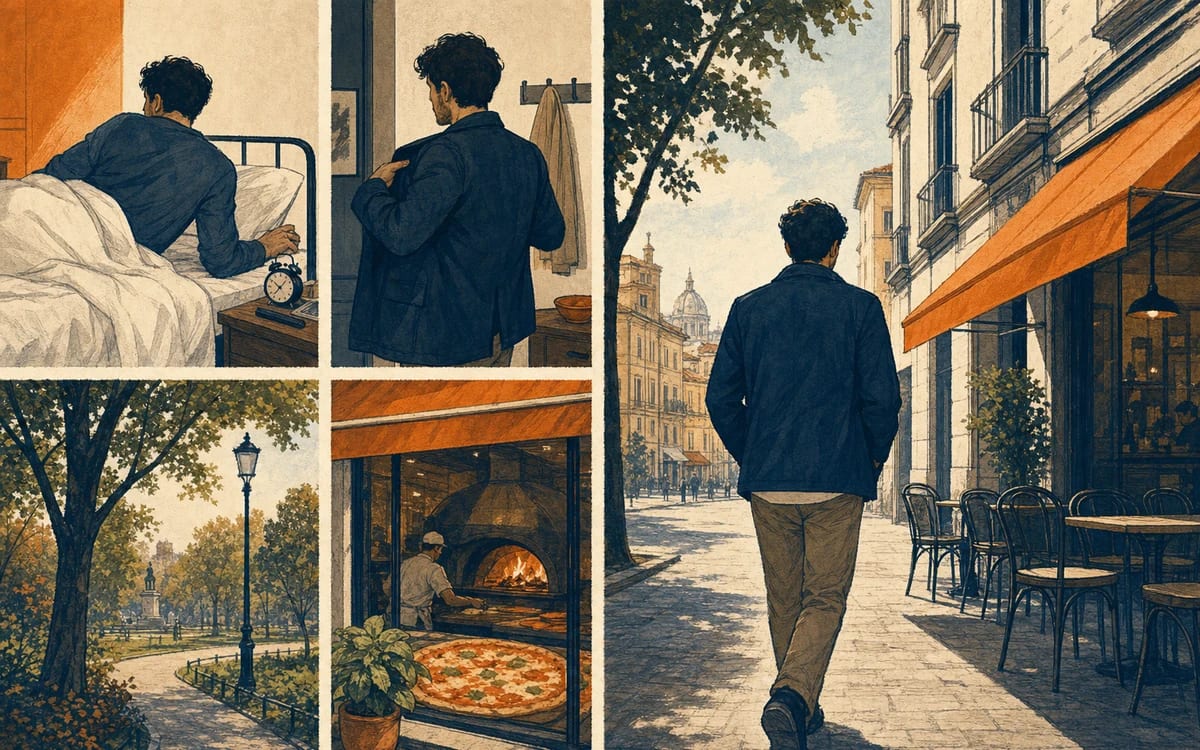
Il Caffè della Mattina
Every morning, Marco wakes up at seven. He gets dressed quickly and leaves the house. He walks down the street to the bar below his home.
Read story →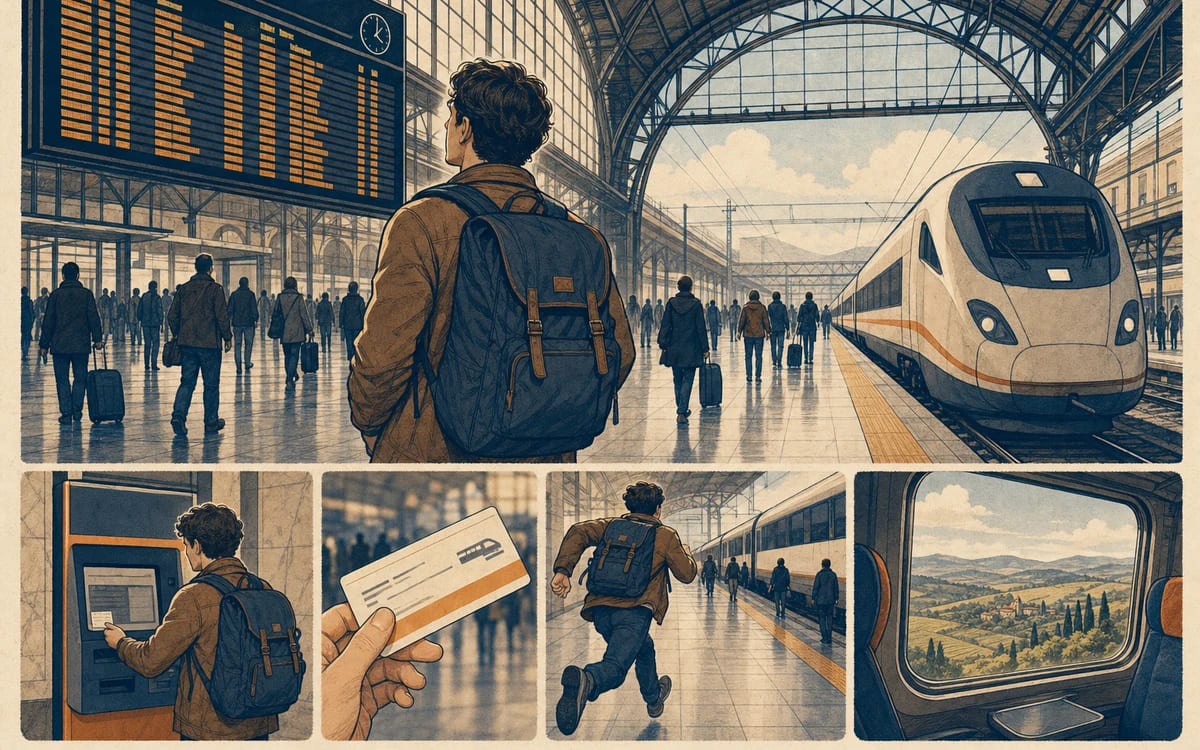
In Treno verso Firenze
Luca embarks on a train journey from bustling Rome to the enchanting city of Florence, where the adventure truly begins.
Read story →