Visita serale al museo
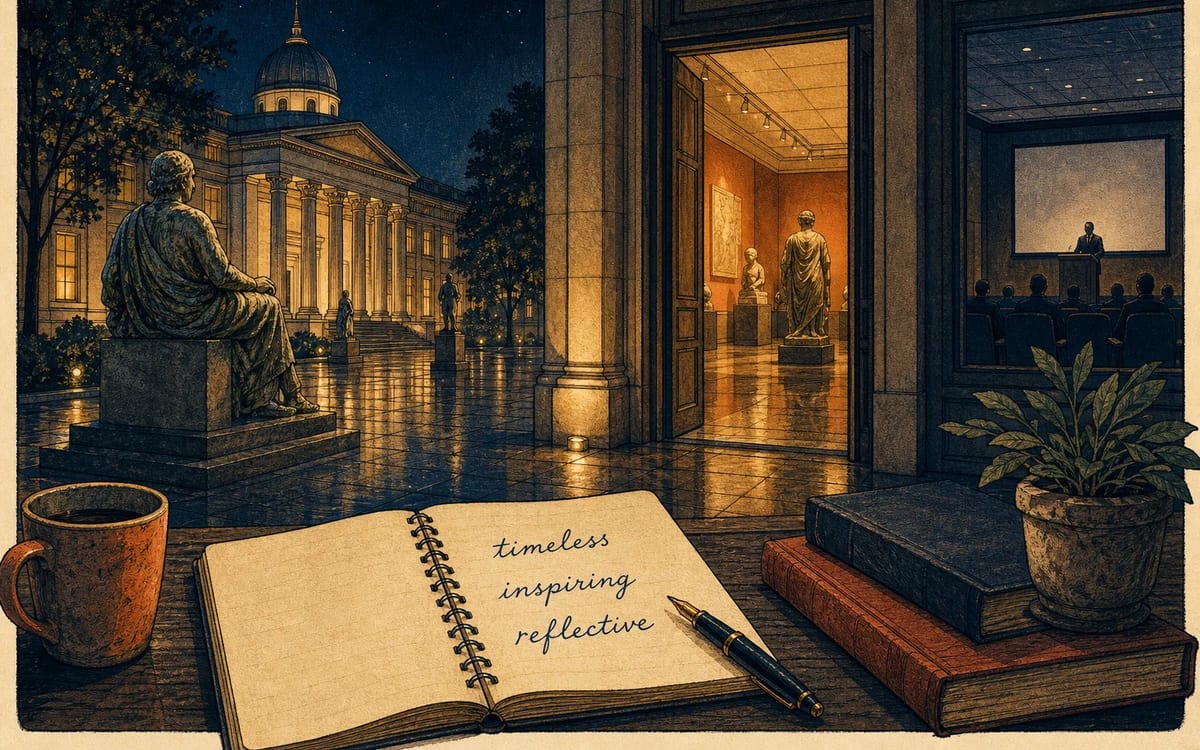
Last night, Alessandro crossed the courtyard bathed in soft lights and entered the civic museum just minutes before the evening tour began.
What you'll learn
- Bilingual graded story
- English translation
- 6 useful words
- 3 comprehension questions
Your Italian story
Tap highlighted words when you need help
Ieri sera Alessandro ha attraversato il illuminato da luci soffuse ed è entrato nel museo civico pochi minuti prima dell'inizio della visita guidata serale.
Last night, Alessandro crossed the courtyard bathed in soft lights and entered the civic museum just minutes before the evening tour began.
La guida ha spiegato che alcune statue furono ripulite con tecniche delicate che rispettano la originale lasciata dal tempo.
The guide explained that some statues were cleaned using gentle techniques that preserve the original patina left by time.
Durante il percorso, ha notato riflessi dorati sul lucido e ha capito come la luce calda trasformi la percezione delle forme.
As he walked, he noticed golden reflections on the polished floor and understood how warm light transforms the perception of shapes.
Nella sala multimediale, ha ascoltato una registrata di uno scultore locale che descriveva il lavoro quotidiano in .
In the media room, he listened to a recorded account by a local sculptor describing the daily work in the workshop.
Prima di uscire, ha scritto sul quaderno tre precisi per ricordare le sensazioni più che i titoli delle opere.
Before leaving, he jotted down three precise adjectives in his notebook to capture the sensations rather than the titles of the artworks.
Poi Alessandro ha chiesto alla guida perché il museo apra di sera soltanto una volta al mese e quali opere cambino di più sotto questa illuminazione.
Alessandro then asked the guide why the museum opens at night only once a month and which works change the most under this lighting.
La guida ha spiegato che l'orario speciale permette ai visitatori di osservare le opere in gruppi più piccoli e di fare domande con calma. Le statue, in particolare, sembrano cambiare perché le ombre ne fanno risaltare i dettagli.
The guide explained that the special opening hours let visitors see the works in smaller groups and ask questions without rushing. The statues, in particular, seem to change as the shadows bring out their details.
Sulla via del ritorno, Alessandro ha riletto i suoi tre aggettivi — silenzioso, dorato, intimo — e ha deciso di usarli per raccontare la visita agli amici, insieme a ciò che aveva imparato sulla conservazione delle statue.
On the way home, Alessandro reread his three adjectives—quiet, golden, intimate—and decided to use them to tell his friends about the visit, along with what he had learned about preserving statues.
Vocabulary recap
Reading Comprehension Exercise
B1 Italian Reading Comprehension Exercises
1. When does Alessandro enter the museum?
Correct: A few minutes before the evening guided tour
Alessandro enters the museum shortly before the start of the evening guided tour, taking advantage of the courtyard's soft lighting.
2. What does the guide explain about the statues?
Correct: They were cleaned with delicate techniques that respect the original patina
The guide emphasizes the importance of preserving the original patina of the statues, a sign of passing time.
3. What does he write in his notebook as he leaves?
Correct: Three precise adjectives to remember the sensations
Alessandro focuses on the sensations experienced during the visit, noting adjectives that describe them.
Nailed the quiz? Start your own story in MeloLingua →
Mini-lesson complete
You understood 3 of 3 questions.
That is 207 real Italian words read in context.
- ✓ 207 words read
- 6 new expressions
- 2 grammar patterns
- B1 level unlocked
Ready for tomorrow’s story?Hear it, shadow the narrator, and lock these words into memory in MeloLingua.
Start learning with storiesOne story. The whole practice loop.
Reading this story for free is just the first rep. The MeloLingua app turns the same story into a full practice loop — understand every word, speak it back, build sentences, and keep stories coming that match what you actually care about.
| What you get | FreeThis story | Full loopMeloLingua app |
|---|---|---|
| Understand every sentence instantly | Bilingual reader, tap to translate | Interactive reader with word-by-word explanations |
| Know exactly why each word works | Basic translation in context | Translation, grammar, conjugation & usage examples |
| Train your ear with native audio | Not included | Listen, follow along, and shadow the narrator |
| Speak like a native while reading | Read aloud on your own | Real-time pronunciation feedback |
| Turn what you read into what you can say | Not included | Build sentences from the story you just read |
| Never forget today's vocabulary | In-story glossary + comprehension quiz | Flashcards & spaced review from story lines |
| Read stories about your real life | Not included | Stories matched to your level and interests |
| Feel yourself improve every day | Not included | Streaks, goals, and your full learning history |
| Result | Enjoy a great story | Actually speak with confidence |
Understand every sentence instantly
Know exactly why each word works
Train your ear with native audio
Speak like a native while reading
Turn what you read into what you can say
Never forget today's vocabulary
Read stories about your real life
Feel yourself improve every day
Result
Make stories aboutyour life
Most language apps hand everyone the same content. MeloLingua lets you create stories around the things you actually enjoy — so staying consistent stops feeling like homework.
- “I love space and cooking”Your story
A chef opens the first restaurant on Mars.
- “I like football and history”Your story
A young striker time-travels to play the legendary teams.
- “I enjoy surfing and travel”Your story
A surfer hunts secret waves across the world.
- “I like Brazilian Jiu-Jitsu and sci-fi”Your story
An astronaut enters the first intergalactic grappling tournament.
Read it. Listen to it. Speak it back. The more it sounds likeyour world, the easier it is to keep going.
Generate your first storyMake it yours
Your next Italian story is one tap away
Turn today's read into a daily habit — personalized scenes, native audio, tap-to-translate vocabulary, and speaking drills matched to what you just understood.
Keep reading on-site

Colloquio per lo stage
Giulia arriva in anticipo, spiega progetti universitari e mediazione di gruppo, e aspetta l'email del venerdì con l'esito.
Read story →
Il Caffè della Mattina
Every morning, Marco wakes up at seven. He gets dressed quickly and leaves the house. He walks down the street to the bar below his home.
Read story →
In Treno verso Firenze
Luca embarks on a train journey from bustling Rome to the enchanting city of Florence, where the adventure truly begins.
Read story →