La Bottiglia di Barolo
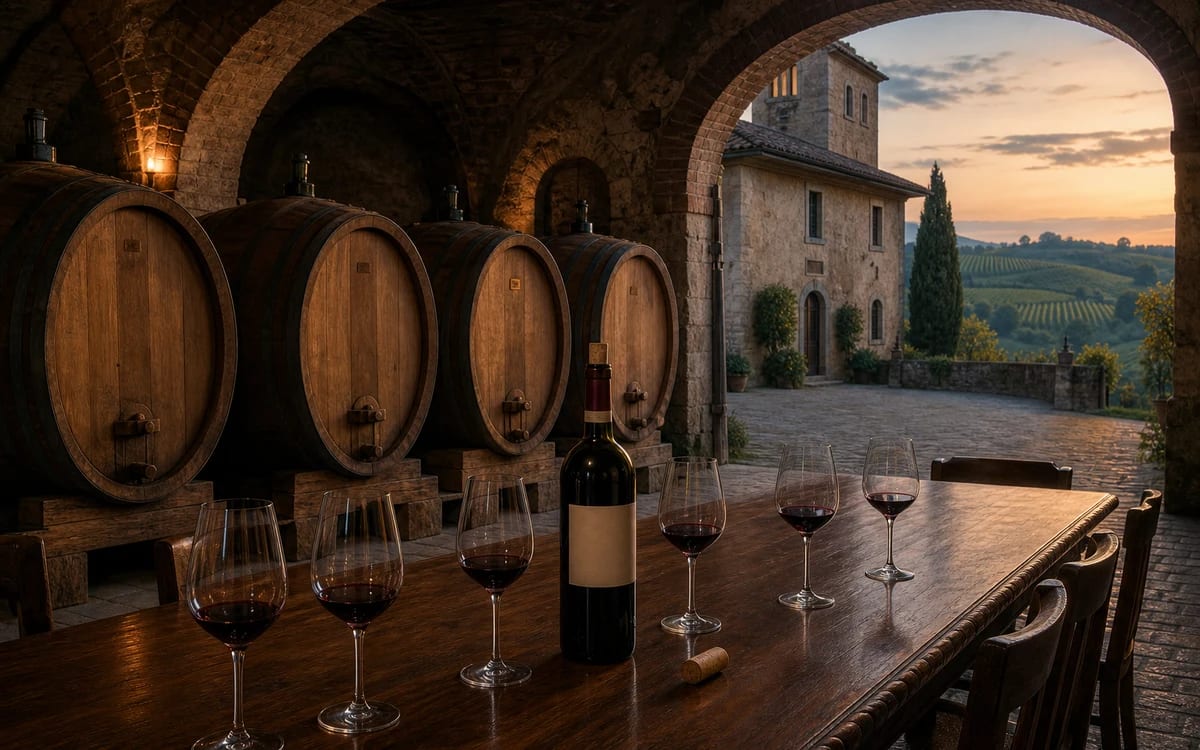
The tasting is held in the historic cellar of a Piedmont estate, among oak barriques and soft light.
What you'll learn
- Bilingual graded story
- English translation
- 6 useful words
- 6 comprehension questions
Warm-up vocabulary
Preview 2 optional words before reading
Your Italian story
Tap highlighted words when you need help
si tiene nella cantina storica di una tenuta piemontese, tra barrique di rovere e luce soffusa.
The tasting is held in the historic cellar of a Piedmont estate, among oak barriques and soft light.
Al centro, un tavolo di noce con sei calici e una bottiglia: Barolo DOCG 2016, annata di riserva.
In the center, a walnut table with six glasses and one bottle: Barolo DOCG 2016, reserve vintage.
Marco, , ha scelto personalmente quella bottiglia dalla cantina privata del proprietario.
Marco, the sommelier, personally chose that bottle from the owner's private cellar.
Tra gli ospiti c'è un signore sulla sessantina, occhi sospettosi. Assaggia, ma non commenta mai.
Among the guests is a gentleman about sixty, with suspicious eyes. He tastes, but never comments.
Marco la bottiglia con cura. Versa, annusa, assaggia. E impallidisce.
Marco opens the bottle carefully. He pours, sniffs, tastes. And turns pale.
Il vino sa di . Quella nota di muffa umida, quella chiusura olfattiva che un Barolo non dovrebbe mai avere.
The wine tastes corked. That note of damp mold, that olfactory closure that a Barolo should never have.
Il signore assaggia e dice: "Forse è normale. Forse è il terroir." Marco sa che non è vero.
The suspicious gentleman tastes and says: "Maybe it's normal. Maybe it's the terroir." Marco knows it's not true.
Marco scusa e sale in cantina. Controlla le altre bottiglie della stessa annata. Tutte perfette. Solo quella è rovinata.
Marco excuses himself and goes up to the cellar. He checks the other bottles of the same vintage. All perfect. Only that one is ruined.
Torna in sala. Gli ospiti discutono. Il signore sospettoso ora difende il vino: "Forse è aperto da troppo tempo."
He returns to the room. The guests are discussing. The suspicious gentleman now defends the wine: "Maybe it's been open too long."
Marco lo osserva. Capisce: quell'uomo non è un cliente scettico. È un enologo concorrente, assunto per screditare la cantina.
Marco observes him. He understands: that man is not a skeptical client. He's a competing oenologist hired to discredit the winery.
Marco prende un'altra bottiglia. La stessa annata, stessa provenienza. La stappa davanti a tutti.
Marco takes another bottle. Same vintage, same provenance. He uncorks it in front of everyone.
Il vino scorre nei calici. L'odore si alza: sottospirito, tabacco, cuoio, liquirizia.
The wine flows into the glasses. The scent rises: cherry in alcohol, tobacco, leather, licorice.
Il signore tace. Il terroir si sente nel vellutato, nella persistenza lunga, nel finale che resta in bocca.
The gentleman falls silent. The terroir is felt in the velvety tannin, in the long persistence, in the finish that stays in the mouth.
Marco guarda l'uomo e dice, a voce bassa ma chiara: "La prima bottiglia è stata aperta prima della degustazione. Qualcuno l'ha sostituita."
Marco looks at the man and says, in a low but clear voice: "The first bottle was opened before the tasting. Someone replaced it."
si alza, lascia e esce . Marco versa il Barolo vero. La degustazione continua.
The oenologist stands up, leaves his glass and walks out without a word. Marco pours the real Barolo. The tasting continues.
Vocabulary recap
Reading Comprehension Exercise
B2 Italian Reading Comprehension Exercises
1. Where does the tasting take place?
Correct: In the historic cellar of a Piedmont estate
The tasting takes place in the historic cellar of a Piedmont estate, among oak barrels and soft lighting.
2. What is the problem with the first bottle of Barolo?
Correct: It tastes corked — it has a musty note it shouldn't have
The wine tastes corked, with a damp musty note and an olfactory closure that a Barolo shouldn't have.
3. Who is the suspicious man in reality?
Correct: A competing oenologist hired to discredit the winery
Marco realizes that man is a competing oenologist, hired to discredit the winery.
4. What does Marco do to resolve the situation?
Correct: He takes another bottle of the same vintage and opens it in front of everyone
Marco takes another bottle of the same vintage, opens it in front of everyone, and the wine is perfect.
5. How does the competing oenologist react at the end?
Correct: He stands up, leaves his glass, and walks out without a word
The oenologist stands up, leaves his glass, and walks out without a word. The tasting continues with the real Barolo.
6. Sfida: Perché Marco non accusa direttamente l'enologo davanti a tutti?
Correct: Perché preferisce risolvere il problema con discrezione e professionalità
Marco dimostra intelligenza professionale: invece di creare una scena, risolve il problema silenziosamente sostituendo la bottiglia.
Nailed the quiz? Start your own story in MeloLingua →
Mini-lesson complete
You understood 6 of 6 questions.
That is 258 real Italian words read in context.
- ✓ 258 words read
- 6 new expressions
- 3 grammar patterns
- B2 level unlocked
Ready for tomorrow’s story?Hear it, shadow the narrator, and lock these words into memory in MeloLingua.
Start learning with storiesOne story. The whole practice loop.
Reading this story for free is just the first rep. The MeloLingua app turns the same story into a full practice loop — understand every word, speak it back, build sentences, and keep stories coming that match what you actually care about.
| What you get | FreeThis story | Full loopMeloLingua app |
|---|---|---|
| Understand every sentence instantly | Bilingual reader, tap to translate | Interactive reader with word-by-word explanations |
| Know exactly why each word works | Basic translation in context | Translation, grammar, conjugation & usage examples |
| Train your ear with native audio | Not included | Listen, follow along, and shadow the narrator |
| Speak like a native while reading | Read aloud on your own | Real-time pronunciation feedback |
| Turn what you read into what you can say | Not included | Build sentences from the story you just read |
| Never forget today's vocabulary | In-story glossary + comprehension quiz | Flashcards & spaced review from story lines |
| Read stories about your real life | Not included | Stories matched to your level and interests |
| Feel yourself improve every day | Not included | Streaks, goals, and your full learning history |
| Result | Enjoy a great story | Actually speak with confidence |
Understand every sentence instantly
Know exactly why each word works
Train your ear with native audio
Speak like a native while reading
Turn what you read into what you can say
Never forget today's vocabulary
Read stories about your real life
Feel yourself improve every day
Result
Make stories aboutyour life
Most language apps hand everyone the same content. MeloLingua lets you create stories around the things you actually enjoy — so staying consistent stops feeling like homework.
- “I love space and cooking”Your story
A chef opens the first restaurant on Mars.
- “I like football and history”Your story
A young striker time-travels to play the legendary teams.
- “I enjoy surfing and travel”Your story
A surfer hunts secret waves across the world.
- “I like Brazilian Jiu-Jitsu and sci-fi”Your story
An astronaut enters the first intergalactic grappling tournament.
Read it. Listen to it. Speak it back. The more it sounds likeyour world, the easier it is to keep going.
Generate your first storyMake it yours
Your next Italian story is one tap away
Turn today's read into a daily habit — personalized scenes, native audio, tap-to-translate vocabulary, and speaking drills matched to what you just understood.
Keep reading on-site
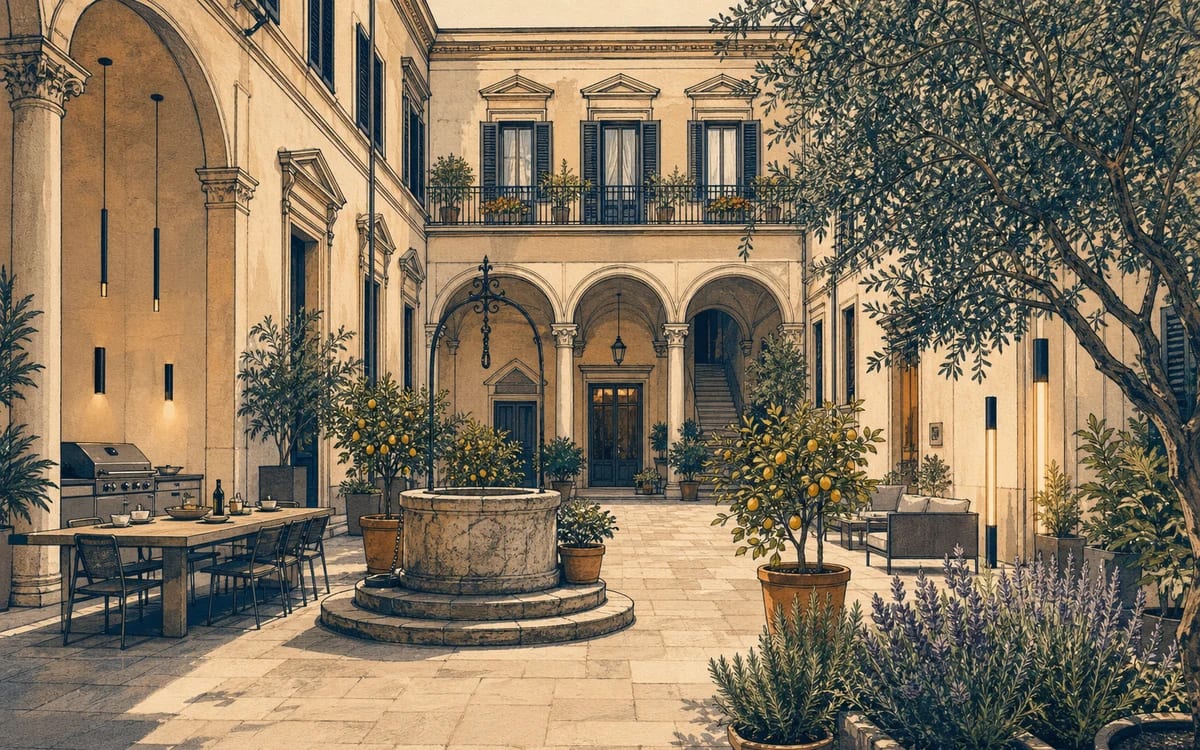
Il Condominio del Sabato
A dispute about the courtyard garden at a Roman palazzo exposes a deeper rift between old and new residents.
Read story →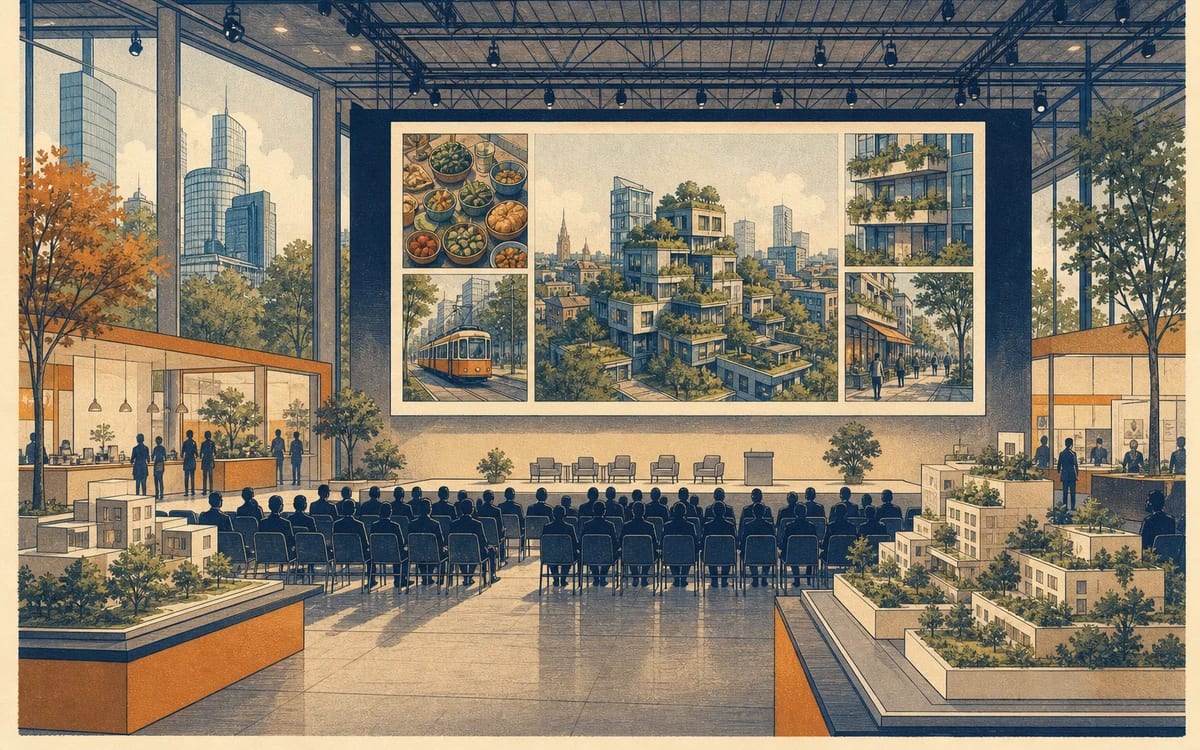
Il Convegno a Milano
A young architect's presentation is upstaged by a colleague who claims her idea as his own at a design conference in Milan.
Read story →
Il Posto Vacante
A job interview at a Bologna publishing house reveals that the position may not be what the candidate was led to believe.
Read story →