La Feria del Libro en Madrid
Isa crossed Retiro Park to reach the fair, where the scent of new paper and roasted peppers mingled with the visitors' voices.

What you'll learn
- Bilingual graded story
- Native narration
- 7 useful words
- 3 comprehension questions
Then shadow
Borrow the narrator’s rhythm
Pause after this line and repeat it aloud without translating. Aim for three clean repetitions.
1Listen first
Hear the whole story
Native Spanish narration of this exact text. Keep the transcript visible on the first pass.
Playback speed: Natural
2Then shadow
Isa cruzó el Retiro hasta llegar a la feria, donde el aroma a papel nuevo y pimientos asados se mezclaba con las voces de los visitantes.Your Spanish story
Read along with the narration, and tap any highlighted word for its meaning
Isa cruzó el Retiro hasta llegar a la feria, donde el aroma a papel nuevo y pimientos asados se mezclaba con las voces de los visitantes.
Isa crossed Retiro Park to reach the fair, where the scent of new paper and roasted peppers mingled with the visitors' voices.
Buscaba un profundo, y un la acompañó hasta una cercana para recomendarle varios títulos.
She was looking for a thoughtful essay, and a bookseller accompanied her to a nearby tent to recommend several titles.
La bajo el sol, pero la espera valió la pena: Isa compró una novela peculiar sobre una protagonista que colecciona carteles perdidos.
The line seemed to take forever under the sun, but the wait was worthwhile: Isa bought an unusual novel about a protagonist who collects lost posters.
En la siguiente carpa, una autora escribía . Isa le confesó que, si el se rompe demasiado tarde, deja el libro sin terminar.
In the next tent, an author was writing dedications. Isa confessed that if the pacing falls apart too late, she leaves the book unfinished.
La autora sonrió, escribió una dedicatoria para Isa y la leyó antes de devolverle la novela.
The author smiled, wrote a dedication for Isa, and read it aloud before handing the novel back to her.
Isa guardó la novela y el ensayo en una bolsa reutilizable y decidió llamar a su hermana antes de cenar para contarle el encuentro.
Isa put the novel and the essay in a reusable bag and decided to call her sister before dinner to tell her about the encounter.
Esa noche abrió la novela firmada y leyó el primer capítulo sin mirar la hora.
That night, she opened the signed novel and read the first chapter without checking the time.
Vocabulary recap
Reading Comprehension Exercise
B1 Spanish Reading Comprehension Exercises
1. What mix of scents marks Isa's memory?
Correct: Fresh paper with roasted peppers
The aroma of fresh paper and roasted peppers is a unique mix that marks her memory.
2. What does she buy after suffering through the eternal wait?
Correct: A novel about a protagonist who collects lost posters
Isa buys a peculiar novel about a protagonist who collects lost posters.
3. What does she admit to the nearby writer?
Correct: She leaves books unfinished if the rhythm breaks too late
Isa confesses that if a book's rhythm breaks too late, she leaves it unfinished.
Nailed the quiz? Start your own story in MeloLingua →
Line 1 / 7
0:00/–:––
Mini-lesson complete
You understood 3 of 3 questions.
That is 151 real Spanish words read in context.
- ✓ 151 words read
- 7 new expressions
- 2 grammar patterns
- B1 level unlocked
- ○ Narration ready
- 0 shadowing reps
Ready for tomorrow’s story?Hear it, shadow the narrator, and lock these words into memory in MeloLingua.
Start learning with storiesOne story. The whole practice loop.
Reading this story for free is just the first rep. The MeloLingua app turns the same story into a full practice loop — understand every word, speak it back, build sentences, and keep stories coming that match what you actually care about.
| What you get | FreeThis story | Full loopMeloLingua app |
|---|---|---|
| Understand every sentence instantly | Bilingual reader, tap to translate | Interactive reader with word-by-word explanations |
| Know exactly why each word works | Basic translation in context | Translation, grammar, conjugation & usage examples |
| Train your ear with native audio | Studio narration — slow, normal, fast | Listen, follow along, and shadow the narrator |
| Speak like a native while reading | Read aloud on your own | Real-time pronunciation feedback |
| Turn what you read into what you can say | Not included | Build sentences from the story you just read |
| Never forget today's vocabulary | In-story glossary + comprehension quiz | Flashcards & spaced review from story lines |
| Read stories about your real life | Not included | Stories matched to your level and interests |
| Feel yourself improve every day | Not included | Streaks, goals, and your full learning history |
| Result | Enjoy a great story | Actually speak with confidence |
Understand every sentence instantly
Know exactly why each word works
Train your ear with native audio
Speak like a native while reading
Turn what you read into what you can say
Never forget today's vocabulary
Read stories about your real life
Feel yourself improve every day
Result
Make stories aboutyour life
Most language apps hand everyone the same content. MeloLingua lets you create stories around the things you actually enjoy — so staying consistent stops feeling like homework.
- “I love space and cooking”Your story
A chef opens the first restaurant on Mars.
- “I like football and history”Your story
A young striker time-travels to play the legendary teams.
- “I enjoy surfing and travel”Your story
A surfer hunts secret waves across the world.
- “I like Brazilian Jiu-Jitsu and sci-fi”Your story
An astronaut enters the first intergalactic grappling tournament.
Read it. Listen to it. Speak it back. The more it sounds likeyour world, the easier it is to keep going.
Generate your first storyMake it yours
Your next Spanish story is one tap away
Turn today's read into a daily habit — personalized scenes, native audio, tap-to-translate vocabulary, and speaking drills matched to what you just understood.
Keep reading on-site
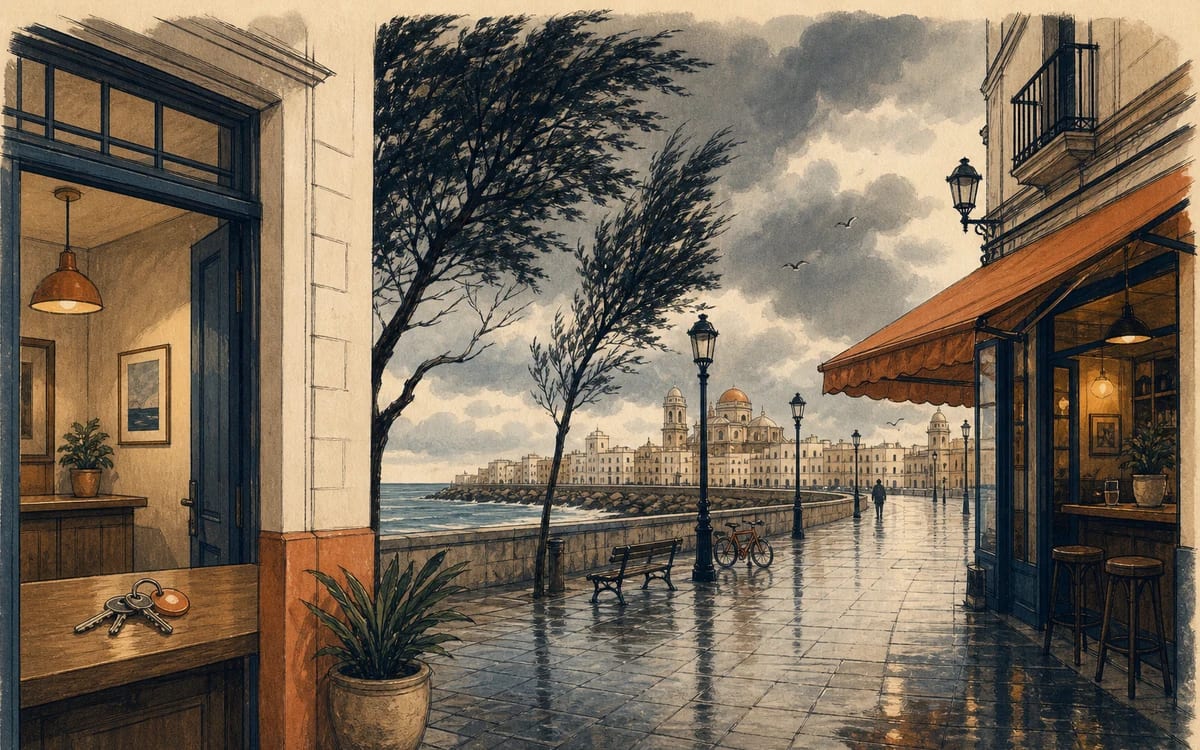
El puente de septiembre
A planned beach weekend in Cádiz turns into an unexpected exploration of a hidden cove when rain forces two friends off the sand.
Read story →
La bandeja equivocada
At a Granada bakery-café, Lucía’s pastry order disappears just before an important studio meeting.
Read story →
La carta de reclamación
Sofia must draft a formal complaint letter for a dissatisfied client but struggles to balance firmness and politeness in a Valencia office.
Read story →