98%
of words on a page you need to know to read Spanish comfortably without a dictionary
Vocabulary research (Paul Nation, 2006)
Connecting language to emotion is what makes Spanish stories stick. MeloLingua pairs each story with native audio and music so vocabulary moves into long-term memory. Whether you are reading your first narrative or practicing at an intermediate level, the library is free in your browser.
Learning through stories beats isolated word lists because your brain picks up grammar from context. Reading at a level you mostly understand — with help when you need it — builds skill faster than memorizing vocabulary in isolation.
Written by our language team · Updated
By the numbers
98%
of words on a page you need to know to read Spanish comfortably without a dictionary
Vocabulary research (Paul Nation, 2006)
A1–B2
four CEFR bands help you choose a supported text at the right difficulty
MeloLingua graded reading library
2,000
high-frequency Spanish words cover roughly 80% of everyday texts
Word frequency research (Paul Nation, 2006)
Why stories work
When you read Spanish stories rather than vocabulary lists, grammar patterns land naturally through context. Krashen (1985) identifies comprehensible input as central to language acquisition. MeloLingua adds a musical hook to every story so spelling, meaning, and sound reinforce one another.
A1–A2
These beginner Spanish stories use a controlled vocabulary of the 500 most common Spanish words. Each story is 100–200 words, present-tense heavy, and covers relatable everyday situations. After finishing each one, test comprehension with a quick quiz, then listen to the MeloLingua audio to reinforce pronunciation.
B1–B2
For learners ready for richer vocabulary, the intermediate library features cultural stories, folk tales, and original fiction by native Spanish-speaking authors. Every story includes narration and a vocabulary recap — you absorb vocabulary through rhythm and melody, not just through silent reading.
Interactive

Cada mañana, María despierta a las siete con el aroma del café. Ella sonríe al sol que entra por la ventana.
Open story →
Pedro visits a bustling market on a vibrant Saturday morning, seeking fresh ingredients for a delicious homemade soup.
Open story →
Sofía and Max enjoy a vibrant Sunday at the park, filled with playful encounters and serene moments.
Open story →
Luciana sigue el aroma del aceite caliente y descubre cómo pedir dulces en un puesto de la plaza sin titubear.
Open story →
Tonight, the Rodríguez family prepares a special dinner. The grandmother makes her famous paella. The grandfather sets the table with white plates and crystal glasses.
Open story →
Hoy llega un nuevo vecino al edificio. Carlos trae consigo una caja grande y un gato curioso. "Hola, soy Carlos," dice con una sonrisa.
Open story →
After work, Marcos calls home for two minutes—and still learns three useful everyday phrases.
Open story →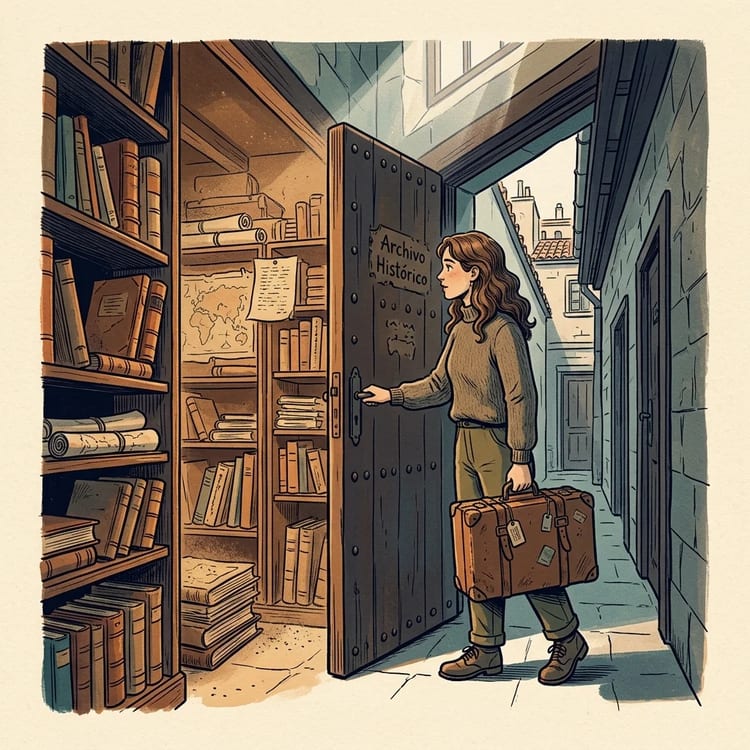
Clara arrives in Madrid to start her library job and discovers a cold, dusty archive room in the basement, where a mystery from 1954 awaits.
Open story →Hub-and-spoke links across the Spanish cluster — passages, stories, in-context translation, and writing guide.
Passages hub
Free A1–B2 paragraphs and passages with audio, translation, and printable worksheets.
Translation method
Line-by-line glosses and tap-to-translate on graded A1–B2 stories — not machine translation.
Writing guide
Step-by-step guide from your first paragraph to compelling Spanish narratives.
Beginners
Curated A1–A2 story collection with full translations.
Full hub
Graded A1–C2 short stories with vocabulary and audio.
Answers
MeloLingua offers free Spanish stories online from A1 through B2. Each story includes English translation support, tap-to-translate glosses, and native audio. Browse by level on this page or open the full Learn Spanish hub for A1–C2 collections.
Good beginner Spanish reading stories use simple present tense, high-frequency vocabulary, and short sentences in everyday scenes — cafés, markets, family calls. Aim for 150 to 300 words per story so you can finish in one sitting and build a daily habit.
Read first without translation, inferring meaning from context. Then check English support only for sentences that blocked you. Finally, re-read or listen to native audio. This read-then-check loop mirrors the comprehensible-input method Krashen (1985) recommends.
Stories add characters, plot, and emotional stakes — which improves engagement and recall. Passages are shorter and topical, designed to build vocabulary efficiently. MeloLingua offers both: stories on this page and reading passages on the Spanish reading passages hub.
Yes. Every story on this page works in your mobile browser. For daily personalized stories with pronunciation feedback, open the MeloLingua app on Android or web.
Melolingua pairs graded Spanish stories with native audio, synchronized text, and speaking drills matched to what you read.