La Cena
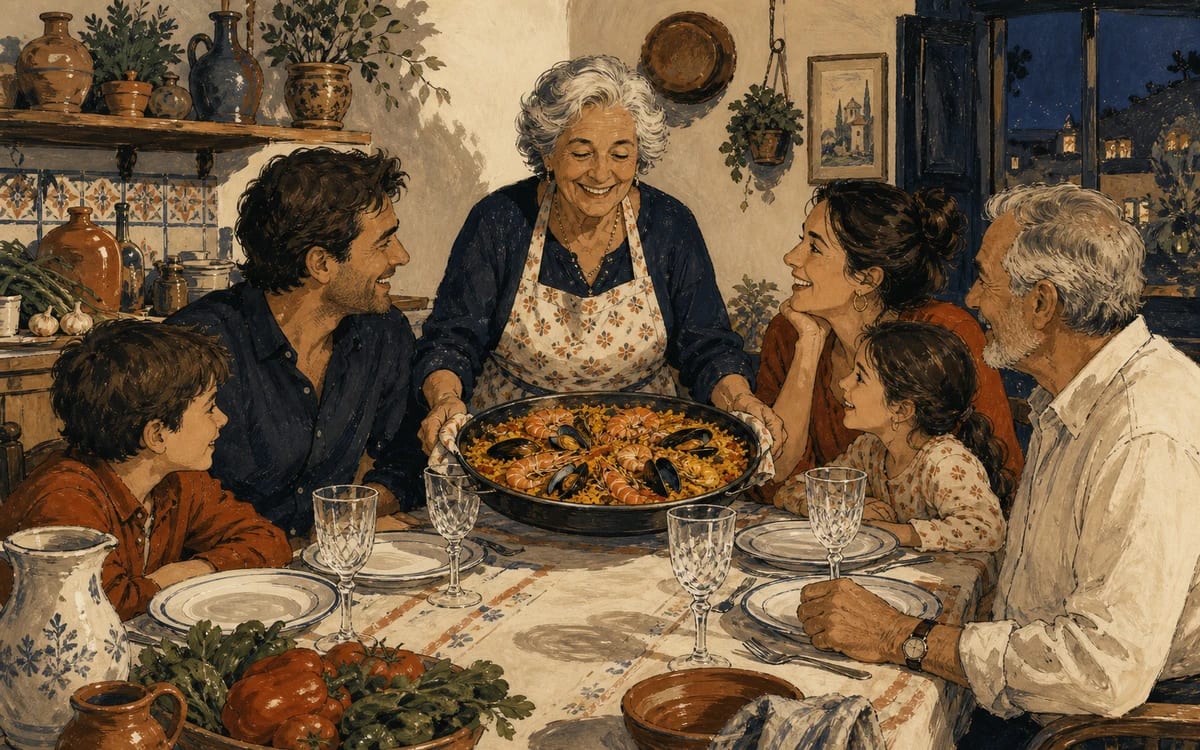
Tonight, the Rodríguez family is preparing a special dinner. Grandmother cooks her famous paella, brimming with fresh seafood.
What you'll learn
- Bilingual graded story
- Native narration
- 6 useful words
- 5 comprehension questions
Then shadow
Borrow the narrator’s rhythm
Pause after this line and repeat it aloud without translating. Aim for three clean repetitions.
1Listen first
Hear the whole story
Native Spanish narration of this exact text. Keep the transcript visible on the first pass.
Playback speed: Natural
2Then shadow
Esta noche, la familia Rodríguez prepara una cena especial. La abuela cocina su famosa paella, llena de mariscos frescos.Your speaking goal
Describe a family meal and thank the person who prepared it.
- “necesita más azafrán”
- “se sienta a la mesa”
- “Gracias por esta deliciosa comida, abuela”
Your Spanish story
Read along with the narration, and tap any highlighted word for its meaning
Esta noche, la familia Rodríguez prepara una especial. La cocina su famosa paella, llena de mariscos frescos.
Tonight, the Rodríguez family is preparing a special dinner. Grandmother cooks her famous paella, brimming with fresh seafood.
El abuelo arregla la con platos blancos y vasos de cristal.
Grandfather arranges the table with white plates and crystal glasses.
Los niños ayudan a lavar las verduras, riendo y salpicando agua.
The children help wash the vegetables, laughing and splashing water.
«La paella necesita más azafrán», comenta la abuela con una sonrisa. El a azafrán y mariscos llena la cocina.
“The paella needs more saffron,” Grandmother remarks with a smile. The scent of saffron and seafood fills the kitchen.
Toda la familia se sienta a la mesa, ansiosa por comer.
The whole family sits at the table, eager to eat.
«Gracias por esta deliciosa comida, abuela», dice el padre con gratitud. Todos disfrutan y hablan sobre su día lleno de aventuras.
“Thank you for this delicious meal, Grandmother,” the father says gratefully. Everyone enjoys the meal and talks about their day.
Los niños historias emocionantes del colegio. La abuela sonríe, escuchando con atención.
The children share exciting stories from school. Grandmother smiles, listening attentively.
Esta es su parte favorita del día: la familia , feliz.
This is her favorite part of the day: the family together, happy.
Vocabulary recap
Reading Comprehension Exercise
A1 Spanish Reading Comprehension Exercises
1. What does the grandmother prepare for dinner?
Correct: Paella
The grandmother prepares her famous paella, a traditional Spanish dish.
2. What do the children do while helping in the kitchen?
Correct: Wash the vegetables
The children help wash the vegetables, laughing and splashing water.
3. What does the father say to the grandmother during dinner?
Correct: Thanks for this delicious meal
The father thanks the grandmother for the delicious meal.
4. Which ingredient does the grandmother say the paella needs more of?
Correct: Saffron
Saffron is a key ingredient in paella, giving it its distinctive color.
5. How does the grandmother feel at the end of the day?
Correct: Happy
The grandmother feels happy seeing her family together enjoying dinner.
Nailed the quiz? Start your own story in MeloLingua →
Line 1 / 8
0:00/–:––
Mini-lesson complete
You understood 5 of 5 questions.
That is 118 real Spanish words read in context.
- ✓ 118 words read
- 6 new expressions
- 2 grammar patterns
- A1 level unlocked
- ○ Narration ready
- 0 shadowing reps
Ready for tomorrow’s story?Hear it, shadow the narrator, and lock these words into memory in MeloLingua.
Start learning with storiesOne story. The whole practice loop.
Reading this story for free is just the first rep. The MeloLingua app turns the same story into a full practice loop — understand every word, speak it back, build sentences, and keep stories coming that match what you actually care about.
| What you get | FreeThis story | Full loopMeloLingua app |
|---|---|---|
| Understand every sentence instantly | Bilingual reader, tap to translate | Interactive reader with word-by-word explanations |
| Know exactly why each word works | Basic translation in context | Translation, grammar, conjugation & usage examples |
| Train your ear with native audio | Studio narration — slow, normal, fast | Listen, follow along, and shadow the narrator |
| Speak like a native while reading | Read aloud on your own | Real-time pronunciation feedback |
| Turn what you read into what you can say | Not included | Build sentences from the story you just read |
| Never forget today's vocabulary | In-story glossary + comprehension quiz | Flashcards & spaced review from story lines |
| Read stories about your real life | Not included | Stories matched to your level and interests |
| Feel yourself improve every day | Not included | Streaks, goals, and your full learning history |
| Result | Enjoy a great story | Actually speak with confidence |
Understand every sentence instantly
Know exactly why each word works
Train your ear with native audio
Speak like a native while reading
Turn what you read into what you can say
Never forget today's vocabulary
Read stories about your real life
Feel yourself improve every day
Result
Make stories aboutyour life
Most language apps hand everyone the same content. MeloLingua lets you create stories around the things you actually enjoy — so staying consistent stops feeling like homework.
- “I love space and cooking”Your story
A chef opens the first restaurant on Mars.
- “I like football and history”Your story
A young striker time-travels to play the legendary teams.
- “I enjoy surfing and travel”Your story
A surfer hunts secret waves across the world.
- “I like Brazilian Jiu-Jitsu and sci-fi”Your story
An astronaut enters the first intergalactic grappling tournament.
Read it. Listen to it. Speak it back. The more it sounds likeyour world, the easier it is to keep going.
Generate your first storyMake it yours
Your next Spanish story is one tap away
Turn today's read into a daily habit — personalized scenes, native audio, tap-to-translate vocabulary, and speaking drills matched to what you just understood.
Keep reading on-site

El Café de la Mañana
María’s seven-o’clock coffee, toast with jam, and open window turn an ordinary morning into a small ritual before work.
Read story →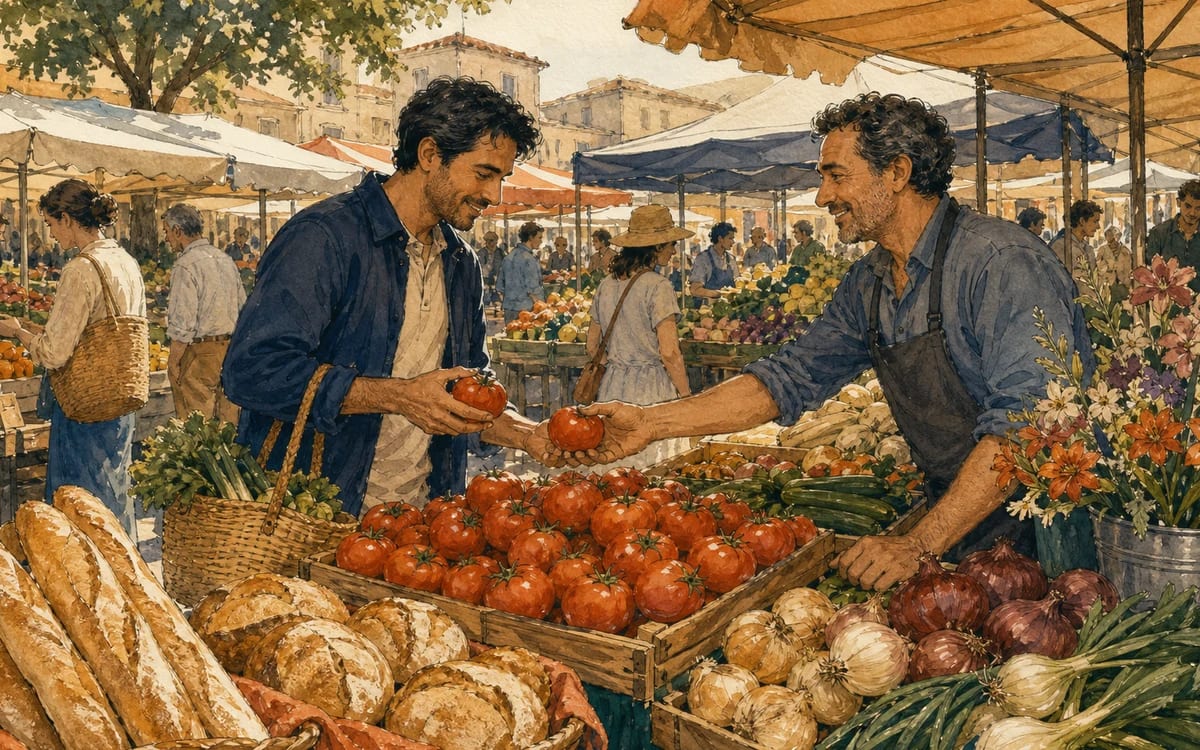
El Mercado
Pedro visits a bustling market on a vibrant Saturday morning, seeking fresh ingredients for a delicious homemade soup.
Read story →
El Parque
While Sofía reads on a park bench, Max finds new playmates—and a young visitor who wants to pet him.
Read story →