La carte postale
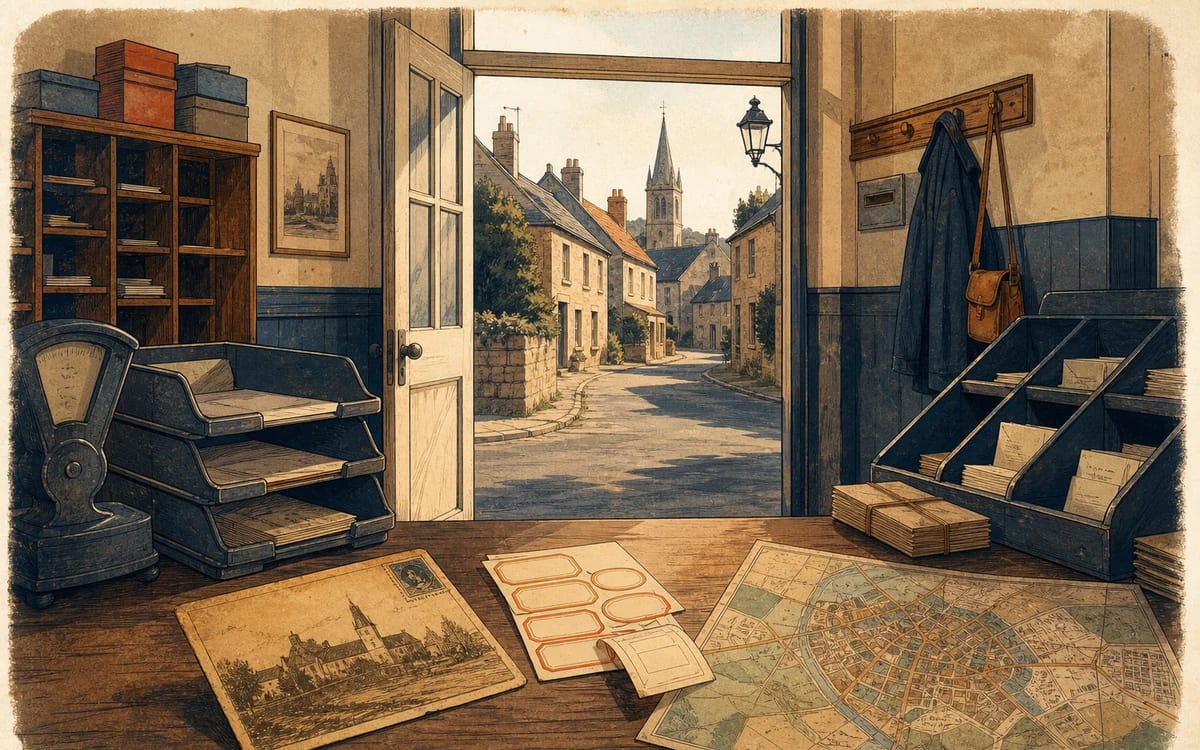
While sorting the morning mail, Julie came across a yellowed postcard addressed to an address that no longer existed. The village of Honfleur — Rue des Pêcheurs, number fourteen.
What you'll learn
- Bilingual graded story
- English translation
- 5 useful words
- 5 comprehension questions
Warm-up vocabulary
Preview 2 optional words before reading
Your French story
Tap highlighted words when you need help
En triant le courrier du matin, Julie tomba sur une jaunie adressée à une adresse qui n'existait plus. Le village de Honfleur — rue des Pêcheurs, numéro quatorze. Julie était factrice depuis six ans dans ce village normand. Elle connaissait chaque rue, chaque boîte aux lettres, chaque nom de famille. Mais ce nom — Cardin — ne lui disait rien. datait de 1985. L'encre, délavée mais lisible, portait un message bref : « Je pars demain. Je reviendrai. Je t'aime. » Il n'y avait pas de signature. Juste deux initiales : P.M. Au lieu de jeter la carte au rebut, Julie la glissa dans la poche de sa veste. Quelque chose dans ce message — l'urgence, la vulnérabilité — la touchait plus qu'elle n'aurait su l'expliquer. Elle interrogea la boulangère, puis le patron du tabac. « Cardin ? Attendez... la vieille maison près du phare, avant la guerre. Mais personne n'y habite plus depuis des lustres. » Julie ne se découragea pas. Elle voulait l'expéditeur ou le destinataire. Un après-midi, elle frappa à la porte de la Maison de retraite Saint-Joseph, la plus ancienne du village. Une vieille dame, Mathilde Cardin, reconnut l'écriture immédiatement. Ses doigts tremblèrent en touchant la carte. « C'est de Pierre, » murmura-t-elle. « Mon mari. Il m'a écrit juste avant de partir en mer. » Mathilde raconta son histoire : Pierre avait promis de revenir après une dernière saison de pêche. Il n'était jamais rentré. Le bateau avait disparu corps et biens en novembre 1985. « La carte n'est jamais arrivée, » dit Mathilde en essuyant ses yeux. « Pendant des années, j'ai cru qu'il était parti sans un mot. » Elle serra la carte contre sa poitrine. « Maintenant, je sais qu'il m'a écrit. » Julie resta un moment silencieuse. Elle n'avait rien fait d'extraordinaire — juste son travail, avec un peu d'obstination. Mais ce simple geste avait apaisé une blessure vieille de plus de quarante ans. En sortant, Julie regarda le ciel gris de Honfleur. Le vent sentait le sel et l'iode. Le dernier message d'un marin de 1985 était enfin arrivé. Plus de quarante ans plus tard, mais il était arrivé.
Show full English translation
While sorting the morning mail, Julie came across a yellowed postcard addressed to an address that no longer existed. The village of Honfleur — Rue des Pêcheurs, number fourteen. Julie had been a postal worker for six years in this Norman village. She knew every street, every mailbox, every family name. But this name — Cardin — meant nothing to her. The stamp was dated 1985. The ink, faded but legible, bore a brief message: “I'm leaving tomorrow. I'll come back. I love you.” There was no signature. Just two initials: P.M. Instead of throwing the card away, Julie slipped it into her jacket pocket. Something about this message — the urgency, the vulnerability — touched her more than she could explain. She asked the baker, then the tobacco shop owner. "Cardin? Wait... the old house near the lighthouse, before the war. But no one has lived there for ages." Julie didn't get discouraged. She wanted to find the sender or the recipient. One afternoon, she knocked on the door of the Saint-Joseph retirement home, the oldest in the village. An elderly lady, Mathilde Cardin, recognized the handwriting immediately. Her fingers trembled as she touched the card. "It's from Pierre," she murmured. "My husband. He wrote to me just before going out to sea." Mathilde told her story: Pierre had promised to return after one last fishing season. He never came back. The ship had disappeared without a trace in November 1985. "The card never arrived," Mathilde said, wiping her eyes. "For years, I thought he had left without a word." She clutched the card to her chest. "Now I know he wrote to me." Julie stayed silent for a moment. She hadn't done anything extraordinary—just her job, with a bit of persistence. But this simple gesture had soothed a wound more than forty years old. Leaving, Julie looked at the gray sky of Honfleur. The wind smelled of salt and iodine. A sailor's last message from 1985 had finally arrived—more than forty years late, but it had arrived.
Vocabulary recap
Reading Comprehension Exercise
B2 French Reading Comprehension Exercises
1. What does Julie find while sorting the mail?
Correct: A yellowed postcard addressed to an address that no longer exists
Julie comes across a yellowed postcard addressed to number fourteen, Rue des Pêcheurs, an address that no longer exists.
2. What does the message on the card say?
Correct: "I'm leaving tomorrow. I'll come back. I love you."
The brief message says that Pierre is leaving the next day, promises to return, and tells Mathilde he loves her.
3. Where does Julie finally find the recipient?
Correct: At the Saint-Joseph retirement home
After questioning shopkeepers, Julie goes to the Saint-Joseph retirement home where she finds Mathilde Cardin.
4. Who is Pierre?
Correct: Mathilde's husband, who disappeared at sea in 1985
Pierre is Mathilde's husband. He wrote to her just before one last fishing season and his ship disappeared without a trace in November 1985.
5. Why is this card important to Mathilde?
Correct: Because it proves Pierre thought of her before disappearing
For years, Mathilde thought Pierre had left without a word. The card proves he wrote to her and was waiting for her.
Nailed the quiz? Start your own story in MeloLingua →
Mini-lesson complete
You understood 5 of 5 questions.
That is 364 real French words read in context.
- ✓ 364 words read
- 5 new expressions
- 3 grammar patterns
- B2 level unlocked
Ready for tomorrow’s story?Hear it, shadow the narrator, and lock these words into memory in MeloLingua.
Start learning with storiesOne story. The whole practice loop.
Reading this story for free is just the first rep. The MeloLingua app turns the same story into a full practice loop — understand every word, speak it back, build sentences, and keep stories coming that match what you actually care about.
| What you get | FreeThis story | Full loopMeloLingua app |
|---|---|---|
| Understand every sentence instantly | Bilingual reader, tap to translate | Interactive reader with word-by-word explanations |
| Know exactly why each word works | Basic translation in context | Translation, grammar, conjugation & usage examples |
| Train your ear with native audio | Studio narration — slow, normal, fast | Listen, follow along, and shadow the narrator |
| Speak like a native while reading | Read aloud on your own | Real-time pronunciation feedback |
| Turn what you read into what you can say | Not included | Build sentences from the story you just read |
| Never forget today's vocabulary | In-story glossary + comprehension quiz | Flashcards & spaced review from story lines |
| Read stories about your real life | Not included | Stories matched to your level and interests |
| Feel yourself improve every day | Not included | Streaks, goals, and your full learning history |
| Result | Enjoy a great story | Actually speak with confidence |
Understand every sentence instantly
Know exactly why each word works
Train your ear with native audio
Speak like a native while reading
Turn what you read into what you can say
Never forget today's vocabulary
Read stories about your real life
Feel yourself improve every day
Result
Make stories aboutyour life
Most language apps hand everyone the same content. MeloLingua lets you create stories around the things you actually enjoy — so staying consistent stops feeling like homework.
- “I love space and cooking”Your story
A chef opens the first restaurant on Mars.
- “I like football and history”Your story
A young striker time-travels to play the legendary teams.
- “I enjoy surfing and travel”Your story
A surfer hunts secret waves across the world.
- “I like Brazilian Jiu-Jitsu and sci-fi”Your story
An astronaut enters the first intergalactic grappling tournament.
Read it. Listen to it. Speak it back. The more it sounds likeyour world, the easier it is to keep going.
Generate your first storyMake it yours
Your next French story is one tap away
Turn today's read into a daily habit — personalized scenes, native audio, tap-to-translate vocabulary, and speaking drills matched to what you just understood.
Keep reading on-site

La fabrique du souvenir
A granddaughter discovers that her grandmother's paintings in a Montmartre workshop hide a coded family history spanning two generations.
Read story →
Le débat en classe
A heated classroom debate about secularism forces a quiet student in a French university seminar to take a public stand for the first time.
Read story →
Le dîner de la discorde
A wine choice at a family dinner in a bourgeois Parisian home escalates into a confrontation about an old betrayal.
Read story →