Le dîner de la discorde
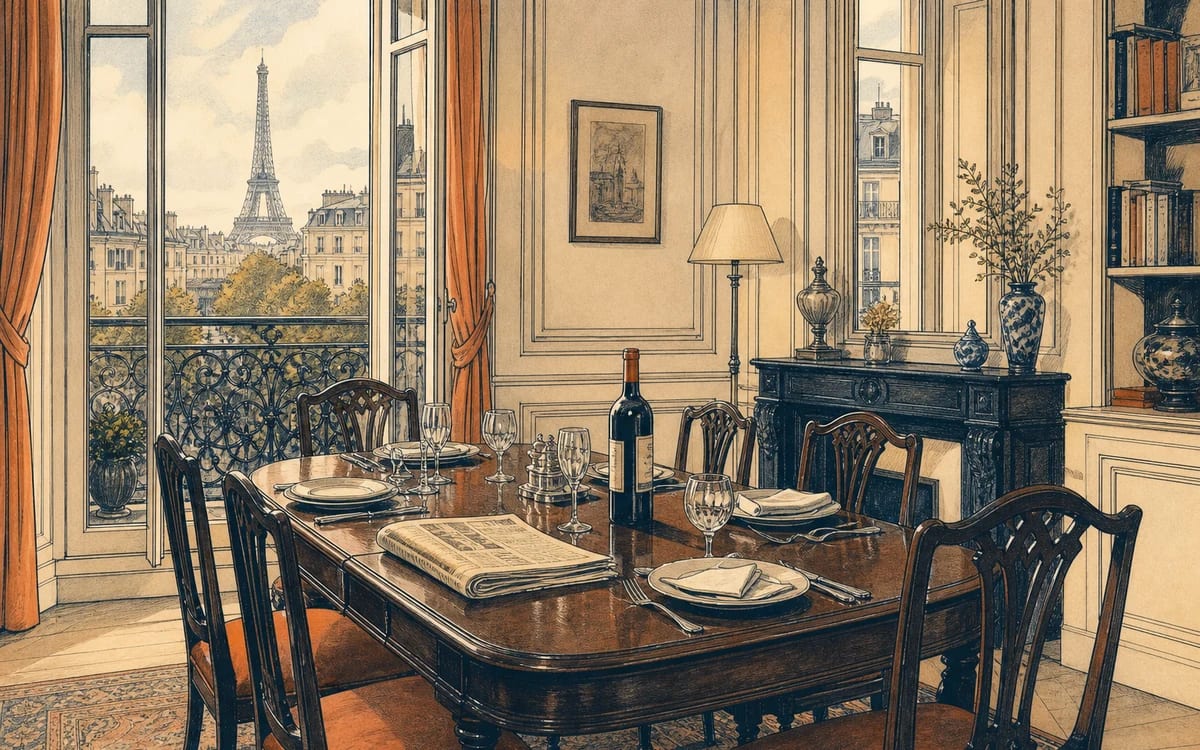
Sunday dinner at the Montforts' was an institution. Every week, the family gathered around a mahogany table in the sixteenth arrondissement.
What you'll learn
- Bilingual graded story
- English translation
- 6 useful words
- 5 comprehension questions
Warm-up vocabulary
Preview 3 optional words before reading
Your French story
Tap highlighted words when you need help
du dimanche chez les Montfort était une institution. Chaque semaine, la famille se réunissait autour d'une table d'acajou dans le seizième arrondissement. Ce dimanche-là, Clara arriva la première, comme toujours. Sa mère disposait les couverts avec une précision chirurgicale. Son père lisait Le Figaro dans son fauteuil. Son frère, Antoine, entra avec une bouteille sous le bras. Il avait choisi un saint-émilion grand cru, un vin que leur père affectionnait particulièrement. Mais l'étiquette portait le nom d'un domaine que Clara connaissait bien. Quand Antoine posa sur la table, le silence se fit. Le père leva les yeux de son journal. La mère cessa de disposer les couverts. Clara sentit le sol se dérober sous elle. en question appartenait à Hélène, l'ancienne associée de leur père. Elle avait quitté l'entreprise familiale dans des conditions que personne n'évoquait jamais ouvertement. Pendant vingt ans, personne n'avait prononcé ce nom à table. Ce soir-là, un simple vin l'avait ramené à la surface. Clara fusilla son frère du regard. Antoine brisa le silence d'un ton faussement léger. « C'est un excellent millésime. Je me suis dit que cela ferait plaisir à tout le monde. » « Tu sais très bien ce que tu fais, » répondit Clara, la voix tremblante de colère contenue. « Cette bouteille n'est pas un hasard. » Le père reposa son journal. Il regarda ses deux enfants, puis la bouteille. « Nous n'allons pas gâcher un dîner pour un vin, » dit-il. Mais la tension dans sa voix trahissait ses paroles. Le dîner se déroula dans une atmosphère électrique. Chaque bouchée semblait peser. La mère changea de sujet trois fois, sans succès. Le vin restait sur la table, ouvert mais intact dans les verres. En partant, Clara attrapa Antoine par le bras dans l'entrée. « Pourquoi aujourd'hui ? Pourquoi ce vin ? » Il la regarda longuement. « Parce qu'il est temps que cette histoire sorte, Clara. Tu ne crois pas ? » Clara ne répondit pas. Elle descendit l'escalier en pensant à toutes ces années de silence, aux dîners où l'on feignait d'ignorer ce que tout le monde savait. Peut-être qu'Antoine avait raison.
Show full English translation
Sunday dinner at the Montforts' was an institution. Every week, the family gathered around a mahogany table in the sixteenth arrondissement. That Sunday, Clara arrived first, as always. Her mother arranged the silverware with surgical precision. Her father read Le Figaro in his armchair. Her brother, Antoine, walked in with a bottle under his arm. He had chosen a Saint-Émilion grand cru, a wine their father particularly cherished. But the label bore the name of an estate Clara knew well. When Antoine placed the bottle on the table, silence fell. The father looked up from his newspaper. The mother stopped arranging the silverware. Clara felt the floor give way beneath her. The estate in question belonged to Hélène, their father's former business partner. She had left the family business under conditions that no one ever mentioned openly. For twenty years, no one had uttered that name at the table. That evening, a simple wine had brought it back to the surface. Clara glared at her brother. Antoine broke the silence with a falsely light tone. "It's an excellent vintage. I thought it would please everyone." "You know very well what you're doing," Clara replied, her voice trembling with contained anger. "This bottle is not a coincidence." The father put down his newspaper. He looked at his two children, then at the bottle. "We're not going to ruin a dinner over a wine," he said. But the tension in his voice betrayed his words. Dinner unfolded in an electric atmosphere. Each bite seemed to weigh heavily. The mother changed the subject three times, without success. The wine sat on the table, opened but untouched in the glasses. As they left, Clara grabbed Antoine by the arm in the hallway. “Why today? Why this wine?” He looked at her for a long moment. “Because it's time this story came out, Clara. Don't you think?” Clara didn't answer. She walked down the stairs thinking about all those years of silence, the dinners where everyone pretended not to know what everyone knew. Maybe Antoine was right.
Reading Comprehension Exercise
B2 French Reading Comprehension Exercises
1. Where does the Sunday dinner take place?
Correct: At the Montforts' home, in the sixteenth arrondissement
Sunday dinner is an institution at the Montforts', who live in the sixteenth arrondissement of Paris.
2. What wine does Antoine bring?
Correct: A Saint-Émilion grand cru
Antoine brings a Saint-Émilion grand cru, a wine their father particularly cherishes.
3. Why does the bottle cause discomfort?
Correct: Because the estate belongs to Hélène, the father's former business partner
The label bears the name of Hélène's estate, the father's former partner who left under troubled circumstances that no one mentions.
4. How does Clara react to Antoine's provocation?
Correct: She says he knows very well what he's doing and the bottle is not a coincidence
Clara replies in a voice trembling with contained anger that Antoine knows very well what he's doing and this bottle is not a coincidence.
5. What is Antoine's reason for bringing this wine?
Correct: He thinks it's time the story of their father and Hélène came out
Antoine explains to Clara in the hallway that it's time this story came out, breaking years of family silence.
Nailed the quiz? Start your own story in MeloLingua →
Mini-lesson complete
You understood 5 of 5 questions.
That is 359 real French words read in context.
- ✓ 359 words read
- 6 new expressions
- 3 grammar patterns
- B2 level unlocked
Ready for tomorrow’s story?Hear it, shadow the narrator, and lock these words into memory in MeloLingua.
Start learning with storiesOne story. The whole practice loop.
Reading this story for free is just the first rep. The MeloLingua app turns the same story into a full practice loop — understand every word, speak it back, build sentences, and keep stories coming that match what you actually care about.
| What you get | FreeThis story | Full loopMeloLingua app |
|---|---|---|
| Understand every sentence instantly | Bilingual reader, tap to translate | Interactive reader with word-by-word explanations |
| Know exactly why each word works | Basic translation in context | Translation, grammar, conjugation & usage examples |
| Train your ear with native audio | Studio narration — slow, normal, fast | Listen, follow along, and shadow the narrator |
| Speak like a native while reading | Read aloud on your own | Real-time pronunciation feedback |
| Turn what you read into what you can say | Not included | Build sentences from the story you just read |
| Never forget today's vocabulary | In-story glossary + comprehension quiz | Flashcards & spaced review from story lines |
| Read stories about your real life | Not included | Stories matched to your level and interests |
| Feel yourself improve every day | Not included | Streaks, goals, and your full learning history |
| Result | Enjoy a great story | Actually speak with confidence |
Understand every sentence instantly
Know exactly why each word works
Train your ear with native audio
Speak like a native while reading
Turn what you read into what you can say
Never forget today's vocabulary
Read stories about your real life
Feel yourself improve every day
Result
Make stories aboutyour life
Most language apps hand everyone the same content. MeloLingua lets you create stories around the things you actually enjoy — so staying consistent stops feeling like homework.
- “I love space and cooking”Your story
A chef opens the first restaurant on Mars.
- “I like football and history”Your story
A young striker time-travels to play the legendary teams.
- “I enjoy surfing and travel”Your story
A surfer hunts secret waves across the world.
- “I like Brazilian Jiu-Jitsu and sci-fi”Your story
An astronaut enters the first intergalactic grappling tournament.
Read it. Listen to it. Speak it back. The more it sounds likeyour world, the easier it is to keep going.
Generate your first storyMake it yours
Your next French story is one tap away
Turn today's read into a daily habit — personalized scenes, native audio, tap-to-translate vocabulary, and speaking drills matched to what you just understood.
Keep reading on-site
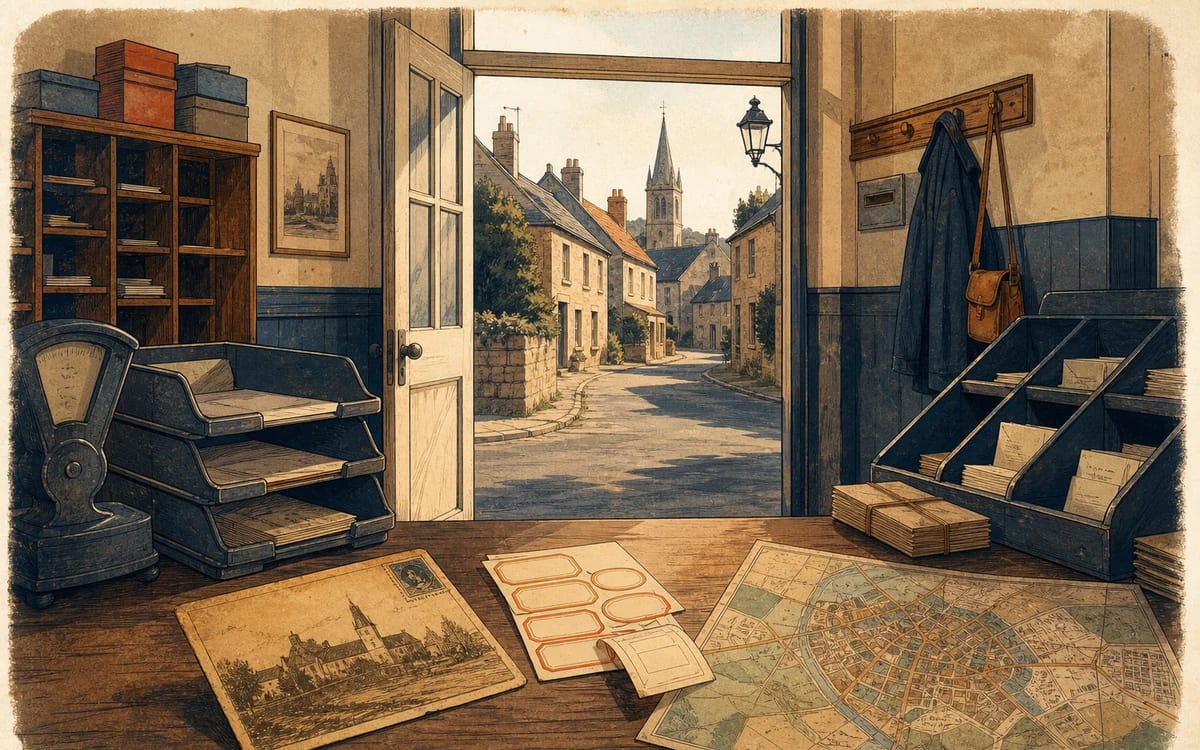
La carte postale
A misdelivered postcard from 1985 leads a postal worker in a small Normandy town to unravel a love story the town forgot.
Read story →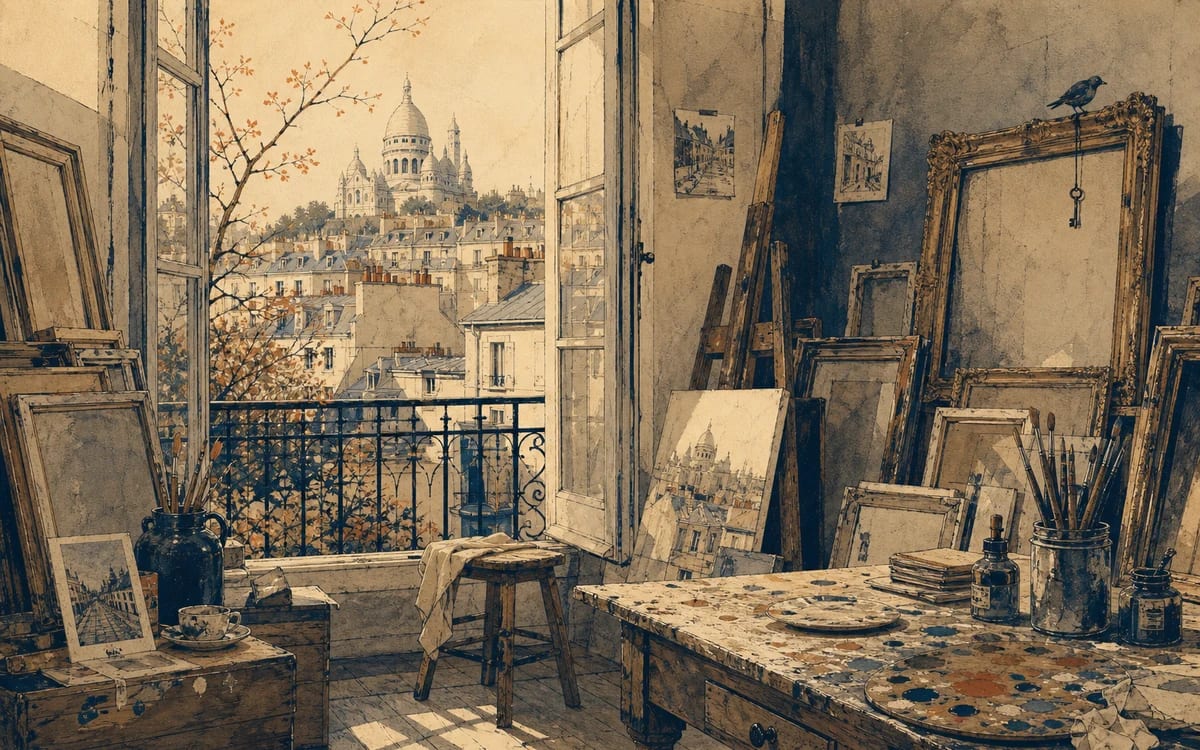
La fabrique du souvenir
A granddaughter discovers that her grandmother's paintings in a Montmartre workshop hide a coded family history spanning two generations.
Read story →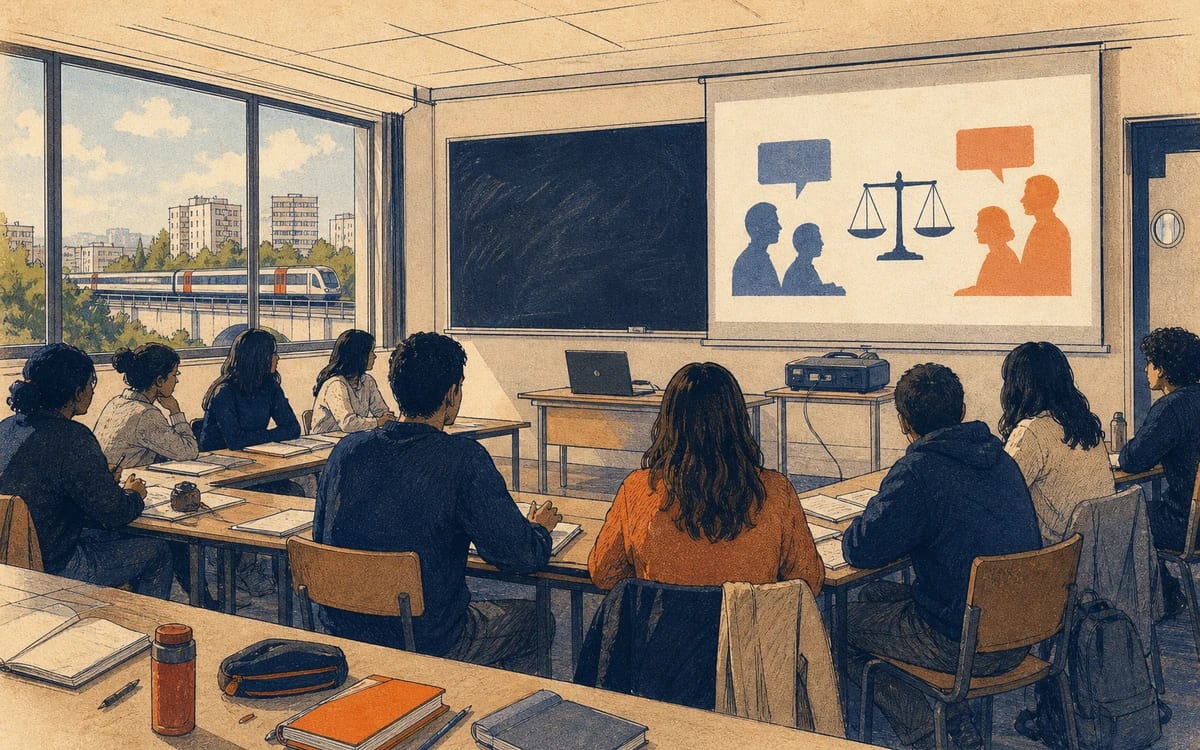
Le débat en classe
A heated classroom debate about secularism forces a quiet student in a French university seminar to take a public stand for the first time.
Read story →