Les coulisses du journal
At the regional newspaper Le Dauphiné, Inès was preparing her first serious investigation piece.

What you'll learn
- Bilingual graded story
- English translation
- 5 useful words
- 5 comprehension questions
Warm-up vocabulary
Preview 1 optional words before reading
Your French story
Tap highlighted words when you need help
Au journal régional Le Dauphiné, Inès préparait son premier sujet d'investigation sérieux. Depuis trois semaines, elle recoupait des documents sur un marché public attribué dans des conditions douteuses. Son rédacteur en chef, Paul, l'avait prise sous son aile dès son arrivée. Il était exigeant mais juste, et Inès respectait son jugement plus que tout. « Inès, ton enquête sur les marchés publics est solide, » dit-il en feuilletant les pages. « Mais il y a un problème. » Il marqua une pause. « Le principal mis en cause est un ami personnel. » Inès resta silencieuse. Elle comprit immédiatement la portée de ce qu'il venait de dire. Paul ne lui demandait pas explicitement d'enterrer l'article. Mais le sous-entendu était clair. « J'ai vérifié toutes mes » insista-t-elle. « Les documents sont authentiques. Si on ne publie pas, c'est la déontologie qu'on trahit. » Paul se frotta les tempes. « On ne peut pas ça. Pas comme ça. Pas maintenant. » Il n'ajouta rien. Le silence entre eux devint lourd, chargé de tout ce qui ne pouvait pas être dit. Cette nuit-là, Inès ne dormit pas. Elle repensait aux visages des personnes citées dans , au droit du public à savoir, à la carrière de Paul, à la sienne. Le lendemain, elle prit une décision. Elle proposa de confier l'article à une rédactrice indépendante et de signaler officiellement le conflit d'intérêts de Paul. Paul lut la proposition sans rien dire. Puis il hocha lentement la tête. « C'est la bonne procédure. Je vais me retirer du dossier et prévenir la direction. » Après une nouvelle vérification, l'article parut en une le jeudi suivant avec les faits et les noms nécessaires. reçut un appel du cabinet du maire dès le matin. Paul ne félicita jamais Inès ouvertement. Mais en quittant le bureau ce soir-là, il laissa sur son clavier un mot : « Tu as fait le bon choix. Le métier, parfois, c'est savoir se retirer pour protéger une enquête. »
Show full English translation
At the regional newspaper Le Dauphiné, Inès was preparing her first serious investigation piece. For three weeks, she had been cross-referencing documents about a public contract awarded under questionable circumstances. Her editor-in-chief, Paul, had taken her under his wing from day one. He was demanding but fair, and Inès respected his judgment above all else. "Inès, your investigation on public contracts is solid," he said, flipping through the pages. "But there's a problem." He paused. "The main person implicated is a personal friend." Inès remained silent. She immediately understood the weight of what he had just said. Paul wasn't explicitly asking her to bury the article. But the implication was clear. "I've checked all my sources," she insisted. "The documents are authentic. If we don't publish, we're betraying journalistic ethics." Paul rubbed his temples. "We can't publish this. Not like this. Not now." He added nothing. The silence between them became heavy, charged with everything that couldn't be said. That night, Inès didn't sleep. She kept thinking about the faces of the people cited in the investigation, the public's right to know, Paul's career, her own. The next day, she made a decision. She proposed entrusting the article to an independent editor and formally disclosing Paul's conflict of interest. Paul read the proposal without saying anything. Then he slowly nodded. “That's the right procedure. I'll step away from the story and inform management.” After another round of verification, the article appeared on the front page the following Thursday with the necessary facts and names. The paper received a call from the mayor's office that morning. Paul never openly congratulated Inès. But as he left the office that evening, he left a note on her keyboard: “You made the right choice. Sometimes this job means knowing when to step aside to protect an investigation.”
Vocabulary recap
Reading Comprehension Exercise
B2 French Reading Comprehension Exercises
1. What subject is Inès investigating?
Correct: A public contract awarded under questionable circumstances
Inès has been cross-referencing documents about a public contract awarded under questionable circumstances for three weeks.
2. Why does Paul ask Inès not to publish?
Correct: Because the main person implicated is a personal friend
Paul reveals that the main person implicated in the investigation is a personal friend, creating a conflict of interest.
3. What argument does Inès use to defend publication?
Correct: That not publishing would betray journalistic ethics
Inès insists on ethics: the documents are authentic and not publishing would amount to betraying journalistic ethics.
4. What compromise solution does Inès propose?
Correct: Have an independent editor review the article and disclose Paul's conflict
Inès proposes independent editorial review and formal disclosure of Paul's conflict of interest.
5. What does Paul leave on Inès's keyboard at the end?
Correct: A note saying she made the right choice
Paul's note says Inès made the right choice and that journalists sometimes need to step aside to protect an investigation.
Nailed the quiz? Start your own story in MeloLingua →
Mini-lesson complete
You understood 5 of 5 questions.
That is 333 real French words read in context.
- ✓ 333 words read
- 5 new expressions
- 3 grammar patterns
- B2 level unlocked
Ready for tomorrow’s story?Hear it, shadow the narrator, and lock these words into memory in MeloLingua.
Start learning with storiesOne story. The whole practice loop.
Reading this story for free is just the first rep. The MeloLingua app turns the same story into a full practice loop — understand every word, speak it back, build sentences, and keep stories coming that match what you actually care about.
| What you get | FreeThis story | Full loopMeloLingua app |
|---|---|---|
| Understand every sentence instantly | Bilingual reader, tap to translate | Interactive reader with word-by-word explanations |
| Know exactly why each word works | Basic translation in context | Translation, grammar, conjugation & usage examples |
| Train your ear with native audio | Studio narration — slow, normal, fast | Listen, follow along, and shadow the narrator |
| Speak like a native while reading | Read aloud on your own | Real-time pronunciation feedback |
| Turn what you read into what you can say | Not included | Build sentences from the story you just read |
| Never forget today's vocabulary | In-story glossary + comprehension quiz | Flashcards & spaced review from story lines |
| Read stories about your real life | Not included | Stories matched to your level and interests |
| Feel yourself improve every day | Not included | Streaks, goals, and your full learning history |
| Result | Enjoy a great story | Actually speak with confidence |
Understand every sentence instantly
Know exactly why each word works
Train your ear with native audio
Speak like a native while reading
Turn what you read into what you can say
Never forget today's vocabulary
Read stories about your real life
Feel yourself improve every day
Result
Make stories aboutyour life
Most language apps hand everyone the same content. MeloLingua lets you create stories around the things you actually enjoy — so staying consistent stops feeling like homework.
- “I love space and cooking”Your story
A chef opens the first restaurant on Mars.
- “I like football and history”Your story
A young striker time-travels to play the legendary teams.
- “I enjoy surfing and travel”Your story
A surfer hunts secret waves across the world.
- “I like Brazilian Jiu-Jitsu and sci-fi”Your story
An astronaut enters the first intergalactic grappling tournament.
Read it. Listen to it. Speak it back. The more it sounds likeyour world, the easier it is to keep going.
Generate your first storyMake it yours
Your next French story is one tap away
Turn today's read into a daily habit — personalized scenes, native audio, tap-to-translate vocabulary, and speaking drills matched to what you just understood.
Keep reading on-site
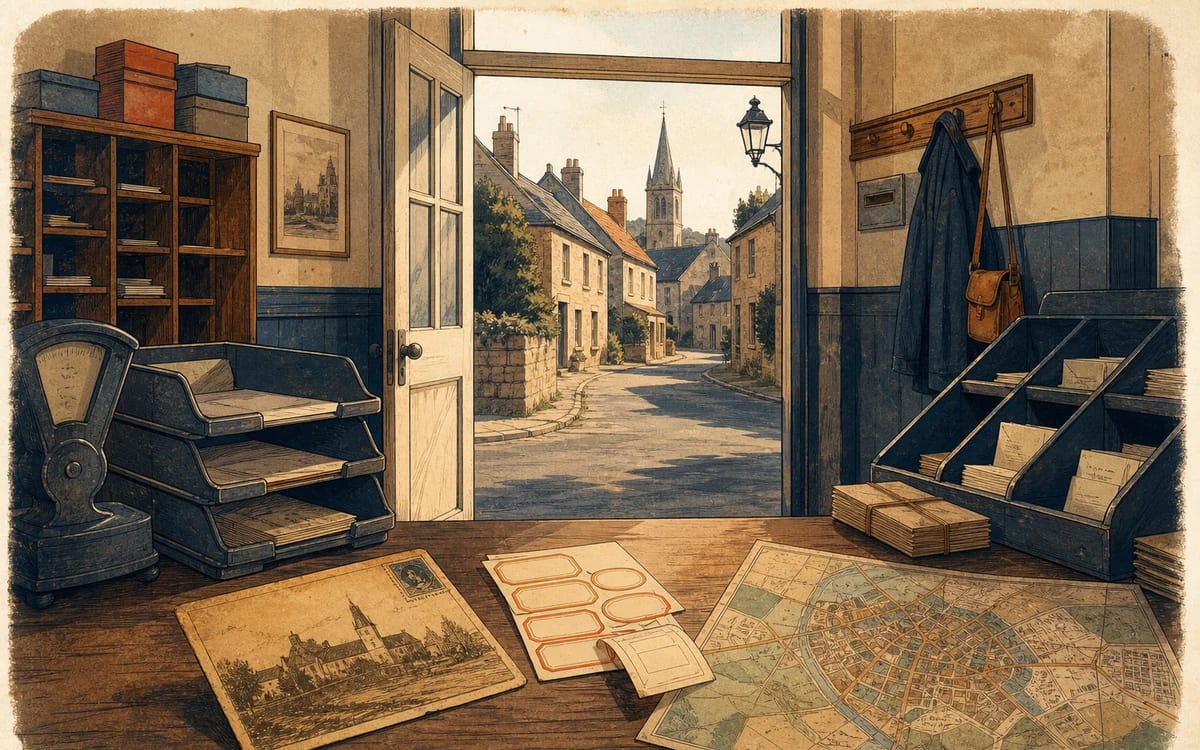
La carte postale
A misdelivered postcard from 1985 leads a postal worker in a small Normandy town to unravel a love story the town forgot.
Read story →
La fabrique du souvenir
A granddaughter discovers that her grandmother's paintings in a Montmartre workshop hide a coded family history spanning two generations.
Read story →
Le débat en classe
A heated classroom debate about secularism forces a quiet student in a French university seminar to take a public stand for the first time.
Read story →