Ein Wochenende am See
On Friday evening, Jonas drove with two friends to a small, hidden lake in Bavaria. They wanted to swim, barbecue, and sleep in a simple, cozy cabin.
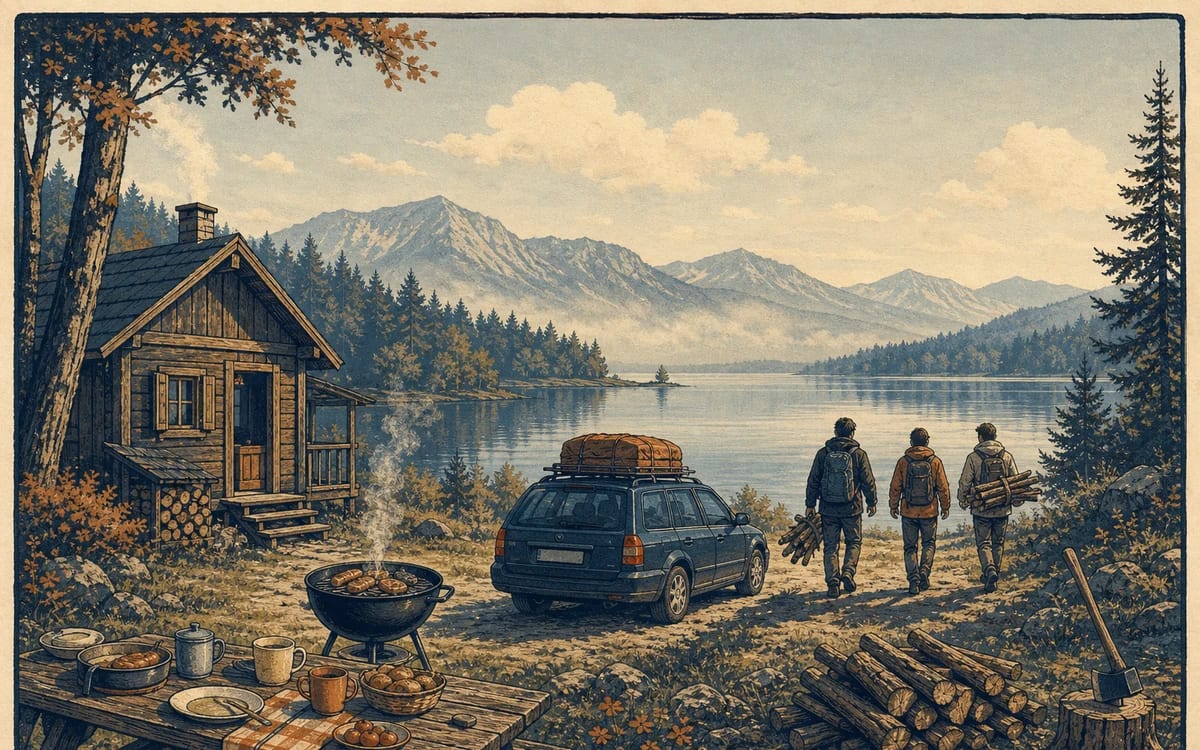
What you'll learn
- Bilingual graded story
- Native narration
- 7 useful words
- 6 comprehension questions
Then shadow
Borrow the narrator’s rhythm
Pause after this line and repeat it aloud without translating. Aim for three clean repetitions.
1Listen first
Hear the whole story
Native German narration of this exact text. Keep the transcript visible on the first pass.
Playback speed: Natural
2Then shadow
Jonas fuhr am Freitagabend mit zwei Freunden an einen kleinen, versteckten See in Bayern.Warm-up vocabulary
Preview 1 optional words before reading
Your German story
Read along with the narration, and tap any highlighted word for its meaning
Jonas fuhr am Freitagabend mit zwei Freunden an einen kleinen, versteckten See in Bayern.
On Friday evening, Jonas drove with two friends to a small, hidden lake in Bavaria.
Sie wollten schwimmen, grillen und in einer einfachen, gemütlichen Hütte schlafen.
They wanted to swim, barbecue, and sleep in a simple, cozy cabin.
Am Samstagmorgen war das Wetter zuerst wie aus einem Bilderbuch. Die Sonne schien hell, und das Wasser glitzerte ruhig.
On Saturday morning, the weather was picture-perfect at first. The sun shone brightly, and the water glittered calmly.
Nach dem Frühstück gingen sie spazieren und für das Lagerfeuer am Abend.
After breakfast, they went for a walk and collected wood for the campfire in the evening.
wurde der Himmel dunkel, und ein starker Regen prasselte nieder.
Suddenly, the sky turned dark, and heavy rain poured down.
Die Freunde liefen schnell zur Hütte , um sich zu schützen.
The friends quickly ran back to the cabin for shelter.
Drinnen kochten sie eine heiße Suppe, spielten Karten und erzählten sich Geschichten.
Inside, they cooked hot soup, played cards, and shared stories.
Am Abend hörte der Regen auf, und die Luft war frisch.
In the evening, the rain stopped, and the air was fresh.
war still, und über dem Wasser lag ein geheimnisvoller Nebel.
The lake was quiet, and a mysterious fog lay over the water.
Jonas dachte, dass das Wochenende anders war als geplant, aber vielleicht gerade deshalb besonders schön.
Jonas thought that the weekend was different from what they planned, but perhaps that made it especially beautiful.
Vocabulary recap
Reading Comprehension Exercise
A2 German Reading Comprehension Exercises
1. What did Jonas and his friends want to do at the lake?
Correct: Swim and barbecue
Jonas and his friends wanted to swim, barbecue, and sleep in a cabin, which is typical for a relaxing weekend trip.
2. What was the weather like on Saturday morning?
Correct: Perfect
The weather was perfect on Saturday morning, with sunshine and calm water, ideal for outdoor activities.
3. What happened suddenly during the walk?
Correct: The sky turned dark
Suddenly the sky turned dark and it started raining heavily, driving the friends back to the cabin.
4. What did the friends do when they returned to the cabin?
Correct: They cooked soup and played cards
In the cabin, the friends cooked soup, played cards, and told stories to pass the time.
5. How does Jonas feel at the end of the weekend?
Correct: Content
Jonas thinks the weekend was beautiful despite the unexpected events, showing he enjoyed the experience.
6. Was haben die Freunde im Regen gemacht?
Correct: Sie sind zur Hütte zurückgelaufen
Die Freunde liefen schnell zur Hütte zurück, um sich vor dem Regen zu schützen.
Nailed the quiz? Start your own story in MeloLingua →
Line 1 / 10
0:00/–:––
Mini-lesson complete
You understood 6 of 6 questions.
That is 130 real German words read in context.
- ✓ 130 words read
- 7 new expressions
- 2 grammar patterns
- A2 level unlocked
- ○ Narration ready
- 0 shadowing reps
Ready for tomorrow’s story?Hear it, shadow the narrator, and lock these words into memory in MeloLingua.
Start learning with storiesOne story. The whole practice loop.
Reading this story for free is just the first rep. The MeloLingua app turns the same story into a full practice loop — understand every word, speak it back, build sentences, and keep stories coming that match what you actually care about.
| What you get | FreeThis story | Full loopMeloLingua app |
|---|---|---|
| Understand every sentence instantly | Bilingual reader, tap to translate | Interactive reader with word-by-word explanations |
| Know exactly why each word works | Basic translation in context | Translation, grammar, conjugation & usage examples |
| Train your ear with native audio | Studio narration — slow, normal, fast | Listen, follow along, and shadow the narrator |
| Speak like a native while reading | Read aloud on your own | Real-time pronunciation feedback |
| Turn what you read into what you can say | Not included | Build sentences from the story you just read |
| Never forget today's vocabulary | In-story glossary + comprehension quiz | Flashcards & spaced review from story lines |
| Read stories about your real life | Not included | Stories matched to your level and interests |
| Feel yourself improve every day | Not included | Streaks, goals, and your full learning history |
| Result | Enjoy a great story | Actually speak with confidence |
Understand every sentence instantly
Know exactly why each word works
Train your ear with native audio
Speak like a native while reading
Turn what you read into what you can say
Never forget today's vocabulary
Read stories about your real life
Feel yourself improve every day
Result
Make stories aboutyour life
Most language apps hand everyone the same content. MeloLingua lets you create stories around the things you actually enjoy — so staying consistent stops feeling like homework.
- “I love space and cooking”Your story
A chef opens the first restaurant on Mars.
- “I like football and history”Your story
A young striker time-travels to play the legendary teams.
- “I enjoy surfing and travel”Your story
A surfer hunts secret waves across the world.
- “I like Brazilian Jiu-Jitsu and sci-fi”Your story
An astronaut enters the first intergalactic grappling tournament.
Read it. Listen to it. Speak it back. The more it sounds likeyour world, the easier it is to keep going.
Generate your first storyMake it yours
Your next German story is one tap away
Turn today's read into a daily habit — personalized scenes, native audio, tap-to-translate vocabulary, and speaking drills matched to what you just understood.
Keep reading on-site

Das Team-Meeting am Montag
Nico shares a five-minute update, dodges jargon overload, and follows up with a concise email that actually matches what was agreed.
Read story →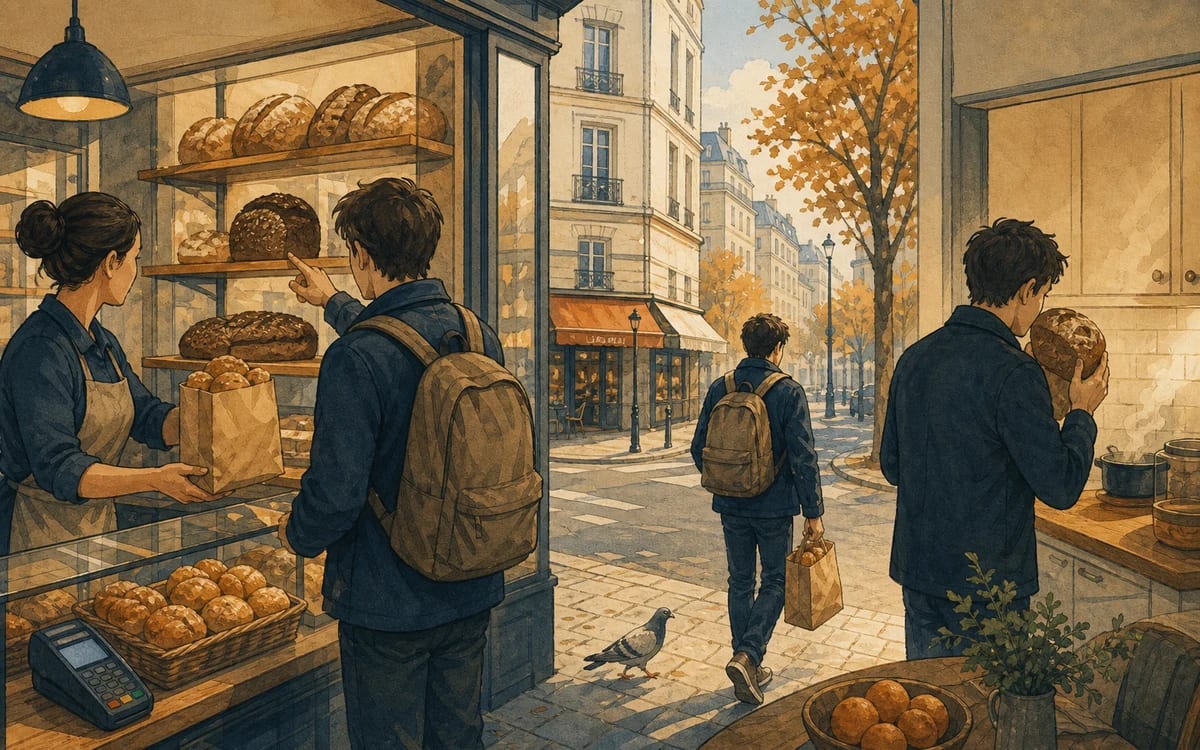
Der Bäcker an der Ecke
Tim steht in der Schlange für warme Brötchen, erkennt ein Roggenbrot am Geruch und verlässt die Bäckerei mit Krümeln auf dem Schal und besserem Deutsch.
Read story →
Die Neue Kollegin
Mira starts a new job and finds confidence through a small team project.
Read story →