Preterite tense in Spanish: conjugation, uses, and stories
The Spanish preterite tense (pretérito indefinido) reports completed past actions — events with a clear beginning and end. You form it with one set of endings for -ar verbs and a shared set for -er and -ir verbs. MeloLingua pairs these conjugation rules with free graded stories so you see the preterite in real narrative scenes.
Spanish stories that use completed past actions in travel, work, and culture scenes. These stories keep the learning focus inside real scenes, then add sentence-level English support, glosses, and quick checks.
Browse the all grammar collections, Spanish stories by setting, or spanish reading practice.
Preterite tense grammar guide
Updated July 7, 2026
Definition
The preterite tense in Spanish is a past tense used for single, completed actions and finished sequences of events — what happened at a specific point. The imperfect covers ongoing, habitual, descriptive, or background past actions.
What you will practice
- Recognize preterite endings across regular -ar, -er, and -ir verbs
- Spot completed events that move a story forward
- Choose the preterite over the imperfect using trigger words
- Read high-frequency irregular preterites in natural context
When to use the preterite tense in Spanish
Use the preterite when the past action is finished and bounded — it presents completed events in a sequence or as a single finished event.
- A single completed action: Ayer compré un libro — Yesterday I bought a book.
- A sequence of events: Llegué, abrí la puerta y entré — I arrived, opened the door, and went in.
- An action with a clear start or end: La película empezó a las ocho — The film started at eight.
- Trigger words: ayer, anoche, de repente, una vez, el lunes, hace dos años.
Spanish preterite tense conjugation (regular verbs)
Regular preterite verbs take stressed endings. -ar verbs use one set; -er and -ir verbs share another.
| Subject | hablar (-ar) | comer (-er) | vivir (-ir) |
|---|---|---|---|
| yo | hablé | comí | viví |
| tú | hablaste | comiste | viviste |
| él / ella / usted | habló | comió | vivió |
| nosotros/as | hablamos | comimos | vivimos |
| vosotros/as | hablasteis | comisteis | vivisteis |
| ellos / ellas / ustedes | hablaron | comieron | vivieron |
Written accents on hablé and habló carry the stress and change the meaning — keep them.
Common irregular preterite verbs
Many high-frequency preterites use irregular stems. Most follow unaccented endings (-e, -iste, -o, -imos, -isteis, -ieron), but ser/ir are fully irregular, hacer has hizo in the third singular, and j-stem verbs like decir take -eron in the third-person plural (dijeron).
| Verb | yo | él / ella | ellos / ellas |
|---|---|---|---|
| ser / ir | fui | fue | fueron |
| estar | estuve | estuvo | estuvieron |
| tener | tuve | tuvo | tuvieron |
| hacer | hice | hizo | hicieron |
| decir | dije | dijo | dijeron |
Ser and ir share the exact same preterite forms — context tells them apart.
Quick reference: preterite vs imperfect
Use the preterite for finished actions; use the imperfect for habits and scene-setting. The full guide covers trigger words and verbs that change meaning.
Full preterite vs imperfect guide →
| Preterite (event) | Imperfect (background) |
|---|---|
| Ayer compré pan | Siempre compraba pan los domingos |
| De repente empezó a llover | Mientras llovía, leía |
| Triggers: ayer, anoche | Triggers: siempre, mientras |
11 stories in this collection
11 graded spanish readers

El Viaje en Tren
Mateo embarks on a train journey to Valencia, discovering unexpected connections and the art of patience along the way.
Read story →
Fin de semana en Granada
Laura combines a squeaky suitcase, a hillside mirador, and a slow breakfast to learn Granada one staircase at a time.
Read story →
La Panadería del Sábado
Sofía goes out early for crusty bread, trades jokes with Don Ramón at the plaza bakery, and walks home through light rain with a simpler plan.
Read story →
Primer día en la oficina
Javier navigates the chaos of a new office, from logins to a bilingual microwave, before sending a team update.
Read story →
Una Tarde en la Biblioteca
Clara busca un rincón tranquilo para estudiar y se encuentra con una conversación inesperada en la biblioteca.
Read story →
El puente de septiembre
A planned beach weekend in Cádiz turns into an unexpected exploration of a hidden cove when rain forces two friends off the sand.
Read story →
La Feria del Libro en Madrid
At Madrid's Book Fair, Isa finds a novel, meets its author, and leaves with a dedication worth sharing.
Read story →
El juicio
A minor property dispute in a small-town courtroom reveals a decades-old neighborhood secret during cross-examination that no one expected.
Read story →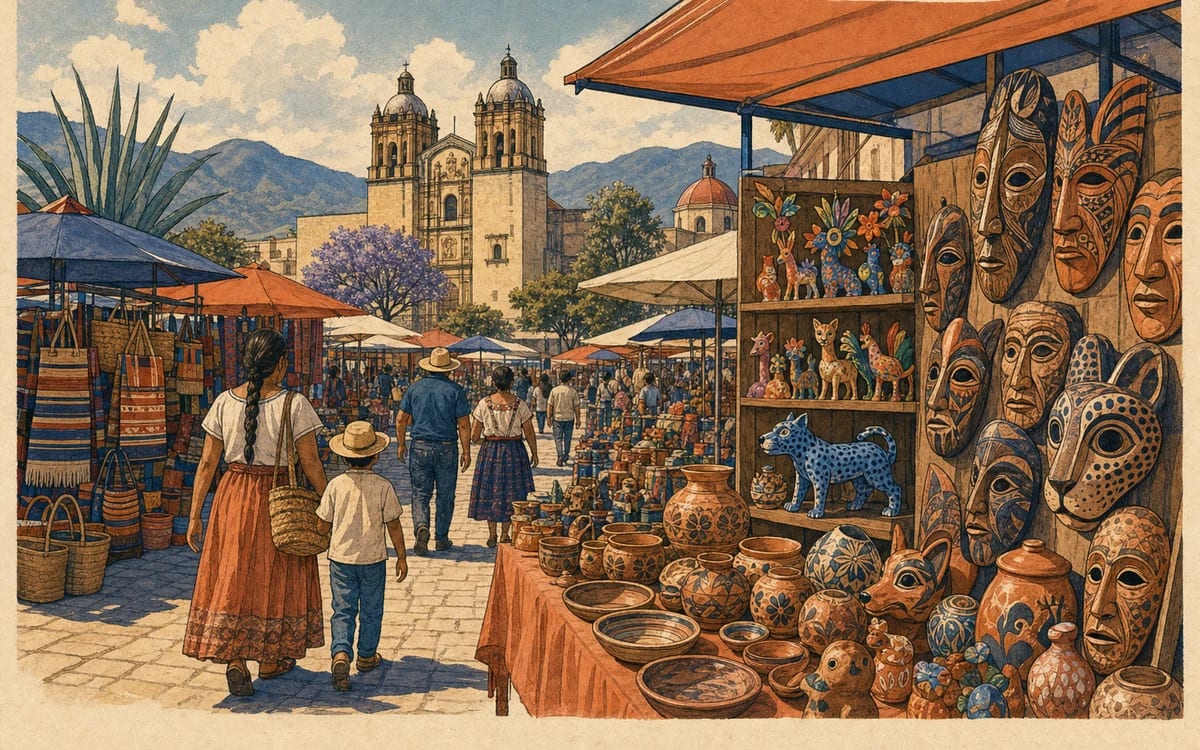
El mercado de artesanos
A visitor at an Oaxaca artisan market discovers that a seemingly simple ceramic piece carries a story her local guide won't translate.
Read story →
El vuelo reprogramado
After his flight is cancelled at the airport, Pablo goes to Atocha to book a train and bus route to Lisbon.
Read story →
La entrevista final
The final round interview at a Mexico City corporate headquarters takes a turn when the hiring manager asks a question that is not in the script.
Read story →More grammar tags
Answers
Preterite tense Spanish stories — FAQ
Q01What is the preterite tense in Spanish?
What is the preterite tense in Spanish?
The preterite (pretérito indefinido) is a Spanish past tense for single, completed actions and finished sequences — what happened at a specific moment. It contrasts with the imperfect, which covers ongoing or habitual past actions.
Q02How do you conjugate the preterite in Spanish?
How do you conjugate the preterite in Spanish?
Add stressed endings to the stem. -ar verbs take -é, -aste, -ó, -amos, -asteis, -aron; -er and -ir verbs share -í, -iste, -ió, -imos, -isteis, -ieron. Keep the written accents on the yo and él forms.
Q03When do I use the preterite instead of the imperfect?
When do I use the preterite instead of the imperfect?
Use the preterite for actions that are finished and bounded (ayer llegué tarde) and the imperfect for ongoing background or habits (de niño llegaba tarde a menudo). Trigger words like ayer, anoche, and de repente signal the preterite.
Q04What are common irregular preterite verbs?
What are common irregular preterite verbs?
High-frequency irregulars include ser/ir (fui, fue), estar (estuve), tener (tuve), hacer (hice/hizo), and decir (dije/dijeron). Many use irregular stems with unaccented endings; ser/ir are fully irregular, and j-stem verbs like decir take -eron in the third-person plural.
Q05How can I practice the preterite with stories?
How can I practice the preterite with stories?
Read graded Spanish stories where the preterite drives the plot — trips, decisions, and turning points. MeloLingua glosses each verb, shows the English line by line, and adds a comprehension check so you learn the preterite as it actually narrates events.
Q06Where else can I practice Spanish after these stories?
Where else can I practice Spanish after these stories?
Continue with Spanish reading practice at /spanish-reading-practice, graded texts at /spanish-texts-to-read, or daily audio and speaking sessions in MeloLingua.
Make this scene stick
Preterite tense Spanish stories
Finish a story in this collection, then carry the same scene into MeloLingua with native audio, tap-to-translate vocabulary, and speaking drills matched to what you read.